RSS
 

Classic Team Logo of The Day

05 Jul

Logo of an old National Basketball Association team, the Cincinnati Royals. This logo was used from 1957, when the team relocated from Rochester, NY, until 1971, when the team was moved to Kansas City and became the Kings. The team was competitive in its’ years in Cincinnati but never won any titles. Some of the most legendary players in NBA history played for them, including Oscar Robertson, Maurice Stokes, Jack Twyman, Wayne Embry, Jerry Lucas and Sihugo Green. Boston Celtic legend Bob Cousy coached the team in the late ’60s, but the franchise declined after trading Lucas and Robertson and eventually moved to Kansas City. The franchise currently exists as the Sacramento Kings, after moving there from Missouri in 1985, but may be in danger of relocation again.


Classic Sports Card of The Day

05 Jul

From www.CheckOutMyCards.com , a 1992 Topps basketball card of recently retired center Shaquille O’Neal. “Shaq” played 19 seasons in the NBA with 6 different teams, winning 4 championships – 3 of which he was named Finals MVP. He also was a 15 time All Star and was MVP of the All Star game 3 times. He was known as a physical player and dominating rebounder, but also led the NBA in scoring twice, and was regularly named an All league defensive player. Off the court, he has appeared in numerous films and recorded at least 5 rap albums, and has dabbled in law enforcement training.


Top 5 Baseball Managers of All Time

24 Jun

My top five baseball managers of all time will not include legends like Joe McCarthy, Connie Mack or even Casey Stengel. McCarthy and Mack don’t qualify since they managed way before my time, and Stengel doesn’t make the list because I only remember him as manager of the hapless expansion Mets in the early 1960s (“Can anybody here play this game?”). My only other recollection of him is his being fired after the Yankees lost the 1960 World Series to Pittsburgh, and that must have been a good decision since his replacement, Ralph Houk, won the next 2 Series titles. I didn’t include any active managers – that might make a good future “list” post. Those who deserve mention but didn’t make the cut include Lou Piniella, Earl Weaver, Tommy Lasorda, Bobby Cox, Whitey Herzog  and Gene Mauch. Here are my choices, again, in no particular order:

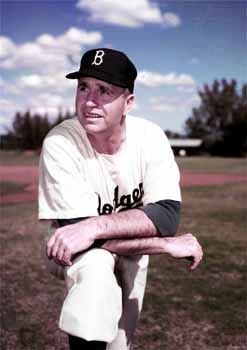
1. Walter Alston – this guy is the reason why the Dodgers, from their Brooklyn days on into the move to Los Angeles and beyond, were always one of the most stable franchises in baseball – at least they were up until the last couple of years. He managed the club for 23 years and won 7 pennants and 4 World Series titles. He managed the NL to victories in the all star game 7 times. His long tenure as manager of the same team is even more remarkable when you add in the fact that he worked on one-year contracts for the entire 23 years. Alston was elected into Cooperstown in 1983.

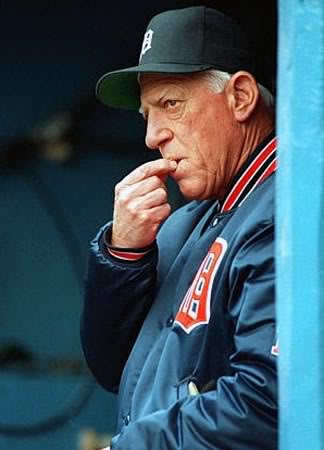
2. Sparky Anderson – like Alston, Anderson’s longevity was his trademark, as he managed in the major leagues for 26 years. The difference is he did it with 2 different teams – the Cincinnati Reds and Detroit Tigers. Anderson guided the vaunted “Big Red Machine” to 2 World Series titles in Cincinnati, then won another title with the Tigers in 1984, becoming the first manager to win a World Series in both leagues. Anderson was inducted into the Hall of Fame in 2000.

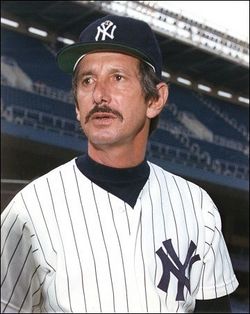
3. Billy Martin – there was much more to Martin’s managerial career than his celebrated feuds with owner George Steinbrenner and animated arguments with umpires. His stints with the Yankees became almost comical, as he was hired 5 different times as manager there, but he also helped revive a once proud franchise and returned them to glory in the mid-1970s, winning 2 pennants and a World Series. His best attributes as a manager were being a genius on strategy and turning losing teams into instant winners, which he pulled off not only with the Yanks but in Minnesota, Detroit, Texas and Oakland. Martin would probably be considered the best manager of all time had he not battled alcohol problems his entire career, which got him fired at almost every stop.

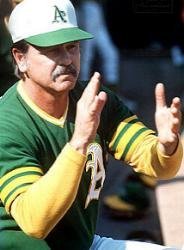
4. Dick Williams – this is one of baseball’s most under-rated managers. Williams won 2 consecutive World Series titles with the Oakland A’s in the early 1970s, and also had successful runs as a manager prior to that in Boston and after his Oakland years in San Diego. In Boston in 1967, he guided the underdog Red Sox to their first pennant since 1946 and although they lost the World Series to the heavily-favored St. Louis Cardinals in seven games (3 of the 4 losses were to Bob Gibson), it was considered a great job of managing by Williams. He led the talent-laden A’s to their titles, proving he could win with both underdogs and talented players. He managed the Montreal Expos for a short stint, turning that franchise into a winner also, and in 1984 led the Padres into the World Series with another ragtag roster, but they lost the Series to Anderson’s Tigers.

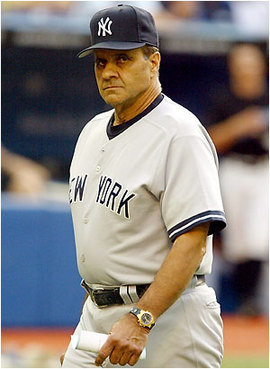
5. Joe Torre – Torre was a good but not spectacular manager in earlier jobs with the Mets, Braves and Cardinals, but found his niche when Steinbrenner hired him to lead the Yankees. His hiring wasn’t popular with the NY media, as they dubbed him “Clueless Joe”, but in 12 seasons as manager, he guided the Yanks to the playoffs every season and restored the Bronx Bombers to prominence, winning 4 World Series titles. It’s possible that Torre’s managing career may not be over, which would mean he’d have to be moved to the “active” list of great managers. If that happens, it would probably be Herzog who replaced him on this list.


Classic Team Logo of the Day

24 Jun

Logo of baseball’s Detroit Tigers used in 1927 and 1928. This is a pretty sad looking tiger that appears to have a severe overbite. The two seasons in which this logo was used were very different in that in 1927, despite finishing fourth in the American League, the team had an 82-71 record. They won only 68 games in ’28 and wound up sixth in the eight team AL. Maybe that’s why the logo tiger looks so sad. Two Hall of Famers played for Detroit in this era – Charlie Gehringer and Heinie Manush, while another, Ty Cobb, retired prior to the ’27 season. That would be another reason for the tiger to be sad.


Classic Sports Card of The Day

24 Jun

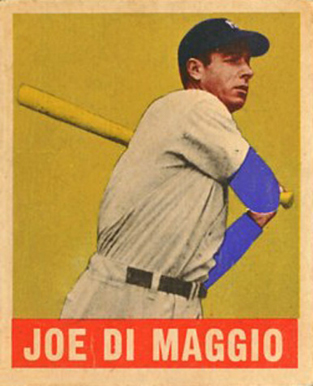
“Where have you gone, Joe DiMaggio?” This is a 1948 Leaf baseball card of the “Yankee Clipper”, former New York Yankee centerfielder Joe DiMaggio. “Joltin’ Joe” was a classy and humble member of the Yanks’ dynasty in the 1940s. He played 13 seasons with the team, and was an All Star all of those seasons. He played on 9 World Series winning teams and was MVP 3 times, and is best known for his record that to this point has been unbreakable – a 56-game hit streak.  DiMaggio was elected to the Baseball Hall of Fame in 1955, and outside of his exploits in the game was best known for his marriage to Marilyn Monroe and his long-time stint as pitchman for Mister Coffee. In 1969, he was voted as baseball’s greatest living player, and is mentioned numerous times in popular culture, including Ernest Hemingway’s novel The Old Man And The Sea, and the Simon & Garfunkel song Mrs. Robinson.


“Is This Heaven?, No, it’s Iowa.” My Five Favorite Sports Movies

20 Jun

Rocky, Remember The Titans, Safe At Home, Pride of  The Yankees, Rudy, Brian’s Song, Bull Durham, Bad News Bears, Hoosiers and League Of  Their Own. These are all films that get honorable mention on my list of favorites when it comes to sports movies. The 2 toughest to eliminate were Pride Of The Yankees, with Gary Cooper’s great portayal of Lou Gehrig, and League Of Their Own, based on the true story of a women’s professional baseball league that existed during the war years, a film that included Tom Hanks’ classic line “There’s no crying in baseball!” Here are the five sports films that made the cut – my favorite sports movies of all time, in no particular order:
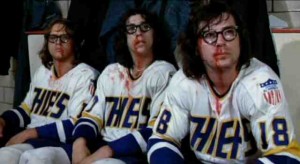
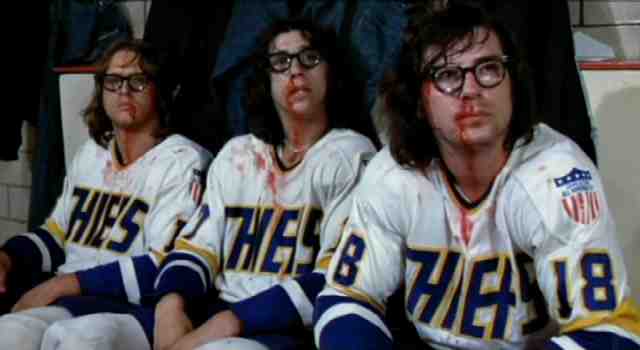
1. Slapshot – a 1970s classic comedy about a minor league hockey team, starring Paul Newman as  aging veteran Reggie Dunlop, who is trying to hang on with the Charlestown Chiefs, a motley group that included the goonish and unforgettable Hanson Brothers (above). The Chiefs are a perennial loser and a financial mess, and are scheduled to fold at season’s end. Dunlop, actually the team’s player/coach, has the Chiefs start playing “goon” hockey and turns them around. The team’s final game, in which they play the Syracuse Bulldogs and their rookie goon – Ogie Ogilethorpe – is a hoot. The film came out in 1977, right around the time the old Philadelphia Flyer “Broad Street Bullies” were dominating the NHL using a style just a little less violent than the Chiefs.
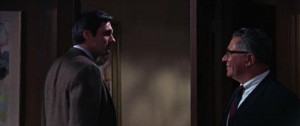
2. Paper Lion – this 1968 classic chronicled author George Plimpton’s foray into pro football. Alan Alda played Plimpton, who had earlier pitched in a baseball all-star game and boxed 3 rounds against Sugar Ray Robinson, then written about his adventures. Plimpton has a hard time finding a team to buy into his idea, and my favorite scene in the movie is pictured above. Plimpton (Alda) is unsuccessful in convincing Green Bay coach Vince Lombardi to let him try out for the Packers, and as he escorts him to the door, with a sly grin Lombardi asks Plimpton “have you tried the AFL?”  When the film was made Lombardi’s Packers had demolished the AFL champs in the first 2 Super Bowls so the line was a real “shot”. Plimpton eventually gets the Detroit Lions to agree to let him try out, and the actual Lion players used in the film turned out to be pretty good comedic actors, especially Alex Karras, who went on to enjoy a decent acting career. The film is not an Academy Award winner, but I love it because it takes place in the golden era of NFL football that I grew up following in the 1960s.
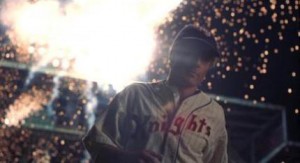
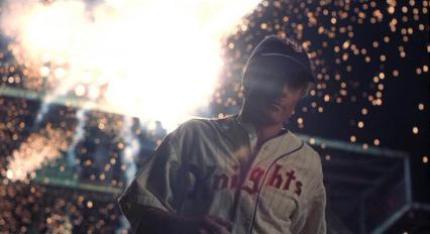
3. The Natural – this movie was panned by some critics when it came out for being too hokey, but those critics didn’t get it. The movie was made from an old book, and was  intentionally made in the sappy, storybook style of the author, Bernard Malamud. Robert Redford was terrific as the movie’s hero, Roy Hobbs, who attempts a comeback after mysteriously disappearing from the game. Robert Duvall, one of my favorite actors of all time, plays an impish sportswriter trying to figure out Hobbs’ story. Hobbs reunites with an old flame, played by Glenn Close, and in the end discovers that he is the father of her young son. Hobbs’ game-winning home run at the end, which breaks the scoreboard and sets off an electrical fireworks display (see picture above) is a little over the top, but again, it’s a fantasy movie with a fantasy ending.
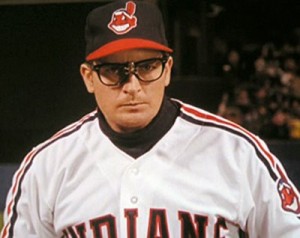
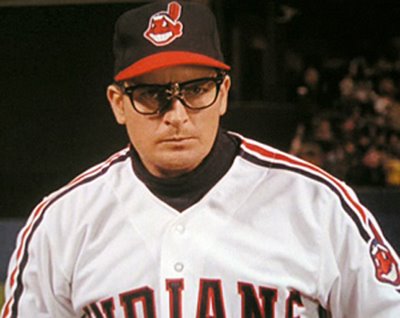
4. Major League – any movie that ends with the Cleveland Indians winning the pennant is going to be on my all-time favorites’ list. This film may be the best comedy sports movie ever made however. It is filled with great comedy moments, like Bob Uecker’s radio play-by-play (“juuuuust a bit outside”) and Pedro Cerrano’s locker room voodoo ceremony designed to help him hit a curve ball.  There  are memorable characters, like Wesley Snipes’ portrayal of the cocky Willie Mays Hayes, crusty manager Lou Brown and of course, Charlie Sheen as the “Wild Thing”, pitcher Rickie Vaughn. The team is inherited by a rich widow who wants to move it to the warmer climate of Miami, and she orders the general manager to field the worst team he can so they’ll lose and make it easier for her to relocate from Cleveland. Tom Berenger, as washed-up catcher Jake Taylor, and Corbin Bernsen, as highly-paid prima donna Roger Dorn, battle throughout the movie but ultimately they all come together in the end. The movie spawned 2 sequels, but those never lived up to the original.
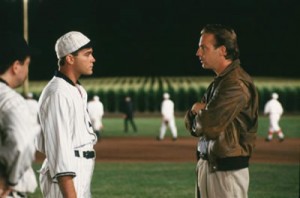
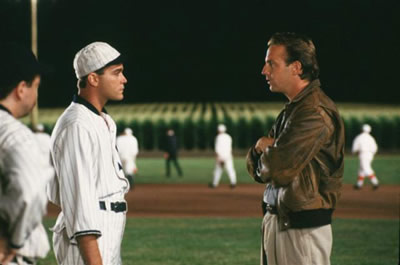
5. Field of Dreams – “Is this Heaven?”  No…it’s Iowa.” A classic line from this fantasy film about baseball and its’ timeless place in people’s lives. Kevin Costner, who has starred in numerous sports films, plays Iowa farmer Ray Kinsella, who hears voices in his cornfield telling him “if you build it he will come”. To the dismay of his family, he then builds a baseball diamond in the cornfield, and eventually the ghost of Shoeless Joe Jackson shows up with a squad of old deceased ballplayers who begin playing on the field. Kinsella then is compelled to go out and find author Terence Mann, played by James Earl Jones, after the “voices” tell him to “ease his pain”. After picking up Mann in Boston in his van, the pair both see a vision on the scoreboard involving a “Moonlight” Graham, another player of the past who played one inning in the major leagues but never got a chance to bat. Graham, in his later years after he became Doctor Graham, is played by Burt Lancaster in his final movie role. Obviously, with the plot of the movie involving ghosts, voices and even time travel (Kinsella finds the older Graham when he leaves his motel room and suddenly it’s 1972), this film is total fantasy, but it is a great film that has a lot of life lessons to be found. The movie received 3 Oscar nominations, including one for Best Picture, a rarity for sports movies.
 

Classic Team Logo of The Day

20 Jun

Logo of an old hockey team that played in the National Hockey League from 1925 until 1930, the Pittsburgh Pirates. Although they are barely remembered among the city’s pro sports teams today, the team was the first in Pittsburgh to use the black and gold color scheme that is prevelant today in the Steel City. The most prominent player for the team was captain Lionel Conacher, and their coach, Odie Cleghorn, was an innovator, as he was the first NHL coach to change players on the fly, and also the first coach to use 3 set forward lines, in an era where most teams just kept their best players on the ice for as long as possible.


Classic Sports Card of The Day

20 Jun

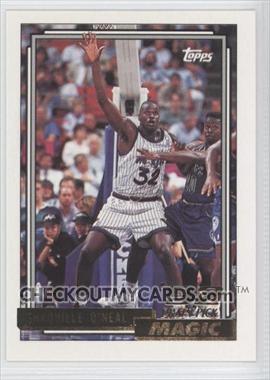
1970 Opeechee hockey card, from www.CheckOutMyCards.com , of former NHL defenseman Brad Park, who played 18 seasons, most notably with the New York Rangers and Boston Bruins. Park, who along with his contemporary, Bobby Orr, revolutionized the defense position into the “offensive defenseman”, was an NHL all star 9 times. He finished second in the voting for the Norris Trophy for best defenseman 6 times. Park was elected to hockey’s Hall of Fame in 1988.


NFL – Five Players Who Changed The Game

13 Jun

This particular list is not a “best of” or a list ranking anything or anybody. It is a list of 5 NFL players whose contributions to the game of professional football were so unique that they actually changed the sport. There were 4 players considered but not included that deserve mention. Two of them are quarterbacks – Slingin’ Sammy Baugh and Joe Montana. I never saw Baugh play so he wouldn’t have made the list anyway, but he deserves credit for being an innovator in the passing game. He basically introduced the forward pass as a major weapon in the game. Montana perfected the offense that is a major part of today’s game, the West Coast offense.  Montana’s San Francisco teammate, Jerry Rice, revolutionized the wide receiver position, and Chuck Bednarik, as the last of the great two-way players, deserve mention also. Here are the five players, in no particular order, who changed the game of pro football:


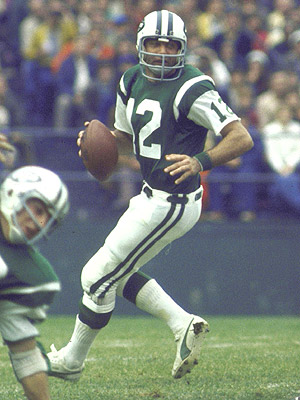
1. Joe Namath – Broadway Joe did a couple of things to move the game into the modern era. He signed a $400,000 contract with the upstart AFL, which pushed the 2 leagues into merger talks, then solidified the credibility of the new league by first guaranteeing, then delivering, a shocking upset win over the Colts in Super Bowl III.

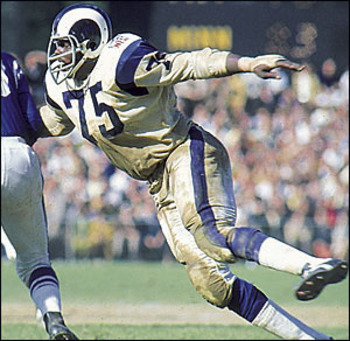
2. Deacon Jones – David “Deacon” Jones revolutionized the way defense was played in pro football during his career. He was the first to use the term “sack” to describe tackling the opposing quarterback for a loss while attempting to pass. During his playing days, the “sack” wasn’t kept as an official statistic, but in the 1967 and 1968 seasons he recorded 50 of them, an unbelievable total never matched since the stat has been kept officially. Jones, nicknamed “The Secretary of Defense”, also used the “head slap” on opposing offensive linemen trying to block him, a tactic that has since been outlawed from the game. He is, in my opinion, the greatest defensive player in the history of the game.

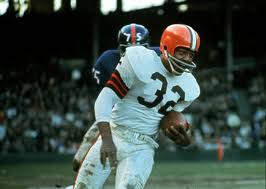
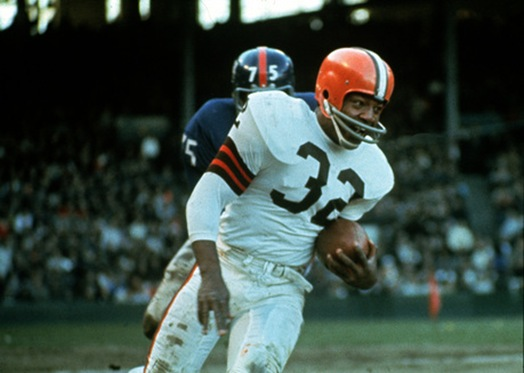
3. Jim Brown – Brown, as an NFL running back in the late ’50s and ’60s, was a physical freak of nature. His combination of size and speed had never been seen before, and he was a dominant force in the pro game during the 9 seasons he played, changing the way the game was played. Brown actually played the fullback position, which in today’s game is pretty much relegated to nothing more than a blocking back. Brown, with his size, is one player from his era who, if transported through time and dropped into today’s NFL, could easily not only thrive, but dominate. There is no question that he changed the game.

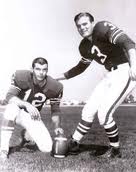
4. Pete Gogolak –  when he entered the pro game by joining the AFL’s Buffalo Bills in 1964, no one had any idea how much of an impact the Hungarian-born Gogolak would have on the future of the game. He was pro football’s first soccer-style placekicker. Before he arrived on the scene, kickers in pro ball were straight-on kickers, and usually played another position on the team, like George Blanda (quarterback) and Lou Groza (tackle). Gogolak introduced specialization to the placekicker position, and the game was changed forever.

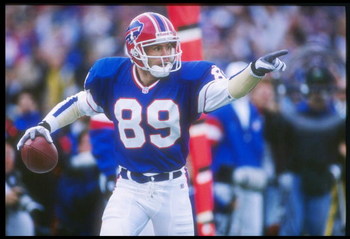
5. Steve Tasker – in the late 1980s, Tasker joined the Buffalo Bills, became a terror on kick coverage teams, and revolutionized the “gunner” position on those teams. Tasker’s coach, Marv Levy, was a former special teams coach and made special teams just as important of a unit on those Bills’ teams as the offense and defense. It’s because of how Tasker revolutionized playing the “Bomb Squads” that today, a special teamer is added to the Pro Bowl teams every year, and for the first time ever, special teamers are being discussed seriously as Hall of Fame-worthy players.


Classic Team Logo of The Day

13 Jun

Logo of the National Football League’s Chicago Bears, one of the league’s iconic franchises, used from 1940 until 1953.  The club was led during this era by team founder George “Papa Bear” Halas, as they were for most of their storied history. The team won the NFL title in the first year this logo was used, 1940, throttling the Washington Redskins 73-0 in the title game while using a new wrinkle to befuddle the ‘Skins during the game, the T formation. The team won 4 NFL championships during the era of this logo. Key Bear players during this era include Clyde “Bulldog” Turner, Sid Luckman, Bronko Nagurski, George McAfee, Joe Stydahar, George Musso, George Blanda and Bill George.