RSS
 

NFL – Bills’ Free Agency Summary

27 Mar

Buffalo Bills’ general manager Brandon Beane, with plenty of salary cap money to spend, promised to be aggressive, while spending “judiciously”, in this year’s annual free agent frenzy period in the NFL. With 14 total signings so far, he has lived up to his word on both counts. The Bills’ strategy, as outlined by Beane and coach Sean McDermott, was to fill holes on the roster with enough free agent talent so as not to leave the team in a spot where they suffer from any  “positional emergencies” when draft times comes in April. As of this date, with some free agents still out there unsigned, Buffalo has inked a grand total of 14 new players. Here is a positional account of the players the Bills have corralled so far:

Running Back

The Bills are almost surely going to select a back somewhere on day 2 or 3 of the draft, so it was somewhat of a surprise when they signed 35 year old veteran Frank Gore to a contract. Gore, along with LeSean McCoy and Chris Ivory, gave the Bills a geriatric running back stable by NFL standards, since all are over 30, until Ivory was released recently. Gore’s signing is mostly for his locker room presence and professionalism, but he is still a very capable runner.


Wide Receiver

The Bills caught a bit of lightning in a bottle late in the 2018 season with the emergence of Robert Foster and Isiah McKenzie, but their wide receiver room was still very thin. They grabbed a pair of veterans who will certainly help with Josh Allen’s progression in 2019 in John Brown, an underrated deep threat, and Cole Beasley, a top notch slot receiver. The team also swiped last season’s leading kick returner, Pro Bowler Andre Roberts, from the division rival New York Jets. He is basically a journeyman receiver, but his kick return ability shows that the Bills’ brass is serious about upgrading every phase of the team, including special teams, through free agency.


Offensive Line

The offensive line was clearly the unit in most need of an overhaul, and the Bills got an early start in that project when they signed center/guard Spencer Long after he was waived by the Jets in a salary cap move. Their prize fee agent, and a player I’m sure they expect to anchor the line for years to come, is center Mitch Morse, plucked away from the Kansas City Chiefs. He is a young veteran who will help Allen with the O-line calls. The rest of the offensive line signings could be viewed as depth players, but they all have untapped potential to grow into solid starters if they take advantage of the opportunities they will surely get. Due to the large number of players signed, the newcomers’ chances will range from becoming starters to not even making the final roster. The signees include guard Jon Feliciano from Oakland, who has worked with new line coach Bobby Johnson in the past, tackle LaAdrian Waddle from New England and tackle Ty Nsekhe from Washington, both of whom are immediate candidates to fight for the starting right tackle position. The Bills allowed three starters from last year’s line to walk away, so it was imperative that they add as many reinforcements as possible, and they did.


Tight End

After releasing Charles Clay and not re-signing Logan Thomas, the Bills had only one tight end, Jason Croom, on their roster, leaving another position group razor thin. They shored this group up by signing a pair of interesting prospects – Tyler Kroft, an oft-injured former Cincinnati Bengal who has shown promise in limited playing time, and a real project, Jake Fisher, also a former Bengal who is attempting to transition from tackle to tight end.


Cornerback

Although undrafted free agent Levi Wallace appeared to solidify the CB spot left open when Vontae Davis quit at halftime of a game last year, the Bills added a pair of veterans to compete with him for that spot and also much needed depth at the position. They are Kevin Johnson, a former first round draft choice of the Houston Texans, and E.J. Gaines, who returns to the club after playing last season for the Browns. Both have injury histories they will have to overcome in order to make the roster. It’s worth noting that when Gaines was with the Bills back in 2017, the team had an 8-3 record in the games he played in.


Linebacker

This appears to be strictly an addition to the special teams, but the Bills signed Maurice Alexander to a one year deal as a linebacker also. It should be remembered that Buffalo did the same thing a few years ago when they signed a player with the same name, Lorenzo Alexander, and he turned out to be much more than what they thought they were getting.

We’ll provide updates to this list if any other players are signed by the Bills as the free agency period continues.
 
Comments Off on NFL – Bills’ Free Agency Summary

Posted in Football


Classic Team Logo of The Day

27 Mar

pttstategorillas

Logo of a Division II college football team that plays in the Mid-America Intercollegiate Athletics Association, the Pittsburg State Gorillas. The program came into existence in 1908 and has been highly successful, boasting a .663 winning percentage and an undefeated (3-0) bowl record. The Gorillas, who have claimed 4 small college national championships over the years, have sent a few alumni on to pro football careers, including Eldon Danenhauer, Ronald Moore, Troy Wilson, Brian Moorman, Kendall Gannon and John Brown.

 
Comments Off on Classic Team Logo of The Day

Posted in Classic Team Logo of the Day


Classic Sports Card of The Day

27 Mar

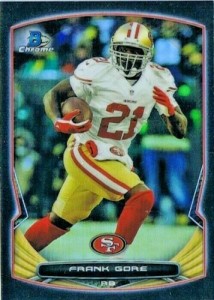
2014bowmanchromegore

2014 Bowman Chrome football card of NFL running back Frank Gore, a soon to be 36 year old who recently signed to play his 15th season in the league for the Buffalo Bills. He had most of his success in his first 10 years in San Francisco with the 49ers, but has proven to be a durable back. A five-time Pro Bowler, Gore is fourth on the NFL’s list of all-time rushing leaders, and should be a lock for the Pro Football Hall of Fame when he decides to  retire.

 
Comments Off on Classic Sports Card of The Day

Posted in Classic Sports Card of the Day


NFL – How The Cleveland Browns Saved Pro Football

01 Feb

The beginning of the growth of the National Football League into the popularity monster that it is today goes back to the 1960s and the birth of the AFL/NFL Championship game, orchestrated by the league’s commissioner at the time, Pete Rozelle. A true visionary, he refereed the battle between the old guard NFL owners and the renegade AFL owners, and out of the battle came the merger of the 2 leagues. The agreement spelled out that beginning immediately the rival leagues would hold a common draft of college players, thus ending the bidding war for players that had been going on. Another of the stipulations was that also beginning immediately, the champions of the 2 leagues would play an ultimate title game to decide who was the “world champion”. The merger agreement was made in 1966, but the actual merger itself didn’t begin until 1970. At that time, there were 16 NFL teams and 10 AFL, so 3 of the old guard clubs had to be transferred into the new American Conference. The Pittsburgh Steelers, longtime NFL doormats who perhaps saw an opportunity for more success among the AFL clubs, volunteered to go. Two franchises that had joined the NFL from another league, the old All America Conference, were natural clubs to make the move  – the Baltimore Colts and Cleveland Browns. Browns’ owner Art Modell balked at the idea, however, but eventually agreed when Rozelle promised him that his team could host the inaugural Monday Night Football game in that first merger season of 1970.

It wasn’t Modell’s agreement to shift that saved pro football though. It was the Browns team of the late ’60s that had a hand in moving the game forward, in a very weird way in fact. The Browns were a proud, winning franchise in the NFL since joining the league in 1950, and were regular participants in the playoffs most of the decade of the 1960s. In fact, they were in the NFL title game the last 2 seasons before the leagues joined together in 1970. That’s where their contribution to saving the NFL comes in to play. The NFL had always boasted that they were the superior league, and that the AFL was a “Mickey Mouse” league full of castoff players who couldn’t make it in the older league. When the Green Bay Packers dominated the best the AFL had to offer in the first 2 AFL/NFL Championship games, doubt began to creep in on whether the merger was a good idea. The NFL owners’ “Mickey Mouse” comments were appearing to be true, that is, until Joe Namath’s New York Jets and the Hank Stram-led Kansas City Chiefs won the next 2 title contests in what were considered to be massive upsets. Those games gave the AFL a bit of legitimacy, but were they really that great of upsets? Part of the reason the Colts team that Namath beat, and the Minnesota Vikings squad that the Chiefs dominated were considered powerhouses was because they had manhandled the proud Browns franchise in the NFL title games. The Colts shut the Browns out 37-0, and coach Don Shula’s defense was expected to totally crush what was considered to be an inferior Jets’ team in the Super Bowl. The next season, Bud Grant’s Vikings, with CFL reject Joe Kapp at quarterback, completely demolished the Browns in the title game. The final score was only 27-7 but the Vikings controlled play the entire game on a bitter cold day in Minnesota.

So even though the Colts and Vikings had very successful seasons on their way to those Super Bowls, it was their dominance of the Browns that established them as heavy favorites against their supposedly weaker AFL competition. Realistically, though, the Cleveland franchise was in the beginning stages of a gradual decline at that point. Jim Brown, considered the greatest player of all time, had long since retired. LeRoy Kelly had replaced him and was a very good back, a future Hall of Famer in fact, but he wasn’t Jim Brown. More importantly, the quarterback who had guided the Browns to the 1964 title, Frank Ryan, was also gone, forced to retire due to injuries. His replacement, Bill Nelsen, was a gamer who played through injuries and was enough of a leader to get his club into the playoffs, but he wasn’t an elite signal caller. The Browns’ offensive line was aging at the time also, and their defense was a mixture of aging players and  inexperienced rookies and young players. So, in a strange way, credit is due to the Browns for making the Colts and Vikings appear to be unbeatable behemoths, who would easily crush, as Vince Lombardi’s Packers had, their AFL opponents. What those Baltimore and Minnesota clubs didn’t realize was that the AFL was already in its’ ninth and tenth years of existence, and the Jets and Chiefs had been built into true championship contenders.


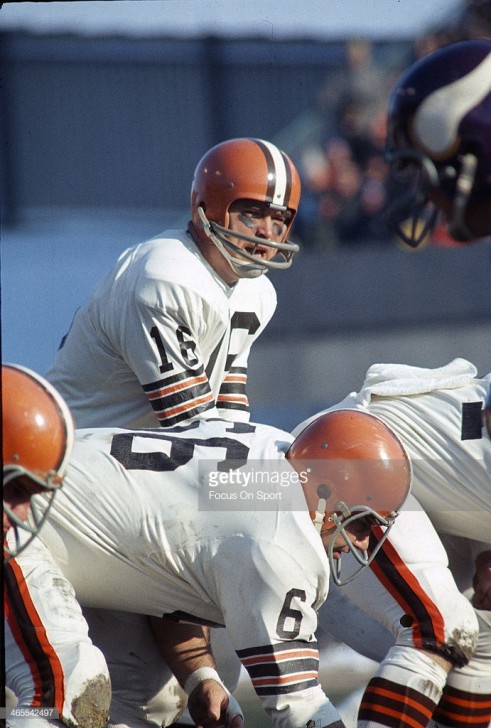
billnelsen

Browns’ QB Bill Nelsen (Getty Images)


Comments Off on NFL – How The Cleveland Browns Saved Pro Football

Posted in Feature Stories, Football


Classic Team Logo of The Day

01 Feb

UMASSMinutemen4

Logo of an independent college football team that plays in the Division I Football Bowl Subdivision, the University of Massachusetts Minutemen. They began play in 1879 and have sent a number of players on to pro football, including John McCormick, Milt Morin, Greg Landry, Victor Cruz, Vlad Ducasse and James Ihedigbo.

 
Comments Off on Classic Team Logo of The Day

Posted in Classic Team Logo of the Day


Classic Sports Card of The Day

01 Feb

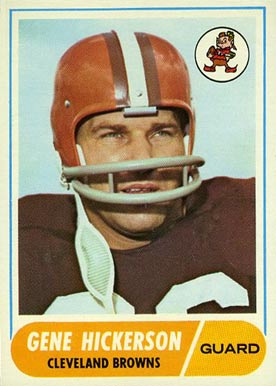
68toppshickerson

1968 Topps football card of former Cleveland Browns’ guard Gene Hickerson, who enjoyed a solid 15 year career in the NFL, all with the Browns. He was a six-time Pro Bowler and lead blocker on the Browns’ line for 3 different 1,000 yard rushers, all of whom are Hall of Famers – Bobby Mitchell, Jim Brown and LeRoy Kelly. Hickerson was voted to the NFL’s All Decade team for the 1960s, played on the Browns’ 1964 championship team and was inducted into the Pro Football Hall of Fame in 2007. He passed away in 2008.

 
Comments Off on Classic Sports Card of The Day

Posted in Classic Sports Card of the Day


NFL – Five Super Bowl MVPs That Never Were

30 Jan

Sometimes the choice of a Most Valuable Player in the Super Bowl is an obvious one, like Nick Foles in last year’s game or Terry Bradshaw in the Pittsburgh Steelers’ 1970s dynasty’s last win in Super Bowl XIV. More often than not, though, the choice is controversial, a lot of the time with the winning team’s quarterback being picked instead of another player who really deserved it more, as in Super Bowl LI, when New England’s Tom Brady won over his teammate who had a dominating performance, running back James White. There are so many unfair choices over the years that it was hard to pin it down to 5, but here are our choices for the Super Bowl MVPs who never were:

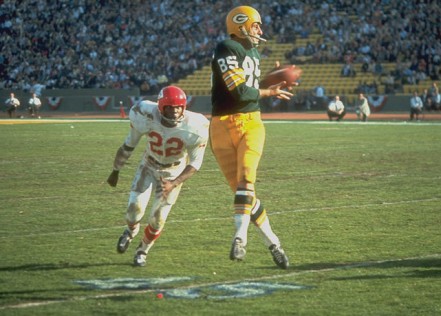
maxmcgee

  1. Max McGee (Super Bowl I) – technically it wasn’t a Super Bowl, it was called the AFL/NFL Championship Game in the beginning, but even in the first one ever played their was a controversial choice. The Packers won over the Kansas City Chiefs handily, 35-10, and the team’s stellar quarterback, Bart Starr, was named MVP. Starr played brilliantly so it wasn’t a bad choice, but McGee may have been even better. He was a little-used past his prime veteran at the time and didn’t expect to play, and was hung over on game day after partying with a couple of stewardesses the night before. McGee was forced into action when Boyd Dowler separated his shoulder early in the game, and wound up catching 7 passes for 138 yards and a pair of touchdowns in the win.


matt-snell

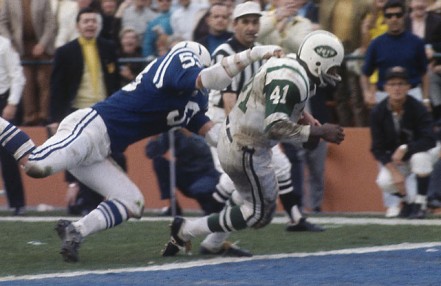
2. Matt Snell (Super Bowl III) – since Joe Namath had guaranteed that his New York Jets would defeat the highly-favored Baltimore Colts and then delivered on his guarantee, there was no way anyone but Broadway Joe was going to win the MVP Award in Super Bowl III. But running back Matt Snell had a strong case to be the game’s top player also. He rushed for 121 yards on 30 carries and his team’s only touchdown as the Jets ran a ball control offense to shock the Colts 16-7.


clarencedavis

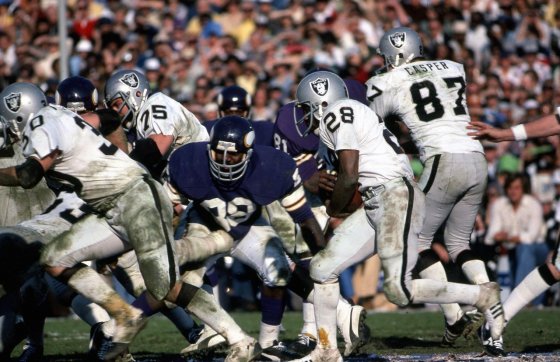
3. Clarence Davis (Super Bowl XI) – this Super Bowl was a shining moment for the Oakland Raider franchise as they won their first championship after being one of pro football’s most winning teams for a decade, yet failing to “win the big one”. They manhandled the Minnesota Vikings 32-14 to give coach John Madden his first title. Running back Davis could easily have been picked as the game’s MVP. He rushed for 137 yards on 16 carries as the Raiders crushed the aging Vikings with a bruising run game. It wasn’t even a case of Davis being overshadowed by a quarterback. Ken Stabler played a fine game also in leading the Oakland attack but he wasn’t chosen as MVP either. The honor went to wide receiver Fred Biletnikoff, who made a series of key receptions during the game among his 4 for 79 yards, not exactly overwhelming statistics.


thurmansb25

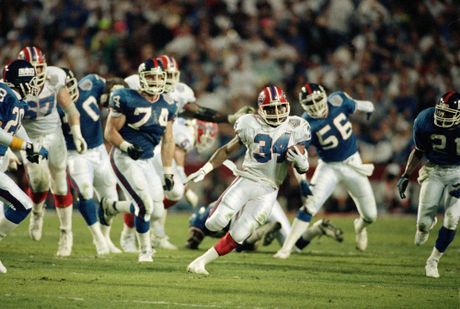
4. Thurman Thomas (Super Bowl XXV) – the precedent was set in Super Bowl V, when the Colts defeated the Cowboys but Chuck Howley of the losing team was chosen as the game’s MVP. Super Bowl XXV, between the New York Giants and Buffalo Bills, was one of the most exciting ever played, and Buffalo’s Thurman Thomas, with 135 yards and a touchdown on 15 carries and another 55 yards on 5 pass receptions, was the dominant player in the game. When Scott Norwood’s last second field goal went wide right, giving the Giants a 20-19 victory, MVP voters decided that the Giants’ Ottis Anderson deserved the award instead. Giants’ coach Bill Parcells had employed a grinding rushing attack to eat up time on the clock and keep the Bills’ high-powered offense off the field, and Anderson was the main guy doing the damage, with 102 yards rushing and a TD. Still, Thomas’ performance was dynamic and one for the ages.


dwightsmith

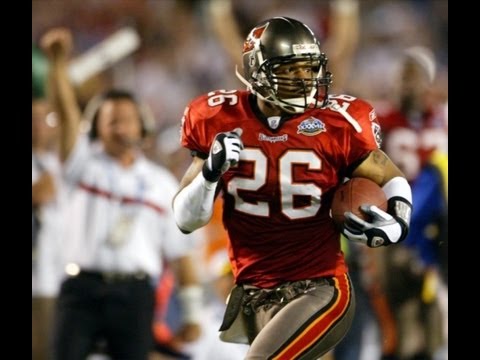
5. Dwight Smith (Super Bowl XXXVII) – there’s no question the MVP of this Super Bowl should have been a defensive player. For one thing, the quarterback duel was between a pair of journeymen, Oakland’s Rich Gannon and Tampa Bay’s Brad Johnson, not exactly a marquee matchup. For another, the Buccaneer defense absolutely dominated Gannon and the Raiders, forcing 6 turnovers, with 5 of them being interceptions, in a 48-21 rout. So Tampa safety Dexter Jackson, who had a pair of picks, was named MVP. Deserving, I guess, but not when you consider that his secondary mate, Smith, also had a pair of interceptions, but he returned both of his for touchdowns. The reason for the snub is that the second of Smith’s pick-sixes came with just a few seconds left in the game, when the MVP voting was likely already completed.


Comments Off on NFL – Five Super Bowl MVPs That Never Were

Posted in Feature Stories, Football


Classic Team Logo of The Day

30 Jan

tulane04now2

Logo of a college football team that currently plays in the American Athletic Conference, the University of Tulane Green Wave. The program began in 1893 and has played in various conferences and as an independent, winning 9 conference titles and 5 bowl games over the years. Tulane alumni who have played pro football include Max McGee, J.P. Losman, Warren Bankston, Bubby Brister, Steve Foley, Matt Forte, Rodney Holman, Ed Khayat, Dub Jones, Don Joyce, Tommy Mason, Eddie Murray, Richie Petitbon and Lionel Washington.

 
Comments Off on Classic Team Logo of The Day

Posted in Classic Team Logo of the Day


Classic Sports Card of The Day

30 Jan

61fleermcgee

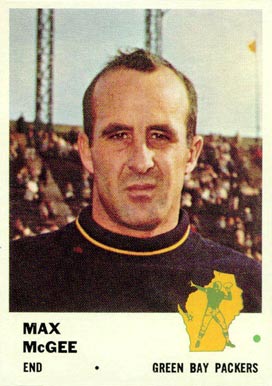
1961 Fleer football card of former Green Bay Packer split end Max McGee, who played 11 seasons, over a 13 year period from 1954 to 1967, missing the ’55 and ’56 seasons while serving as a pilot in the Air Force. He was the team’s punter early in his career, but saw more time as a receiver after Vince Lombardi took over as coach in 1959. He was a two-time Pro Bowler and a member of 5 Packer championship teams. McGee suffered from Alzheimer’s disease late in life, and died from injuries he sustained from a fall from the roof of his home, while using a leaf blower to remove leaves, in 2007 at the age of 75.

 
Comments Off on Classic Sports Card of The Day

Posted in Classic Sports Card of the Day


NFL – Five Forgotten Super Bowl Winning Coaches

29 Jan

It’s officially Super Bowl week and we here at Rayonsports  wonder, on media day, how many more new questions can reporters have for the New England Patriots after 9 appearances in the Belichick/Brady era? We like to look at different angles having to do with the big game, so for starters we’ll revert to a staple of our site, the “list” post. Here is our list of five head coaches who in the 53 years of the game’s existence, despite winning football’s ultimate prize, have largely been forgotten:


mccafferty

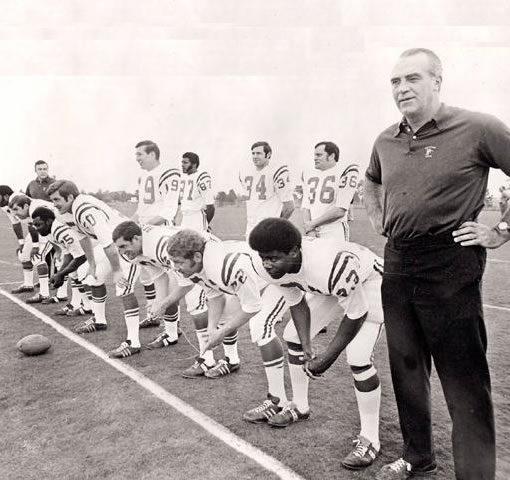
  1. Don McCafferty, Baltimore Colts – the Colts’ loss to the New York Jets in Super Bowl III was so shocking and embarrassing to the old guard NFL that it led to the firing of Don Shula as Colts’ head man. McCafferty, the loyal assistant coach, was promoted into the top job and in his first season rewarded team management with a win over Dallas in Super Bowl V. He guided the Colts to the playoffs again the next year but lost to the Miami Dolphins, coached by Shula, in the conference championship game. His third season started out badly, however, and McCafferty was fired. He had a short stint as coach of the Detroit Lions but passed away of a heart attack in 1974. It was a relatively short head coaching career but one that left him with a shining moment that a lot of successful coaches never achieve-a Super Bowl win.


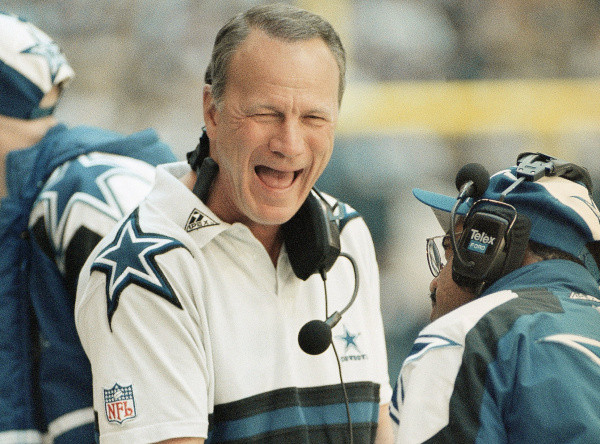
2. Barry Switzer, Dallas Cowboys – when Jerry Jones bought the Dallas Cowboys and fired legendary coach Tom Landry, there was an uproar among Cowboy fans. That quieted down when Jones’ hand-picked replacement, successful college coach Jimmy Johnson, won a pair of Super Bowls in the early 1990s. Jones and Johnson both had huge egos, however, and the pair clashed to the point where Johnson left to coach the Miami Dolphins. Jones replaced him with another former successful college coach in Switzer, who guided the Cowboys for 4 seasons, including a win in Super Bowl XXX, giving Dallas their third championship of the decade and sealing them as the team of the ’90s. The Dallas dynasty of that decade is largely remembered as a product of Johnson’s “genius”, with Switzer’s success largely forgotten.


billick

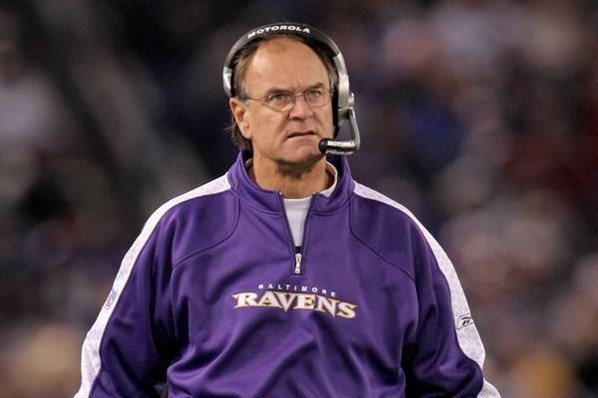
3. Brian Billick, Baltimore Ravens – after a very successful run as offensive coordinator of the Minnesota Vikings, Billick was hired as the Baltimore Ravens’ head coach in 1999. He lasted 9 seasons and won the franchise a championship in Super Bowl XXXV. The Ravens’ success that season was largely due to their dominating defense, however, and that success landed the team’s defensive coordinator, Marvin Lewis, a head coaching job. Despite being a Super Bowl winning coach, when Billick was eventually fired by the Ravens he never was given another opportunity to coach again in the NFL, even though he interviewed many times for multiple organizations over the years. He works in broadcasting for the NFL Network these days, apparently giving up on trying to coach again.


seifert

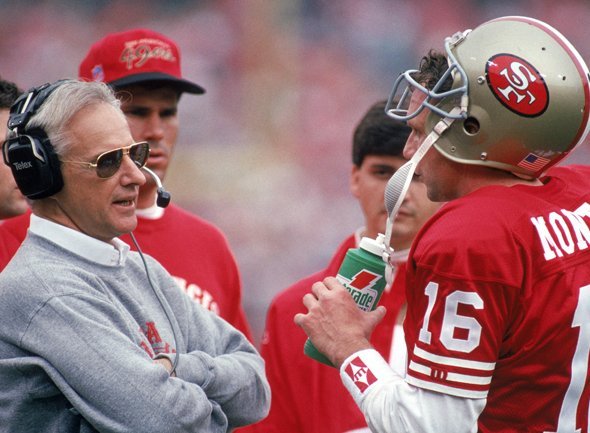
4. George Seifert, San Francisco 49ers – this is a coach that was part of 5 Super Bowl winning teams in San Francisco, including 2 as head coach in 1989 and 1994. It’s hard to imagine a guy who won multiple championships as a forgotten coach, but unfortunately Seifert’s accomplishments are marred by 2 things: 1. He was overshadowed by the genius of his predecessor with the 49ers, Bill Walsh, and even though Seifert won 2 titles, it was largely assumed that he just inherited a team built by Walsh and that anybody could have won with those players. 2. He coached the Carolina Panthers after leaving the Niners and had a mediocre 16-32 record there, including a 1-15 season in 2001.


kubiak

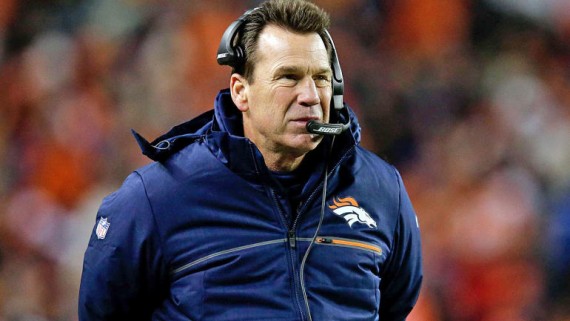
5. Gary Kubiak, Denver Broncos – after a successful career as an assistant coach at various stops, Kubiak served as head coach of the Houston Texans in their formative years for 8 seasons, producing mostly mediocre results. He revived his reputation as offensive coordinator in Baltimore after Houston fired him, and that led to his hiring as head coach of the franchise he had spent a large part of his career with, as both a player and assistant coach, the Denver Broncos. He was blessed with the addition of legendary quarterback Peyton Manning to his roster, and guided the Broncos to a Super Bowl win in the game’s 50th anniversary contest in 2015. Health issues forced him to step down as coach after only 2 seasons, however, and although he has returned to the game on a limited consultant basis, he will likely not be able to handle the stress of a head coaching position again.


Comments Off on NFL – Five Forgotten Super Bowl Winning Coaches

Posted in Feature Stories, Football