RSS
 

NFL 100 – Hank Stram

25 Dec

“Keep matriculating that ball down the field, boys!” That NFL Films video, of Kansas City Chiefs’ coach Hank Stram on the sidelines of Super Bowl IV, is a treasure for football fans who love the game’s history. No history of the NFL can be written without including Stram, the subject of our NFL 100 post today. He began his coaching career as an assistant football coach and head baseball coach at Purdue in the 1940s, and it was during his eight year stint there that he first met the future quarterback his pro football coaching success would be tied to – Len Dawson. He coached at three other schools, Southern Methodist University, Notre Dame and Miami, as an assistant during the 1950s and it was at the one-year stop at S.M.U. that he would meet a fringe Mustang player who would eventually alter his life – future American Football League founder and Kansas City Chiefs’ owner Lamar Hunt.
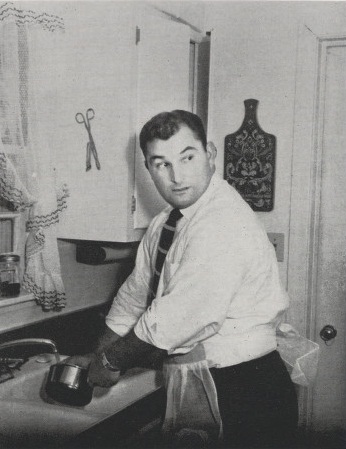
 

Hank_Stram

Hank Stram in a Purdue yearbook photo

When Hunt founded the AFL in 1959, he placed his own franchise in Dallas and named them the Texans. Although he’d never been a head coach, Stram was hired for that job with the Texans. Stram wasn’t his first choice. He had tried to hire Bud Wilkinson and Tom Landry but was turned down by both. Of course Landry, a successful New York Giants’ assistant coach at the time, took the job as coach of the expansion NFL team in Dallas, the Cowboys, instead. Stram turned out to be a good hire, however. The Texans were immediately successful and won the AFL championship in 1962 by knocking off the Houston Oilers in overtime. The Oilers had won the league’s title in it’s first 2 seasons. Despite the success on the field, the Texans could not compete at the box office with the NFL’s Cowboys, and Hunt moved the franchise to Kansas City for the 1963 season and renamed them the Chiefs. Their success continued there, as Stram and Dawson led them to 2 more AFL titles, including a 31-7 win over Buffalo in 1966 that would earn them the right to play Green Bay in the first Super Bowl, known as the AFL/NFL Championship Game at the time. They lost that contest but won the AFL crown again in 1969 and upset the Minnesota Vikings in Super Bowl IV, recording the newer league’s second straight title win, establishing once and for all that the AFL had reached parity with the older NFL. Stram’s Chiefs fell on hard times as the 1970s progressed, and he was fired in 1974. He returned to the NFL to coach the New Orleans Saints in 1976 but had no luck turning around the moribund franchise. His shining moment with the Saints came in 1976 as the team recorded their first win of the Stram coaching era there, beating his old team, the Chiefs, 27-17. He was highly successful as a color analyst on radio and CBS television broadcasts when he was through coaching, working in that capacity into the 1990s.
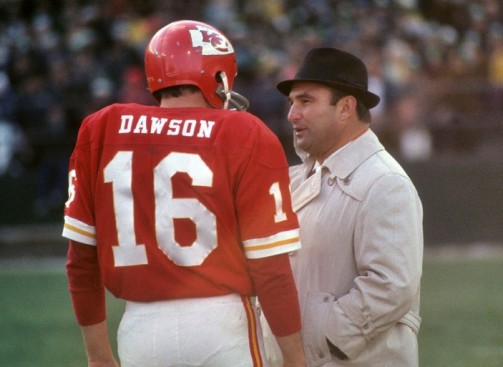
hank_stram_len_dawson

The always well-dressed Stram discusses strategy with his QB, Len Dawson

Stram was deservedly enshrined in the Pro Football Hall of Fame in 2003. Like many who labored in the AFL, he was an innovator who helped change the game. His Chiefs’ were the first professional team to use Gatorade on the sidelines, he introduced the “choir huddle” where his players lined up in organized lines, rather than the traditional circle. His offensive strategies included using both the I formation and the double tight end set, both used widely in the NFL today. Perhaps his greatest contribution to the game was doing intense scouting of small black colleges, where he uncovered gems like Buck Buchanan, Willie Lanier, Wendell Hayes, Otis Taylor and Emmitt Thomas. The pioneers who guided the AFL through the 1960s into reaching parity with the NFL are all a huge part of helping grow the game into the monster it is today, and Hank Stram belongs at the top of that list of pioneers.
 
Comments Off on NFL 100 – Hank Stram

Posted in Feature Stories, Football


Classic Team Logo of The Day

25 Dec

PVA&MPanthers

Logo of a small college football team that plays in the Southwestern Athletic Conference, the Prairie View A&M Panthers. The school began play in 1907, and has claimed 11 conference titles and 5 Black college football national championships. The Panthers also hold the dubious record of having lost the most consecutive games, a total of 80 between 1989 and 1998. Some Panther alumni who have played pro football include Jim Kearney, Otis Taylor, Ken Houston, Sam Adams, Clem Daniels, Alvin Reed, Jim Lee Hunt, Jim Mitchell and Charley Warner.

 
Comments Off on Classic Team Logo of The Day

Posted in Classic Team Logo of the Day


Classic Sports Card of The Day

25 Dec

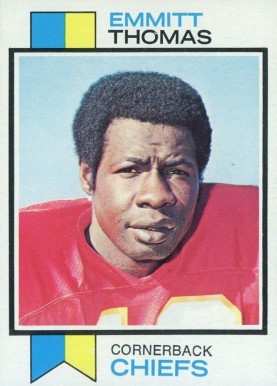
73toppsemmittthomas

1973 Topps football card of former pro football defensive back Emmitt Thomas, who enjoyed a 13 year career in the NFL with the Kansas City Chiefs. He was a five-time Pro Bowler, helped the Chiefs win the Super Bowl following the 1969 season, and holds the franchise record for career interceptions. After retiring as a player, he went into coaching and worked at Central Missouri State for 2 years before beginning a coaching career in the NFL that spanned 38 years with 7 different teams, including a pair of champion Washington Redskin clubs. Thomas was elected to the Pro Football Hall of Fame by the Seniors Committee in 2008.

 
Comments Off on Classic Sports Card of The Day

Posted in Classic Sports Card of the Day


NFL 100 – Expanded Hall of Fame Class

24 Dec

Back in 2010, Rayonsports.com published a series of 9 posts pointing out the many players who we felt were gross omissions from the Pro Football Hall of Fame. Since then some of those players have been voted in, but there still remains some notable men who stand out as having Hall of Fame resumes but still aren’t in. For this NFL 100 post, we’ll revisit the list of players who we feel belong in the Hall, since for their 100th season celebration the league is expanding the number of candidates to be enshrined. The Hall of Fame has listed the semifinalists for the extra class and unfortunately many of the players I felt should have been included were not. The expanded class will have 20 new members, broken down as follows: 5 modern era players, 10 senior inductees, 3 contributors and 2 coaches. Let’s start with the modern era players. Former Steelers’ safety Troy Polamalu is almost a lock to be inducted in his first year of eligibility. John Lynch, former Tampa Bay safety, is a strong candidate, as is Isaac Bruce, a top receiver on the Rams’ “Greatest Show On Turf” teams in the late 1990s/early 2000s. Clay Matthews, ex-Cleveland Browns’ linebacker who had a brilliant career, is a dark horse candidate but I feel he is more than deserving. My fifth and final choice is a real long shot who really should get serious consideration – former Bills’ special teamer Steve Tasker. He is in his final year of regular eligibility and truly redefined the position of “special teams maven”.


tasker

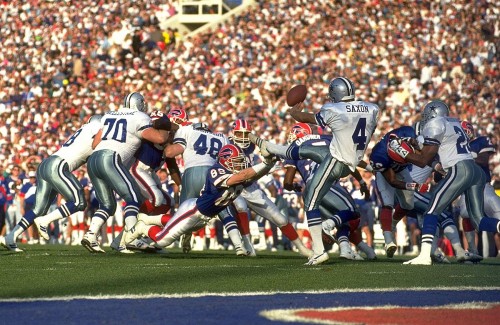
Steve Tasker (89) blocks a punt in the Super Bowl

Looking at the senior candidates, even though expanding the number of players to be enshrined should help some long-overlooked men finally get in, the semifinalists named left off some that should have been considered long ago. Jim Marshall, Roman Gabriel, Maxie Baughan, Jim Plunkett, Lee Roy Jordan and Walter Johnson are all Hall-worthy players who didn’t make the semifinal list of 20. The Hall’s list includes some early era players I’m not familiar with, so my 10 players are going to be mostly guys who were in the NFL post-1950s. I’ve got 4 wide receivers on my list who I feel belong. They were called “split ends” or “flankerbacks” when they played. Three of them played in what I consider to be the Golden Age of pro football, the 1960s through the 1980s. They are former Raider Cliff Branch, ex-Eagle Harold Carmichael and Drew Pearson of the Cowboys. The fourth is an old-timer, Mac Speedie, who was a star on the dominant Cleveland teams of the 1940s and ’50s, catching passes from Otto Graham. The next 3 of my choices played on the defensive side of the ball. Alex Karras, former Detroit defensive tackle, should have been inducted long ago, but was probably hurt by his suspension for gambling in 1963. Pittsburgh safety Donnie Shell is another deserving candidate. As Jerry Kramer of the Packers was held back until last year by the large number of his Green Bay teammates already enshrined, Shell has been the victim of the numbers game when it comes to the amount of 1970s Steelers already in the Hall. He is more than deserving to go in with this senior class however. The last defensive player, and seventh overall of my senior picks, is linebacker Randy Gradishar of the Broncos. A stalwart of Denver’s “Orange Crush” defense of the 1970s, he has been long overlooked. My eighth choice is the player on the semifinalist list who is most deserving, former 49er back Roger Craig. He was a great all-around back who played a major role in San Francisco’s dominant era of the 1980s and ’90s. For my last 2 choices, I had to do some heavy research, since I knew very little about the old-timers on the list. One pick is Cecil Isbell. He quarterbacked Curley Lambeau’s Green Bay  teams of the 1930s and was a prolific passer in a run oriented era, hooking up with Hall of Famer Don Hutson. My other choice is Duke Slater, a five-time All Pro tackle in the 1920s. He played mostly for the Chicago Cardinals and was the first African American lineman to play in the NFL.


drewpearsonhailmary

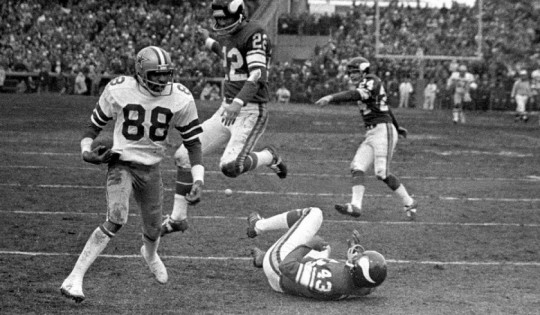
Drew Pearson (88) with a “Hail Mary” reception

Moving on to the coaches, one of my 2 choices stands out like a sore thumb. Tom Flores won 2 Super Bowls as head coach of the Raiders, yet is never mentioned in the same conversation as coaches like Bill Parcells or Jimmy Johnson. Johnson is on the semifinalist list but he isn’t one of my picks. My second choice is Don Coryell, who never won a championship but was an offensive innovator who belongs in the Hall. Coryell was a tough choice, as Buddy Parker also deserves consideration. He coached the last Detroit Lion teams who had any success, winning 2 championships in the 1950s for that franchise. His later years in Pittsburgh were not very successful so Coryell edges him out.

Of the contributors, my main pick is the late Steve Sabol of NFL Films. Along with his father Ed, who is already enshrined, they ushered the league into the media age with their masterful images of game action, using slow motion video, the music of Sam Spence and narration from the “Voice of God”, John Facenda, to bring true drama to the game. Frank “Bucko” Kilroy and George Young are my other choices. Kilroy was a long-time executive with 4 different franchises. He also was a good enough player to be named to the All Decade team for the 1940s. In all, his career in the NFL spanned the decades from 1943 until 2007. Young was a five-time Executive of The Year, and as Director of Player Personnel in Miami and GM of the New York Giants, was a part of 3 Super Bowl-winning organizations. Two men on the list who I didn’t consider are Art Modell and Art McNally. Modell earned the wrath of Cleveland fans when he moved the Browns to Baltimore and there is already protesting among fans that the NFL is trying to “back door” him into the Hall against the wishes of Cleveland, and other, fans. McNally was a long-time official who probably should be considered for enshrinement but my view is that officials should have their own place of “honor” outside of Canton, like maybe in the zoo with the other zebras.

SABOLs

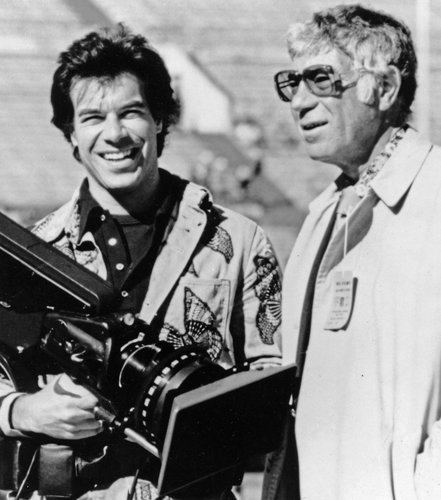
Steve and Ed Sabol of NFL Films


Comments Off on NFL 100 – Expanded Hall of Fame Class

Posted in Feature Stories, Football


Classic Team Logo of The Day

24 Dec

idahost9718

Logo of a college football team that plays in the Big Sky Conference, the Idaho State Bengals. The program, which first began play in 1902, has captured 8 conference titles and a Division I-AA national championship in 1981. Numerous former Bengal players have gone on to play pro football, including Merrill Hoge, Jared Allen, Eddie Bell, Will Grant, Josh Hill, John Roman and Jim Wagstaff.

 
Comments Off on Classic Team Logo of The Day

Posted in Classic Team Logo of the Day


Classic Sports Card of The Day

24 Dec

85toppscliffbranch

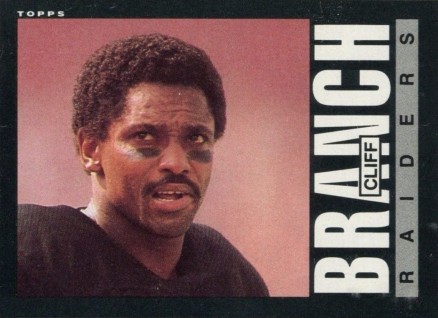
1985 Topps football card of former wide receiver Cliff Branch, who played 15 seasons in the NFL for the Oakland/Los Angeles Raiders. A former college track star, he held the NFL records for career playoff receptions and receiving yards until Jerry Rice broke them in the 1990s. Branch, who passed away in 2019, was a four-time Pro Bowler and a major contributor to 3 Raider Super Bowl titles.

 
Comments Off on Classic Sports Card of The Day

Posted in Classic Sports Card of the Day


NFL – Throwback Thursday: Walking The Walk?

19 Dec

The Detroit Lions take on the Denver Broncos this week in the penultimate game for the NFL teams. For this week’s Throwback Thursday post, we’ll travel back to a strange time in pro football’s history, the 1967 preseason. This is the second time we’ve featured a game from that year that was just an exhibition contest, but was really much more. On October 28, 2015 we highlighted a game between the Chiefs and Bears from that same preseason. To set up the story we need to remind people who didn’t witness that period of what it was all about. It was 1967, the start of the first season following Green Bay’s demolition of Kansas City in the first AFL/NFL Championship game, which would later become the Super Bowl. It was also the first time, according to the terms of the merger of the 2 leagues, that teams from the rival leagues were allowed to play exhibition games against each other. In prior years the preseason would be a time when players came into training camp from the second jobs they held in order to survive and used the time to get back into football shape. This preseason was going to be drastically different. The NFL had long stated that their upstart rivals were “a Mickey Mouse operation” and a vastly inferior product made up of players who couldn’t cut it in the older, established league. The AFL clubs felt they had advanced to the point where they could compete with the older league, Green Bay’s championship dominance not withstanding. Packer coach Vince Lombardi had added fuel to the fire when he stated in an interview following that first Super Bowl that although he thought that Kansas City was a fine club, that there were numerous teams in the NFL that were better.

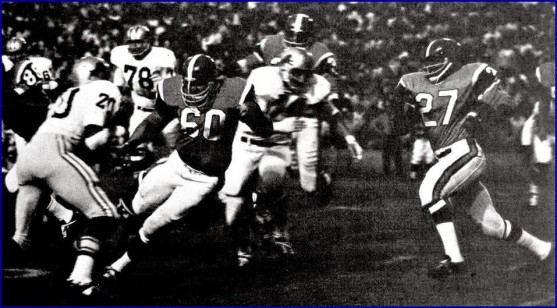
In this particular exhibition game, played on August 5, 1967, there was quite a bit of skepticism about the upstart AFL among Lions’ players. The Broncos, for one thing, were the absolute worst of all the teams in the new league, having never posted a winning record. Also, Denver had opened the ’67 preseason with an embarrassing 19-2 loss to the Miami Dolphins, an expansion team in the previous season. Detroit’s outspoken defensive lineman, Alex Karras, openly laughed at the prospect of facing the downtrodden Broncos, and before this game boasted that if his team lost to the Broncos he would walk home from Denver. The Broncos banded together and played an outstanding game. Their defense stymied the Lions’ attack, while their offense managed a field goal to take a 3-0 lead. A key play happened in the third quarter when Denver punter Bob Scarpitto faked a kick and ran for a first down, extending a drive that ended with aging fullback Cookie Gilchrist plunging into the end zone from a yard out to open up the lead to 10-0. The Lions came back to score in the fourth quarter on a Milt Plum touchdown pass but Denver added a field goal and hung on for a shocking 13-7 victory. Detroit coach Joe Schmidt handled the defeat with class, praising the Broncos’ effort and desire and adding that the new league was on par with the NFL. Although some Lion players expressed disbelief in the result, Karras didn’t have much to say after the loss. He just put his tail between his legs and quietly took the team flight back to Detroit. As for the AFL/NFL preseason competition that year, the older league wound up dominating, winning 13 of 16 contests. Two of the AFL’s 3 wins were recorded by the lowly Broncos.


lionsbroncos67

Lions vs. Broncos action from 1967 preseason

 
Comments Off on NFL – Throwback Thursday: Walking The Walk?

Posted in Feature Stories, Football


Classic Team Logo of The Day

19 Dec

sarniaimperials

Logo of an old Canadian football team that played in the Ontario Rugby Football Union, the Sarnia Imperials. The ORFU preceded the Canadian Football League and competed for the Grey Cup until 1955. The Imperials won the Cup twice, in 1934 and 1936. Some notable players who competed for Sarnia are Norm Perry, Orm Beach, Gino Cappelletti and Cookie Gilchrist.

 
Comments Off on Classic Team Logo of The Day

Posted in Classic Team Logo of the Day


Classic Sports Card of The Day

19 Dec

68toppsscarpitto

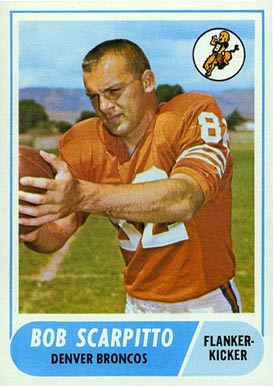
1968 Topps football card of former NFL flanker/punter Bob Scarpitto, who played eight seasons of pro ball in the American Football League for 3 different teams, most notably the Denver Broncos. He was an AFL All Star in 1966 and was named to the AFL’s All Time second team. He still holds team records for punting, including most punts in a game and a season, a reflection of how bad the 1960s Denver teams were.

 
Comments Off on Classic Sports Card of The Day

Posted in Classic Sports Card of the Day


NFL 100 – The College Draft

18 Dec

How does the National Football League maintain it’s position as the most popular sport in the country? One of the main reasons is the parity developed through the use of the yearly draft of college talent. This NFL 100 feature will explore the evolution of this process over the years. The first draft wasn’t held until 1936, and prior to that it was chaos when it came to player procurement. Players would hold out and sign with the highest bidder, and there was even a case where Steelers’ owner Art Rooney, with his team having no chance to play in the postseason, gave the New York Giants permission to use 2 of his players. The Boston Redskins protested the move and the league commissioner at the time, Joe Carr, disallowed it. After that incident, the waiver claim rule that exists today was put into place. Eventually, Philadelphia Eagles’ owner, and future commissioner Bert Bell proposed the idea of the annual draft to make acquiring talent more fair to each team. His idea was unanimously accepted by the owners and the first draft took place in 1936. The first player ever selected, Jay Berwanger, never played in the NFL. At the time college football was considered a superior game to the pros, and many players saw it as a step down to turn pro. The Eagles had drafted Berwanger and traded his rights to the Chicago Bears when they couldn’t sign him. Bears’ owner George Halas was also unsuccessful in signing him, and Berwanger took a job with a rubber company. Only 24 of the 81 players drafted in that first year of selecting chose to play in the NFL.


Joe Stydahar

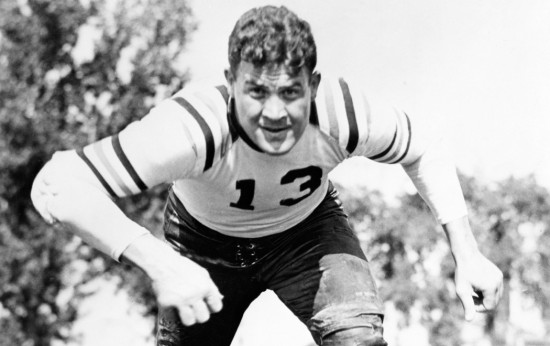
Hall of Famer Joe Stydahar, Bears’ first pick in the ’36 draft

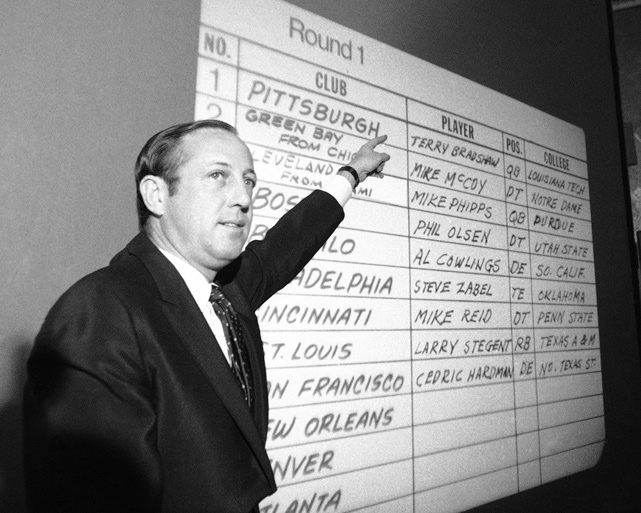
Giants’ owner Wellington Mara could be considered the father of modern day scouting, as he subscribed to magazines and out-of-town newspapers to collect information on players across the country. In a sad anecdote to the selecton process, the best player of 1939 was unequivocally Kenny Washington, but when word spread that he was African-American, no team selected him in the 1940 draft. The first actual scout was Eddie Kotal, who was hired in 1946 by the Los Angeles Rams. Coincidentally, the Rams signed Washington, and his UCLA teammate Woody Strode, in ’46. Scouting became the norm for all teams if they wanted to stay competitive, but the draft itself didn’t garner much attention. In 1960, with the inception of the AFL bringing competition, the NFL put a lot more emphasis on the process, since the teams would have to bid against clubs from the new league for players. When the leagues agreed to a merger in 1966 part of the agreement, and a very important part, was the creation of a “common draft” in which the competing leagues would draft as one unit, ending the bidding wars for talent. Commissioner Pete Rozelle would oversee the selections using a blackboard, and in 1970, when the merger was completed and the teams officially merged into one NFL, he graduated to a white board.

rozelle-whiteboard

Pete Rozelle presides over the 1970 NFL draft

In 1980, the brand new cable network, ESPN, was looking for content to fill their air time, and the network’s president, Chet Simmons, approached Rozelle with the idea of televising the selection process. Although the commissioner thought it would be boring television viewing, he agreed. The draft didn’t do very well on TV until 1988, when it was moved from the middle of the week to the weekend. Suddenly, a new cottage industry of “draftniks” emerged, people like Joel Buchbaum and Mel Kiper, who provided advanced scouting information on the college prospects for the television viewers and through publications. The selection process has grown into a must-see monster of a production today, spread out over three days with the opening round on Thursday night. That opening round is treated as if it were a Hollywood award show, with a red carpet pre-draft show and drama created over every selection. Combined with free agency, the combine and it’s own NFL Network, the draft is just another example of how popular the NFL has become in this modern age, becoming the true national pastime not only during it’s actual season but it’s entire offseason as well.


Comments Off on NFL 100 – The College Draft

Posted in Feature Stories, Football