RSS
 

MLB – Five Players Who Changed The Game

27 Jul

In picking five significant players who changed the game in major league baseball, I broke my usual rule of only including those who I’d actually seen play. The contributions of the players included on the list from before my time were just too great and too significant to leave them off. Here are five players who changed the game in major league baseball:

1. Jackie Robinson – when he was called up to the Brooklyn Dodgers in 1946, breaking the color line in baseball, it was the most significant change in the history of the game. He handled the adversity of having to face racism in ballparks across the country with class and dignity, and paved the way for minorities to play in the major leagues. Some of that racism came not only from the bleachers, but from opposing dugouts and even his own clubhouse.
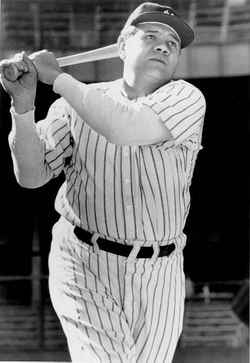
2. Babe Ruth – before “The Babe” came on the scene, baseball was in what is now referred to as the “dead ball” era, where the player who led the league in home runs hit around 10 or so for the whole year. The game was dominated by pitching and speed. Ruth, after starting his career as a pitcher, became the most prolific home run hitter of all time and lifted the popularity of the sport to new heights. He set major league records for single season and career home runs ( 60 and 714) that stood for generations. Ruth is probably the biggest icon in the history of American professional sports.
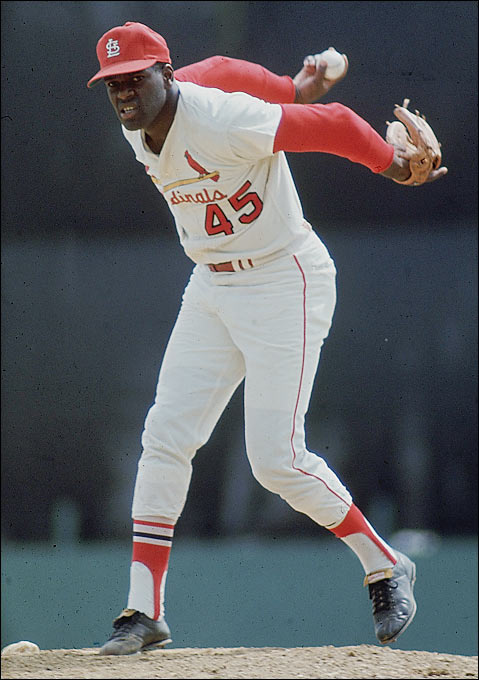
3. Bob Gibson – the big Cardinals’ right-hander dominated the game in the 1960s, and his contribution to changing baseball can be summed up in the 1968 season, known as the “Year of The Pitcher”. Gibson set an all-time standard by recording a 1.12 ERA and his dominance was directly responsible for baseball making significant rule changes for the following season – lowering the pitcher’s mound and tightening up the hitter’s strike zone.

4. Ichiro Suzuki – there were a couple of Oriental players who played in the major leagues prior to Ichiro’s arrival, but none had the impact that he had in paving the way for the influx of Asians into the game as he did. He was the first Japanese-born every day positional player in the majors, and was an instant all star, sending GMs searching for the “next” Ichiro throughout Japan, Korea, etc.

5. Curt Flood – he had a decent major league career, playing 15 seasons, mostly with the St. Louis Cardinals. But he made his biggest impact on the game when, after the 1969 season, he challenged baseball’s “reserve clause” system by refusing to be traded to the Phillies. His challenge was ultimately unsuccessful, but it brought the players together in solidarity to eventually fight and break down the system, resulting in the free agency today’s players enjoy. Flood is mostly remembered for his role in baseball’s labor history, but his playing career, which included 7 Gold Gloves for fielding excellence, 3 all-star selections and 2 World Series rings, is also worth noting.

 

Classic Team Logo of The Day

27 Jul

Logo of a minor league baseball team that plays in the AA Texas League, the San Antonio Missions. They are affiliated with the San Diego Padres, and have been in existence since 1988. The city has actually had a AA team since 1888, and there have been a number of versions that used the “Missions” nickname. In those earlier incarnations, they were affiliated with the Baltimore Orioles, and their roster included Brooks Robinson, and also with the Chicago Cubs, with Billy Williams and Ron Santo playing for them. The current franchise won Texas League titles in 2002 and 2003 while affiliated with the Seattle Mariners.


Classic Sports Card of The Day

27 Jul

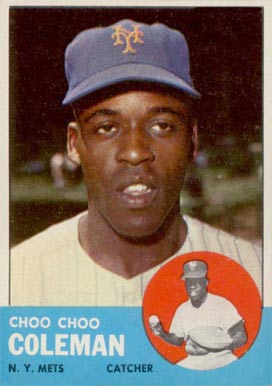
1963 Topps baseball card of a member of the lovable and laughable New York Mets expansion team of the early 1960s, former catcher Clarence “Choo Choo” Coleman. The Mets had little success in their first few years but Coleman supplied a lot of comedy relief. He was known for outrageous comments and malapropisms. One example is his answer to broadcaster Ralph Kiner when asked “what’s your wife’s name and what’s she like?” His answer: “Her name is Mrs. Coleman and she likes ME, bub!” Former Met pitcher Roger Craig once said that Choo Choo, when catching, used to give the sign for what pitch he wanted thrown, then look down to see what it was.


NHL – Five Players Who Changed The Game

25 Jul

The game that started out being played on frozen ponds in Canada has evolved a great deal over the years. Here are five players who changed the game in professional hockey:

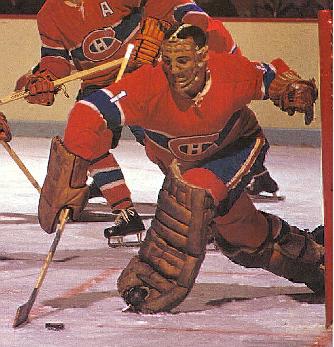
1. Jacques Plante – the veteran Montreal Canadiens’ goaltender changed the game forever when he became the first to don a mask on a regular basis, going against the macho attitude of the old guard at the time. He also was the first goalie to play the puck outside the crease in support of his defensemen – another facet of the game that is now considered standard procedure. Plante won 6 Stanley Cups with the Habs.

2. Borje Salming – the Swedish-born defenseman was one of the first European players to make a major impact in the NHL, opening the floodgates for future generations of players from overseas. Those players brought with them a wide-open style of play that changed the way the game is played in North America. Prior to Salming’s arrival, the few Europeans who gave the NHL a try were considered soft and had a reputation for avoiding the physical play of the North American game, but Salming, in playing 16 seasons with the Toronto Maple Leafs, showed the toughness and stamina that wiped out that stereotype. Salming was inducted into the Hockey Hall of Fame in 1996.


3. Bobby Orr – he was the first of what today is referred to as the “offensive defensemen”. Prior to his arrival in the NHL, defensemen were mainly plodding, slow-skating “stay-at-home” players who defended the front of their net and did little else. Orr revolutionized the position, using his speed, skating and puck-handling ability to join the offensive rush and become a real scoring threat. In fact, he even won the Art Ross Trophy, awarded to the league’s highest scorer for a season, twice in his career, a feat unheard of before Orr came along. His game wasn’t all about offense, however, as he won eight consecutive Norris Trophies as the best defensemen and 3 MVP Awards.

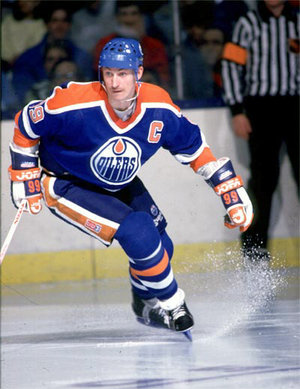
4. Wayne Gretzky – obviously these players aren’t being listed in order of importance as to their impact on the game, since no player in NHL history changed the game as much as “The Great One” did. Gretzky re-wrote the league’s record book and set standards that most likely will never be matched again. He holds 40 regular season records and 15 playoff records. Scoring 100 points in a season (total of goals and assists combined) is a feat only the league’s top superstars ever accomplish. Gretzky is the only player in league history to top 200 points in a season, and he did it 4 times. Number 99 won 9 Hart Trophies as league MVP, and is unquestionably the greatest hockey player of all time.

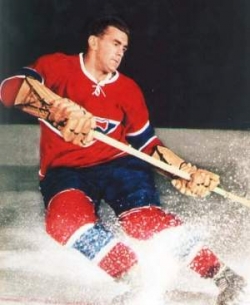
5. Maurice Richard – “The Rocket” was a legendary player with the dominating Montreal teams of the 1940s, 1950s and early ’60s, serving as captain of the team also. He changed the game in that he was the first player to score 50 goals in a season, doing it in 50 games in 1944/45. He helped the Habs win 8 Stanley Cups, and also helped change the game by speaking out against perceived prejudice against French-Canadian players by league officials.


Classic Team Logo of The Day

25 Jul

Logo of a National Hockey League team that, as of the start of the 2011/12 season will cease to exist – the Atlanta Thrashers. The Thrashers entered the NHL as an expansion team in 1999 as the city’s second attempt to sell the sport in the Georgia city. Atlanta had previously lost the Flames to Calgary, Alberta, and the Thrashers will now be relocated to Winnipeg and become the second incarnation of the Jets. Some notable players in the franchise history include Kelly Buchberger, Ilya Kovalchuk, Dany Heatley, Marian Hossa, Marc Savard and Kari Lehtonen.


Classic Sports Card of The Day

25 Jul

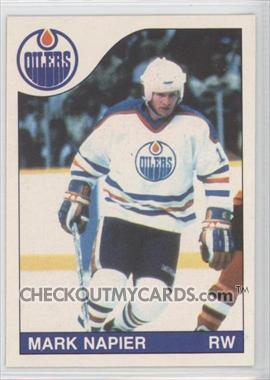
1988 Opeechee hockey card of former NHL player Mark Napier, courtesy of www.CheckOutMyCards.com . Napier played 19 seasons of pro hockey, starting in 1975 with the World Hockey Association before moving to the NHL. He was a part of Stanley Cup winning teams in Montreal and Edmonton. He did a lot of charity work with the Cystic Fibrosis Foundation during his career, and  when he joined the Buffalo Sabres in 1987 he donned the jersey number 65, to draw attention to the foundation, since some children who suffer from the disease but have trouble pronouncing it refer to it as “65 roses”. Napier currently serves as president of the NHL Alumni Association.


NFL – Top Five Head Coaches of All Time

08 Jul

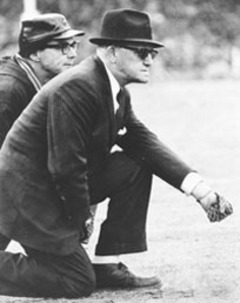
Picking the top 5 NFL head coaches of all time was a difficult task, so difficult that what I wound up doing was splitting the list into two categories. There are some glaring names missing from this particular list, but that’s because even though those names, it could be argued, belong on this list, they were included, instead, on a future list of the 5 most innovative coaches of all time. Here are my choices for the best head coaches, in no particular order:

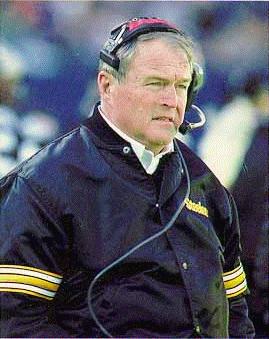
1. Chuck Noll – it’s hard to believe that a coach who guided his team to 4 Super Bowl titles in a decade would be underrated, but Noll never seems to get mentioned a lot when the greatest coaches are discussed. Those 4 Super Bowl wins, by the way, are more than any other coach in league history has. Noll coached the same franchise, the Pittsburgh Steelers, from 1969 until 1991, and the club was a perennial contender almost every year he led them. A lot of people don’t realize that the Steelers were  the losingest team in the NFL when Noll took them over. He completely transformed the culture there, from a team with a rough-and-tumble (some would say dirty) defense but a losing mentality, into the most respected franchise in the NFL.

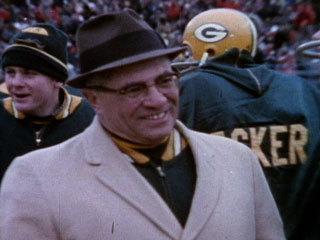
2. Vince Lombardi – like Noll, Lombardi took a team that was a loser and built them into an NFL dynasty that dominated the decade of the 1960s. Although he didn’t match Noll’s 4 Super Bowl wins, Lombardi’s Packers won the first 2 Super Bowls, and 3 more in the early ’60s before the big game was played. Those Green Bay teams won 5 NFL championships in 7 years. Critics have said that anybody could’ve won with all the great players Lombardi had at his disposal, but I would counter that argument by saying that those players, like Bart Starr, Max McGee, Ray Nitschke, Jim Taylor, Willie Davis, etc. reached greatness BECAUSE of Lombardi.

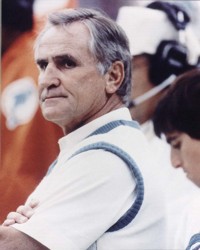
3. Don Shula – he’s the winningest coach in NFL history, and his teams in Baltimore and Miami were annual contenders. Shula’s 1972 Miami Dolphins are still the only team in league history to complete a regular season and playoffs undefeated. He was a master of molding his teams into winners based on whatever type of roster he had – winning with great quarterbacks like John Unitas and Dan Marino, with journeymen QBs like Earl Morrall and David Woodley, and with a punishing running game coupled with a stifling defense like his two-time Dolphin Super Bowl-winning teams. Former Houston Oiler coach Bum Phillips once paid Shula this down-home tribute: “He can take his’n and beat your’n, and take your’n and beat his’n.”

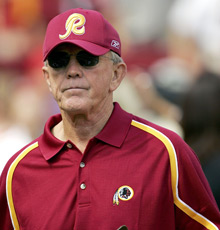
4. Joe Gibbs – he recently came out of retirement to coach his old team – the Washington Redskins – and that didn’t work out well, but in his original 12-year stint as coach, he guided the ‘Skins to the playoffs 8 times and to the Super Bowl 4 times, winning 3 of them. His legacy is his ability to build winning teams without superstar players. His quarterbacks for the 3 Super Bowl wins were Joe Theismann (a “too short” CFL reject), Doug Williams (a flop in Tampa Bay) and the ultimate journeyman QB, Mark Rypien. Gibbs’ career is a lesson for NFL owners in showing patience, as the ‘Skins started out 0-5 in Gibbs’ first year in 1981.

5. George Halas – “Papa Bear” was much more than just a coach – he was a founder, president, owner – the face of the Chicago Bears franchise for decades. He won 6 NFL championships in 4 different decades, a tribute to his longevity in the game. It was Halas’ record for most career wins that Shula broke late in his career. He was a charter member of the Pro Football Hall of Fame in 1963, and actually coached the Bears to the NFL title that year. The NFC Championship Trophy is named for him. Overall, he was a part of the game for 63 years, 40 as a coach.


Classic Team Logo of The Day

08 Jul

An “alternate” logo of the old Houston Oilers football team, used in 1964 and ’65, when the team was a charter member of the American Football League. The team, after winning the first 2 AFL titles, was in a downward spiral during these 2 seasons, finishing 4-10 both years under coaches Sammy Baugh, the legendary QB, and Hugh Taylor. The team had some of the more memorable  players in its’ history on the roster, including George Blanda, Sid Blanks, Charley Tolar, W.K. Hicks and split end Charley Hennigan, who had a then-record setting 101 catch season in ’64.


Classic Sports Card of The Day

08 Jul

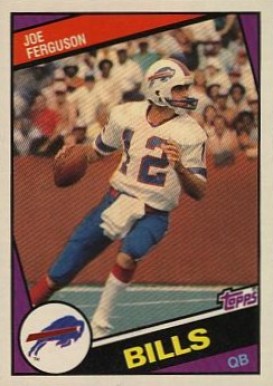
With the recent unveiling of the team’s new uniforms, a good sports card to feature is this 1974 Topps football card of former Buffalo Bills quarterback Joe Ferguson. The team will return to the white helmets this season, and also to their more traditional blue. The Bills originally changed their helmets from white to red because Ferguson was color-blind and had trouble picking out his receivers from among all the players on the field, causing him to throw more interceptions. All the other teams in the AFC East at the time had white helmets also. Ferguson played 12 seasons for the Bills and is generally considered to be one of their most successful signal-callers of all time, after Jim Kelly and Jack Kemp.


NBA – Five Players Who Changed The Game

05 Jul

Professional basketball has evolved more than any other sport over the years – from a game dominated by white, two-handed set shot players to the athletic players of today. The three-point shot altered the game also, as did the outlawing, then re-instituting, the use of zone defense. Here are 5 players who changed the game during their careers:

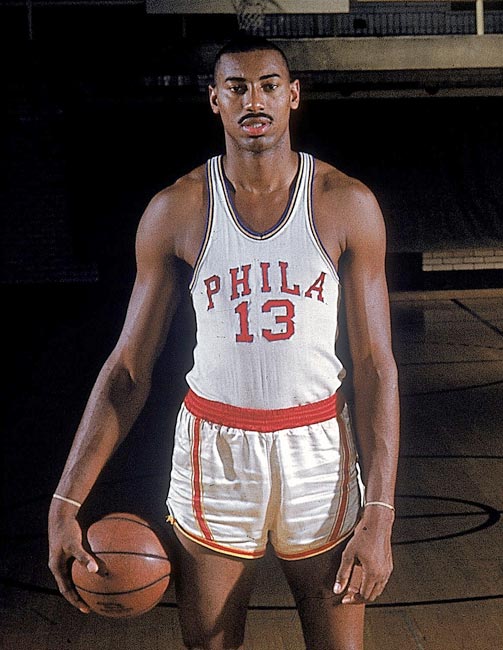
1. Wilt Chamberlain – if this photo looks familiar, it’s because “Wilt The Stilt” was recently included as one of the top 5 centers of all time also. Like George Mikan before him, Chamberlain was a physical freak who dominated opponents. Because of his domination, the NBA widened the free throw lanes and instituted the three second rule to try to cut down on that dominance. It is also said that league referees called more goaltending violations against him because of his shot-blocking ability.

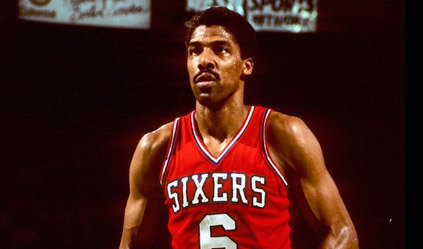
2. Julius Erving – “Doctor J” entered pro ball with the fledgling ABA and helped create excitement for the new league with a dazzling style that promoted athleticism, leaping ability and tremendous body control. His dunks throughout his career were legendary and still are shown on highlight shows. Erving evolved into a consummate team player and helped the 76ers win a championship, and his play was so much more than just the dazzling dunks he is remembered for. He is considered the player who launched the modern-day style of playing above the rim into the NBA.

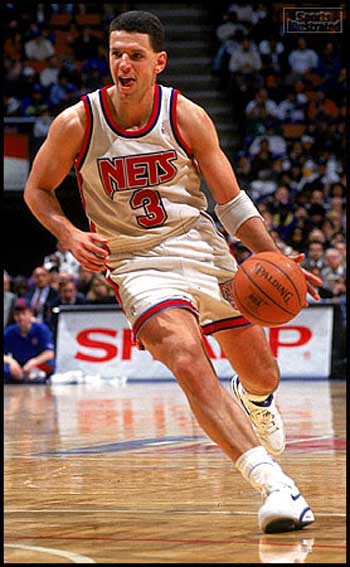
3. Drazen Petrovic – Petrovic, along with the Lakers’ Vlade Divac, ushered in the era of the dominating European players. He helped blaze the trail for other Europeans, ironically starting his NBA career with the Portland Trailblazers. He was an outstanding shooting guard and eventually became a serviceable player with the Nets. Unfortunately, he died in a car accident in 1993, cutting his NBA career to only 5 years. Although his full potential was never realized, there’s no denying his contribution of helping bring European players to the pro game.

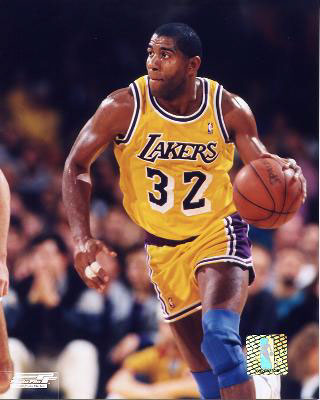
4. Magic Johnson – “Magic” entered the NBA along with Larry Bird in 1979, and their rivalry throughout the 1980s helped revive interest in the game. He teamed with Kareem Abdul Jabbar and a talented Laker team to win 5 NBA titles during the decade, and was a 3-time league MVP. The thing that puts him on this list, however, is his unique style of play. He was a 6’9″ point guard, unheard of in the game back then, and displayed tremendous athleticism for his size. Magic got all his teammates involved in the game and made the players around him better – even star players like Jabbar, James Worthy and Jamaal Wilkes. A defining moment in his career was in the 1980 Finals, when he started at center in place of an injured Jabbar and played a great game. He was Finals MVP that year, his rookie season.

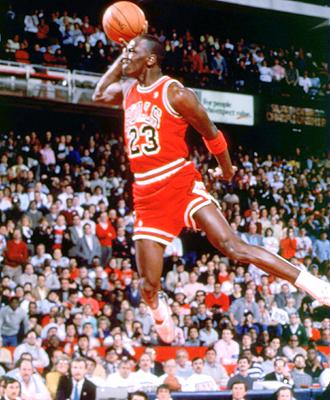
5. Michael Jordan – like both Dr. J and Magic before him, Jordan entered the NBA with high expectations, and wound up exceeding those expectations. Early in his career, amazingly, Jordan was going through the same thing LeBron James is now. His Bulls’ teams couldn’t get past the bad boy Detroit Pistons and critics began to say he couldn’t win the big ones. Jordan didn’t run off to join a team with better players to try to help him win – he stayed in Chicago and lifted those Bulls’ teams to 6 NBA titles, and is arguably the most talented, and most exciting player of all time.