RSS
 

Classic Sports Card of The Day

15 Jun

74toppserving

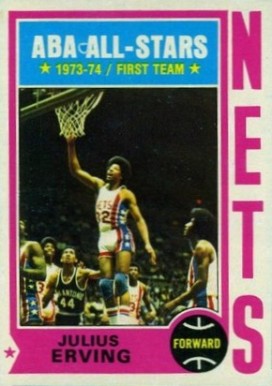
1974 Topps basketball card of one of the all-time greats of pro basketball, Julius Erving. He didn’t make my list of top basketball nicknames, but he had one of the most well-known – “Doctor J”. Erving was a one-of-a-kind athlete in his era, dazzling fans with his leaping ability and off-the-charts dunks. He began his pro career in the old American Basketball Association, which started the tradition of holding a dunking contest at its’ All Star game, to feature the skils of “The Doctor” and other players in the league. He guided his ABA team, the New York Nets, to two titles.  After the ABA merged with the established NBA, Erving wound up with Philadelphia and helped the 76ers win a championship in 1983.


The 10 Best Hockey Nicknames of All Time

10 Jun

I’ve promised myself that I would continue posting one of the things I’ve enjoyed the most since I started this blog, which is the “list” posts. So starting this week I’m going to publish a series of posts listing the ten best nicknames in each of the four major sports, beginning with hockey since the Stanley Cup Finals are now underway. It was harder than I thought to whittle the list down to just ten, but here’s my list, in no particular order:


howe

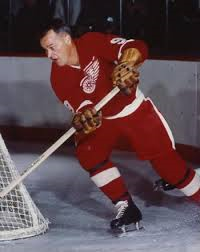
1. Gordie Howe “Mr. Hockey” – let’s face it, when you play a professional sport until age 51, in five different decades, you deserve to have a nickname that starts with Mister and ends with your sport. Howe is generally regarded as one of the NHL’s best ever, and was the idol of other greats who played after him, most notably Bobby Orr and Wayne Gretzky, who is next on this list.


gretzky

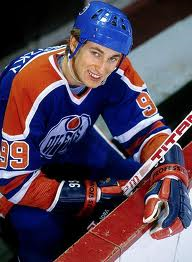
2. Wayne Gretzky “The Great One” – Gretzky is without a doubt the most dominating player in NHL history, and is really the guy most deserving of the “Mr. Hockey” moniker, but he always demurred to his idol, Howe, and was as humble as he was great.


bobbyhull


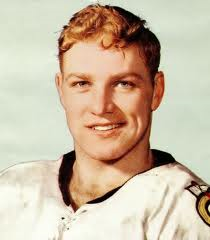
3. Bobby Hull “The Golden Jet” – with his speed and blonde locks, he had the perfect nickname. He was also known for having one of the game’s hardest slapshots. His son Brett also had a highly successful NHL career and became known, naturally, as “The Golden Brett”.


bullies


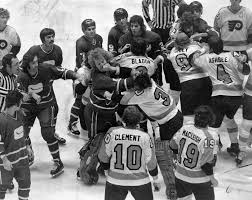
4. The 1970s Philadelphia Flyers – I cheated with this one a bit. The team itself had a nickname – “The Broad Street Bullies”, that will surely appear on a future list post I do of team nicknames. However, they also deserve recognition on this list of individual nicknames, as their roster included gems like Dave “The Hammer” Schultz, Bob “Hound Dog” Kelly, Andre “Moose” Dupont and Don “Big Bird” Saleski.


hasek


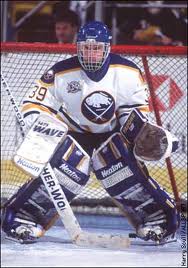
5. Dominik Hasek “The Dominator” – his career blossomed when he arrived in Buffalo and eventually took over the starting goaltending job from Grant Fuhr, and he led a sparsely talented Sabre team deep into the playoffs numerous times with his stellar play. He was rewarded years later when he went to Detroit and helped the Red Wings win a Stanley Cup.


bulinwall


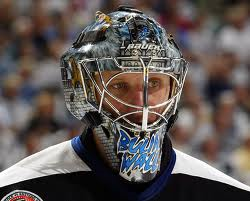
6. Nikolai Khabibulin “The Bulin Wall” – the Russian goalie has had a solid NHL career, and became the first Russian netminder to win a Stanley Cup when he backstopped the Tampa Bay Lightning to a title in 2004.


rocketrichard


7. Maurice “The Rocket” Richard – one of the most famous players on probably the most legendary NHL team, Richard was the first player to score 50 goals in a single season, and the first player in league history to reach 500 career goals. His younger (and shorter) brother Henri also played for Les Habitants, and was known as “The Pocket Rocket”.

cournoyer


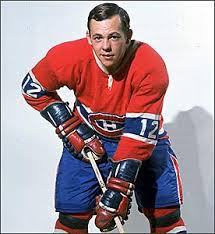
8. Yvan Cournoyer “The Roadrunner” – he played for the Canadiens from 1963 until 1979, an era when the franchise dominated the league with speed and skill, and were known collectively as “The Flying Frenchmen”. They won 10 Stanley Cups during Cournoyer’s career, and his nickname obviously labeled him as one of the team’s fastest skaters.


cujo


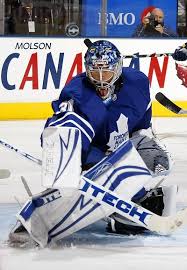
9. Curtis Joseph “Cujo” – his nickname was derived from the first two letters of his first and last names, but he embraced the comparison with the snarling, rabid dog from the Stephen King movie by wearing a mask painted with the movie character canine on it.


korab


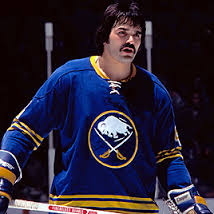
10. Jerry “King Kong” Korab -a big, intimidating defenseman, he earned his nickname by gaining a reputation as one of the league’s toughest fighters during his career. It helped that he looked like a big gorilla.


Classic Team Logo of The Day

10 Jun

nordiques7279

Logo of a professional hockey team that began in the old World Hockey Association, the Quebec Nordiques. The Nordiques played in the WHA until the league merged with the NHL, when they joined the established league, which set up a natural rivalry with the storied Montreal Canadiens. This logo was used during the team’s WHA years, from 1972 until 1979. The franchise had been awarded to San Francisco and was to be named the San Francisco Sharks, but the ownership group collapsed prior to playing a game and the team was relocated to Quebec City.


Classic Sports Card of The Day

10 Jun

74opcheebromley

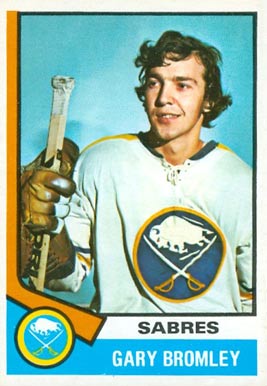
1974 O-Pee-chee hockey card of former NHL goaltender Gary Bromley, who didn’t make my list of top hockey nicknames but deserves consideration. His nickname was “Bones” and late in his career he wore a mask with a skull face on it that made him a cult figure. Bromley was mostly a backup, but hung around for 12 seasons of pro hockey in the NHL and World Hockey Association.


Buffalo Bills’ 2014 Draft Picks

13 May

It was a busy three days for Buffalo Bills’ general manager Doug Whaley as the NFL conducted its’ annual draft of college players this past weekend. The team’s new GM pulled off a number of trades, the biggest one being the deal that allowed the Bills to move up in the first round to grab one of the players considered to be the “Elite Six” among NFL scouts at the top of the draft – wide receiver Sammy Watkins. There were also a couple of deals in later rounds where the Bills moved down, and added an extra seventh round pick and extra picks next year. Whaley also made trades involving players, picking up a promising young running back from the Eagles – Bryce Brown, and trading the club’s top receiver, Stevie Johnson, to the 49ers almost immediately after drafting Watkins. I’m not sure I understand this deal. Johnson was supposedly dealt to remove the distraction of his negative attitude from the locker room. Although you could make an argument that Johnson was a diva, and had a drop for every great play during his stay here, his attitude surely wasn’t a big deal. His biggest transgression was lifting up his jersey to reveal “Why so serious?” and “Happy New Year” messages on his undershirt after scoring touchdowns. So you ship him out the door, but add Mike Williams to take his place, a guy who trashed his apartment complex in a gated community and broke down the door of his girlfriend’s apartment in a domestic dispute? It doesn’t make sense to me, and it’s disheartening that instead of stockpiling good, productive players to build depth on their roster, Buffalo always seems to feel the need to dump good players when they think they’ve found their replacements. Their track record for those “finds” isn’t very impressive. The acquisition of Brown, and free agent signee Ricky Dixon, worries me, since it seems to imply they may have plans to move Fred Jackson and/or C.J. Spiller.
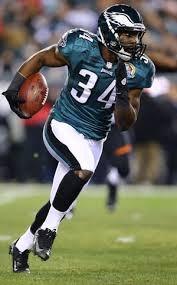
brycebrown

RB Bryce Brown

Anyway, the Bills’ draft filled some of their pressing needs, especially along the offensive line and linebacking corps. Here are the players they picked up:
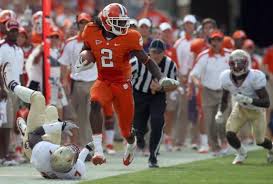
  sammywatkins

WR Sammy Watkins

1. Sammy Watkins (WR – Clemson) – Whaley mortgaged part of the team’s future to move up and draft Watkins, but he is easily the best offensive player available this year, and the team is in desperate need of dynamic playmakers. All signs point to him being a difference-maker in his first season, and a major weapon for QB EJ Manuel for years to come. Whaley showed guts in making this move – the Bills needed to do something to break the pattern of mediocrity they’ve been stuck in for over a decade.
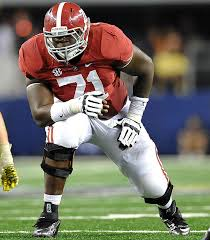
cyruskouandjio

OT Cyrus Kuoandjio

2. Cyrus Kuoandjio (OT – Alabama) – the Bills started a much-needed revamping of their offensive line with this pick. Kuandjio, born in the African nation of Cameroon, should immediately take over the starting right tackle spot currently held by Erik Pears. A standout tackle at ‘Bama, he fell this far in the draft because of concerns over arthritis in his knee. He’s a first round talent if he stays healthy.
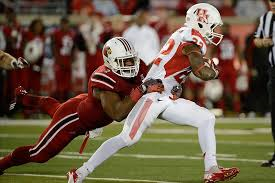
prestonbrown

LB Preston Brown

3. Preston Brown (LB – Louisville) – he’s a good run stuffer, which the Bills need badly, and projects as an inside linebacker. He’ll be on the depth chart as a backup to newly-signed free agent Brandon Spikes, who only signed a one year pact, so the opportunity will be there for Brown to crack the starting lineup eventually if he’s motivated.
rosscockrell

CB Ross Cockrell

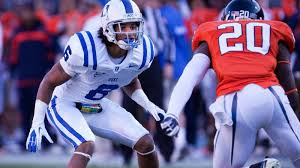
4. Ross Cockrell (CB – Duke) – his biggest positive traits are intelligence and consistent play. Since he’s a cornerback, in my mind the only thing that matters is can he cover anybody, and make plays on the ball when it arrives, or his he just another mediocrity who runs around looking lost in the secondary? Time will tell, but if the kid can play there’s always room on NFL rosters for coverage corners.
cyrilrichardson

OG Cyril Richardson

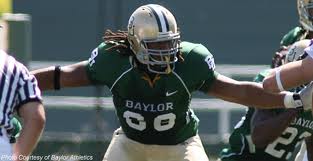
5. Cyril Richardson (OG – Baylor) – Richardson is a New Orleans native who moved to Texas after Hurricane Katrina, and wound up at Baylor. At one time he was considered one of the top offensive line prospects in the nation, but gained a lot of weight which slowed him down. He did slim down and supposedly looked good at his pro day. If he shows up to training camp in shape and serious about playing pro ball, and somehow regains his top form from his early college days, Richardson can be a road grader at guard who helps the Bills’ run game. If he can show any ability at all as a rookie, he should be a candidate to start immediately at the guard spot currently held by Doug Legursky.
randelljohnson

LB Randell Johnson

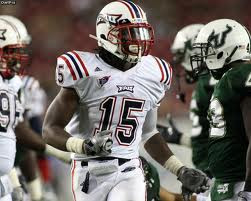
7a. Randell Johnson (LB – Florida Atlantic) – he projects as an outside backer with good size and speed, and is highly athletic. He’ll likely be a developmental project who either contributes on special teams or winds up on the practice squad.
seantrellhenderson

OT Seantrel Henderson

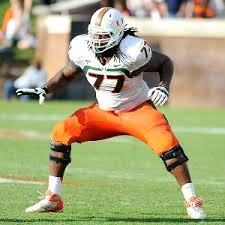
7b. Seantrel Henderson (OT – Miami of FL) – this pick is kind of a head scratcher. He is massive, with long arms and all the physical tools to be an outstanding tackle in the NFL. At one time, he was the top offensive lineman prospect in all of college football. However, his career was marred by benchings and suspensions, and on his “pro day”, the post-combine day where the prospects at each school are supposed to impress the scouts, Henderson was out of shape and stopped his workout before it was over, announcing that “I’m not doing this anymore.” Not to beat a dead horse, but Doug Marrone figures he can resurrect this guy’s career, but Stevie Johnson’s “attitude” was too much for him to handle?

As of this post, the Bills hadn’t announced any college free agent signings.
 
No Comments

Posted in Football


Classic Team Logo of The Day

13 May

95expdraft

This isn’t a “team” logo, but with the NFL draft just concluded, I thought it would be interesting to feature a logo that I was surprised even existed – a logo for the 1995 expansion draft that stocked the two teams entering the league that year, the Carolina Panthers and Jacksonville Jaguars. Unlike in prior expansions, the league was generous with the new clubs in dispersing players from the existing teams, and also gave the two new teams the first two picks in the college draft. The generosity was mainly due to the huge “entry fees” the new cities paid to join the NFL. Both the Panthers and Jaguars parlayed the generosity into early success, as both qualified for their conference’s championship game by their third season.


Classic Sports Card of The Day

13 May

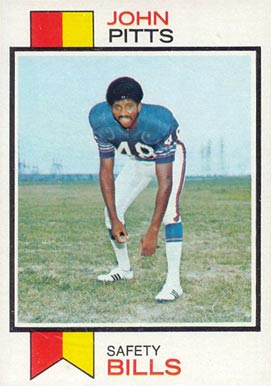
67toppsjohnpitts

1973 Topps football card of the player who was the Buffalo Bills’ first pick in the NFL’s inaugural “common” draft, defensive back John Pitts. The year was 1967, and it marked the first year that the National and American Football Leagues, which had just agreed to a merger, drafted eligible college players together from one pool. It ended the bidding war the two leagues had battled through for players in previous years. Although he is pretty much a forgotten player in Bills’ annals, Pitts played 7 of his 9 years in pro ball for the Bills, then spent a year each in Denver and Cleveland before retiring.


R.I.P. Dr. Jack Ramsay

29 Apr

Buffalo Braves vs. Boston Celtics

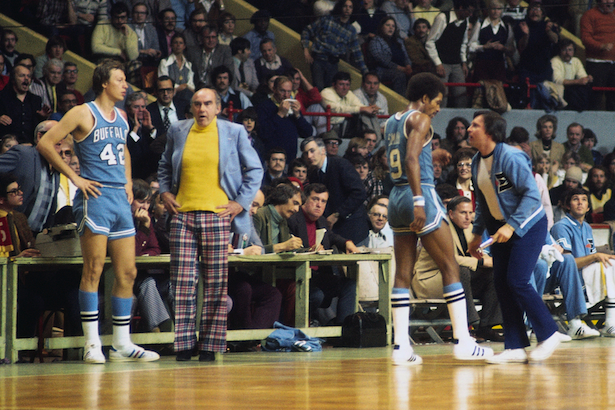
Jack Ramsay coaching the Buffalo Braves in the 1970s

I was saddened to hear of the recent death of former NBA coach Jack Ramsay, one of the league’s classiest people who had a Hall of Fame coaching career, and was a tremendous ambassador for the game as a game analyst for ESPN after his coaching days were over. After coaching in college at St. Joseph’s, Ramsay was hired as general manager of the Philadelphia 76ers in 1967, and the team won the NBA title in his first year in the front office. Ramsay moved down to the bench to coach the team in 1968, and led them to the playoffs in 3 of the 4 years he served in that capacity. He made some unpopular moves as GM, however, trading away stars Wilt Chamberlain and Chet Walker. When the team had a major collapse in 1971/72 and missed the playoffs for the first time in franchise history, Ramsay was let go. He landed on his feet, however, taking over as coach of the Buffalo Braves, who were entering their third year of existence. It’s the four years he spent as Braves’ coach that are my most fond memories of Ramsay, prowling the sideline decked out in his loud, typical ’70s outfits. He developed young stars like Bob McAdoo, Randy Smith, Kenny Charles and Ernie DiGregorio, and blended them together with savvy veterans like Jim McMillian, Garfield Heard and Jack Marin and turned out an exciting, fast-paced club that qualified as playoff contenders by that third year. The Braves were one of the NBA’s most dynamic teams for a short period of time, but when owner Paul Snyder decided to sell the team to former ABA owner John Y. Brown, the bottom quickly fell out and the  franchise was eventually relocated to San Diego and renamed the Clippers. Although the Braves’ final days were messy – they traded away stars and fan favorites like McAdoo and Adrian Dantley, then threatened to move if fans didn’t support the shell of a team that was left – one positive thing did come out of the wreckage. Ramsay moved on to Portland, where he put together a championship team built around superstar Bill Walton, that played unselfish basketball and played the game the way it’s supposed to be played. In fact, Ramsay’s teams in both Buffalo and Portland played an exciting, fast break brand of basketball that emphasized defense, passing and hitting the open man, a style that you rarely see in today’s three point shot, clear the floor for the superstar, dunkfest brand of basketball.

Ramsay, even well into his 80s, had a reputation for being physically fit and enthusiastic about life. He was always very insightful and fun to listen to as an analyst, but in May of 2013 was forced to leave that job in order to begin treatment for cancer, which eventually took his life on Sunday.


Classic Team Logo of The Day

29 Apr

blazers7090

Logo of the National Basketball Association’s Portland Trailblazers, a franchise that came into existence when the league expanded in 1970. This logo was used from 1970 until 1990. The club won the NBA championship in 1977, under the direction of Hall of Fame coach Jack Ramsay, and led by star players like Bill Walton, Maurice Lucas and Lionel Hollins. Four Blazer players have been named Rookie of The Year over the years, and six former players are in the Hall of Fame, including Walton, Clyde Drexler, Scottie Pippen and Lenny Wilkens, who also coached the team at one point.


Classic Sports Card of The Day

29 Apr

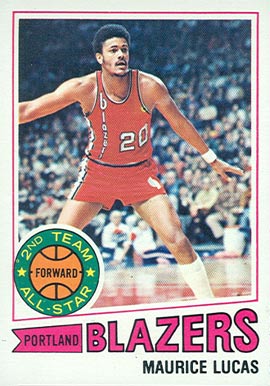
77toppslucas

1977 Topps basketball card of a former player who excelled in both the American and National Basketball Associations, Maurice Lucas. He was a preeminent power forward in his time, starting in the ABA with the Spirits of St. Louis franchise, then with the NBA’s Portland Trailblazers, where he was part of that franchise’s 1977 championship team. He played a total of 14 seasons of professional basketball, 12 of them in the NBA. Lucas was a five-time NBA All Star, and his physical play as a power forward earned him the nickname “The Enforcer”. He served as a Portland assistant coach after retiring, but health concerns forced him to resign from that position in 2010, the same year he passed away from cancer.