RSS
 

Archive for the ‘Feature Stories’ Category

Football Pep Talks

23 Jul

Famous football pep talks are a favorite subject of mine, and even though the famous Knute Rockne “Fight, fight, fight” speech is very inspiring, the ones I like best are the ones that are subtle. I guess if I were a player on a team, those are the kinds of speeches I would respond best to. Here are a few legendary but subtle football pep talks:

At halftime of a game in which his Notre Dame squad was playing poorly, Rockne never came into the locker room. His players sat there wondering what was going on, since the fabled coach was known for his halftime inspirational talks. Then, as the halftime was winding down, Rockne opened the locker room door, stuck his head in and said,  “OK. Half a minute left. Let’s go, girls!”

John Madden’s Oakland Raiders were about to take the field against their fierce division rivals, the Kansas City Chiefs. The Chiefs had a horse named Warpaint that would ride around the field when the Chiefs scored, ridden by a guy dressed in Indian garb, pretty much the Chiefs’ mascot. Madden, in his typical hyper style, red-faced and with arms flailing, yelled out “Hey! Hey! I don’t wanna see that damn horse on the field once today!!” Now I would run through walls for a guy like that.

Paul Brown’s Cleveland Browns had just been brought into the NFL after being a dominant team in the old All-America Football Conference, and for their first game in the NFL the Browns were scheduled to face the reigning league champion Philadelphia Eagles, led by their superstar back Steve Van Buren. The pundits of the day spent the week before the game writing how the Eagles would roll over the upstart kids from “that minor league” and how Van Buren would show the new kids from Cleveland how the game was played. The Browns players were a little worried that Brown, usually a master motivator, seemed to be mostly silent the whole week prior to the game as everyone in the press, and some in the Eagles organization, laughed at the prospect of the Browns competing against the NFL champs and having any chance of slowing down their backfield sensation, Van Buren. Then, as the team was getting ready to take the field, Brown turned to his players and uttered these words: “Just think, men, in a minute you’ll get to touch the great Steve Van Buren.” Final score: Browns 35, Eagles 10.

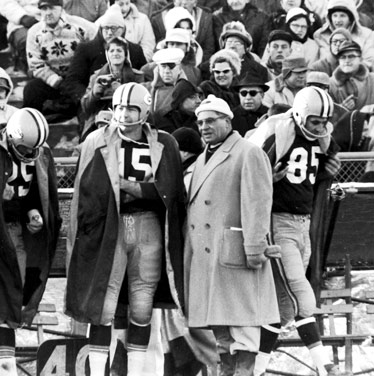
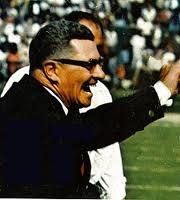
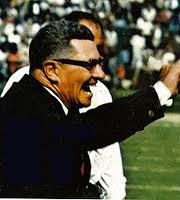
Vince Lombardi was known for his line “Winning isn’t everything, it’s the only thing.” He has actually been villified for that comment by some in society who feel that this philosophy goes too far, that it means to win at all costs and the hell with everything else. In today’s “everybody is special” society where people advocate not keeping score in sporting events and “every kid needs to receive a trophy”, Lombardi is considered somewhat of a villain. But those people don’t seem to understand that Lombardi was a great teacher of  not only the game but of life to his players. Many of his former players still say that decisions they made long after their playing careers were over were shaped by what Lombardi had taught them. Below is a short audio clip of a speech by Lombardi that is an example of his real philosophy, not just the one-line quote attributed to him. I think it’s pretty inspirational.
Unknown – Win Win Win


Buffalo Bills Memorabilia

21 Jul

Last season the National Football League celebrated the 50th anniversary of the league that was once a fierce rival, the American Football League. The eight original AFL teams were allowed to wear “throwback” uniforms in selected games,honoring the early years of those franchises. Our local team, the Buffalo Bills, had one of the sweetest retro uniforms of any of the old AFL teams – in fact some fans have lobbied to have the “throwbacks” become the team’s regular uniforms. The team has produced a plethora of memorabilia over the years that have become popular with collectors, starting with early game day programs that feature the “Buffalo Bill” cartoon character. One of the team’s early logos featured a player, wearing jersey number 31, running with the ball alongside a herd of buffalo. That jersey number was not worn by any player for many years because of the logo. Of course, any Bills’ fan today worth his or her salt knows that young star safety Jairus Byrd now dons the number. Those annoying vuvuzela horns that dominated the recent World Cup soccer tournament were a huge story, but how many people remember that at one time the Bills sold similar red plastic horns to the fans at old War Memorial Stadium? Or that the horns so annoyed then coach Lou Saban that he had them banned from the stadium after only one game? How many of those horns are still around today? In the Chuck Knox era in the early 1980s, somebody in the Bills’ marketing department came up with the idea of the “Whammy Weenie”. It was some disturbing promotion for a hot dog company, if I remember right, and was green and kind of perverted looking. Fans were encouraged to shake them when the Bills did something good on the field (they had noisemaker-type beads inside). Here’s a link to read more about this infamous promotion: http://www.forgottenbuffalo.com/forgottenbflofeatures/whammyweenie.html

This was just a plain bad idea, and it’s doubtful if many of those “Whammy Weenies” survived, which makes it a great collector’s item. A great memorabilia item from the team’s glory days of the 1990s would be the “Zubaz” pants, a form of sweat pants with a strange, sort of “camouflage” design, in the team’s colors. A few pairs of these can still be spotted around even today, but they are usually as tattered looking as the old number 34 Thurman Thomas jersey that you have hanging in the closet. Yes, you wore it to the comeback game and it’s a good luck charm, so of course, you can’t possibly throw it out, right?


Goalie Masks – Part II

16 Jul

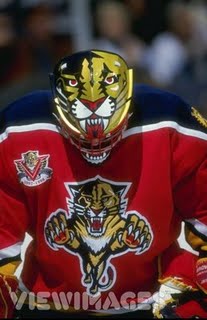
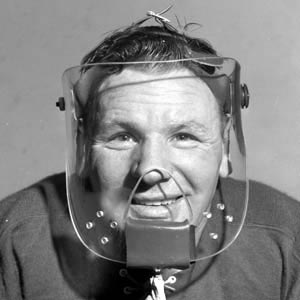
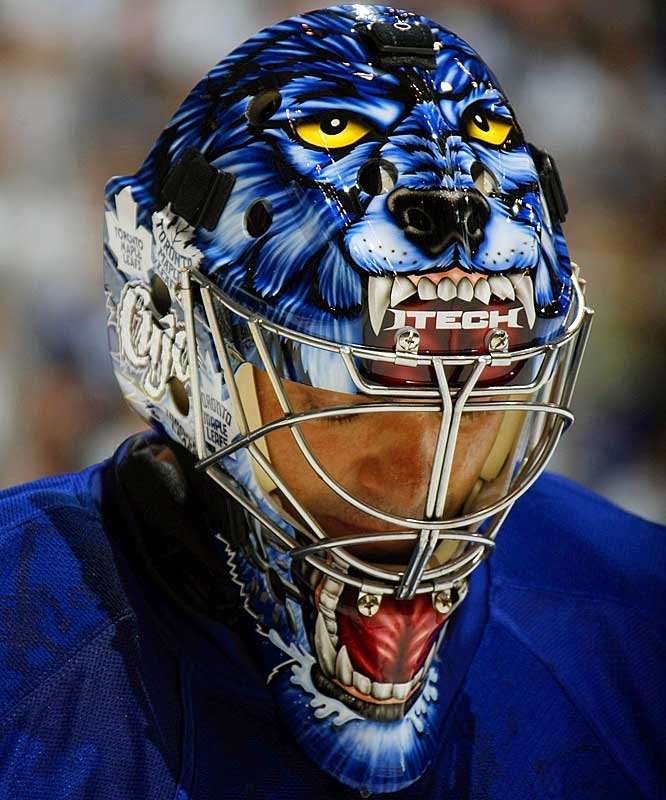
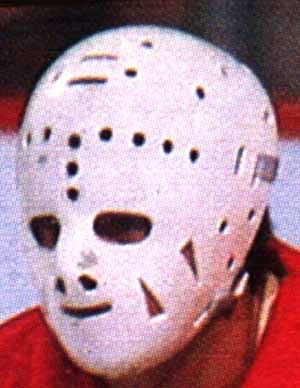
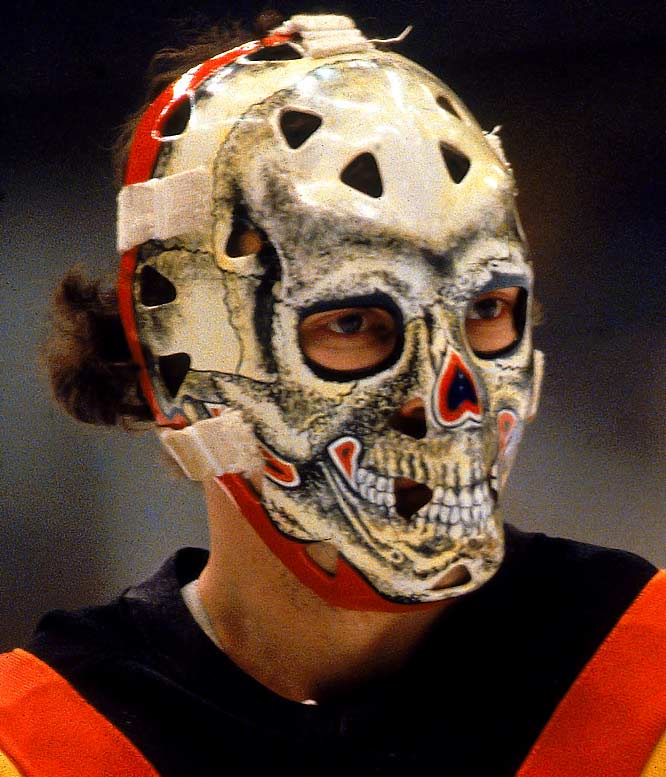
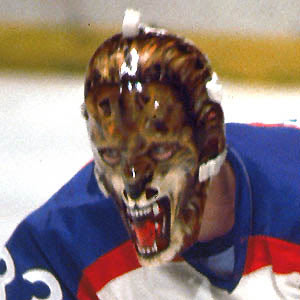
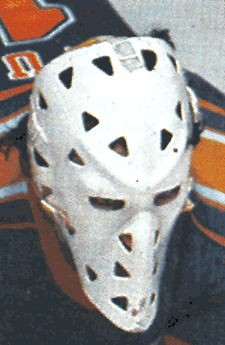
There are so many classic goalie masks, past and present, that it was worthwhile to revisit this topic. Three classic masks above are John Vanbiesbrouck’s Florida Panther helmet (above left), Johnny Bower’s “Bay Window” mask (above right), and Curtis Joseph’s “Cujo” mask. Here are some other great masks and/or helmets:

Apparently they play hockey in outer space also.

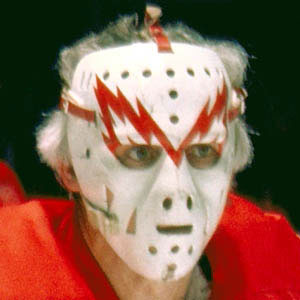
A couple of pretty scary masks – Gary Bromley (left) and Gilles Gratton.

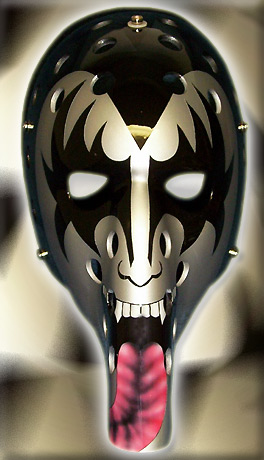
The “Long Kiss” mask on the left. That’s Hall of Famer Glenn Hall in the mask on the right, not Hannibal Lecter.

I’m not sure who this is behind this mask. Maybe Lon Chaney, Jr.?


The Man Who Changed The Game

14 Jul

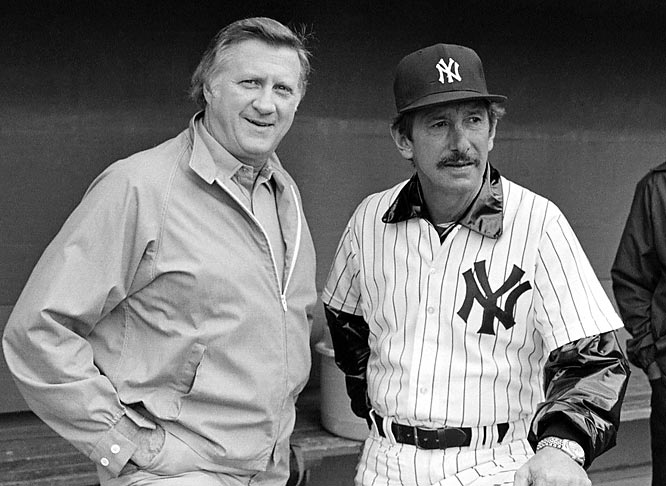
When Oakland A’s owner Charles O. Finley failed to make a life insurance payment on a policy in pitcher Jim “Catfish” Hunter’s contract in 1974, making Hunter a free agent, he had no idea what he was unleashing on major league baseball. The year before, in 1973, the New York Yankees had been purchased by a group led by George Steinbrenner, and little did anyone know at that time what an effect the shipping tycoon from Cleveland would have on sports in America. Steinbrenner, who initially made the statement, “I’m going to be a hands off owner”, didn’t exactly live up to that. He proceeded to aggressively sign any free agent player that he felt could help his team, and relentlessly pursued World Series titles with his checkbook like no other owner would even imagine. The Yanks pretty much tore the heart out of Finley’s 3-time champion Oakland A’s team by signing away Hunter and slugger Reggie Jackson, and the additions of Goose Gossage and Don Gullett, along with some shrewd trades, built the Yanks into 2 time champions in that era. Steinbrenner was a perfectionist. This story was told on ESPN after Steinbrenner’s passing yesterday, by Rob Parker. One night George had invited some friends to his owner’s box for a game, and the friends showed up late because they had been delayed in the stadium parking lot. The next day as Parker, a sportswriter, pulled into the press lot, he saw Steinbrenner in the lot parking cars. He asked George, “What are you doing out here?” Steinbrenner’s reply – “I’m going to show these guys how to run a parking lot!” His stubborn ways made him as hated at times as he is loved now that he has passed away. His hirings and firings of manager Billy Martin were almost like an Abbott and Costello comedy routine. He certainly wasn’t perfect. I mean, how can ANYBODY have a falling out with a jovial guy like Yogi Berra? At the end of the day, however, you can’t deny Steinbrenner’s insatiable desire to not only win but win championships. Any fan that says they wouldn’t want him as the owner of the team they root for would be lying. He never cheated the fans. Stories of his loyalty and quiet charitable contributions have come out over the last 2 days also. He was rushed to the hospital when he suffered his heart attack that had a sign outside advertising the “Steinbrenner Children’s Emergency Unit”. When Steinbrenner was young and trying to break into sports, Lou Saban hired him as an assistant football coach when he became head coach at Northwestern, and took Steinbrenner with him when he moved on to Purdue. Saban’s nomadic coaching career is well known, and when he seemingly ran out of options in the football world after changing jobs almost every year (or at least it seemed that way), Steinbrenner hired him as a vice president with the Yankees in 1981. I’m about the furthest thing from being a New York Yankee fan as there is, but there is no denying the impact Steinbrenner’s term as Yankee owner has had on baseball and the sports world in general. Certainly every major league player who is collecting paychecks on a massive contract should thank him.


Goalie Masks In Hockey

12 Jul

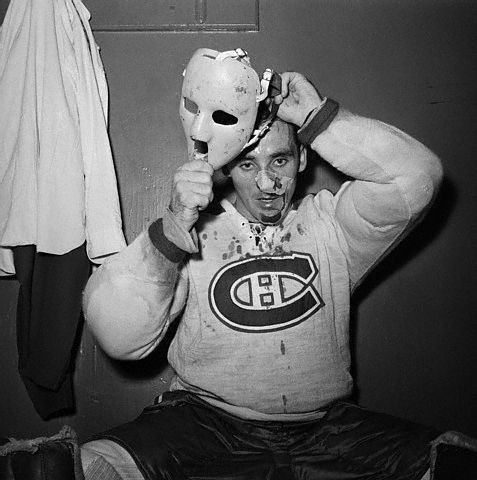
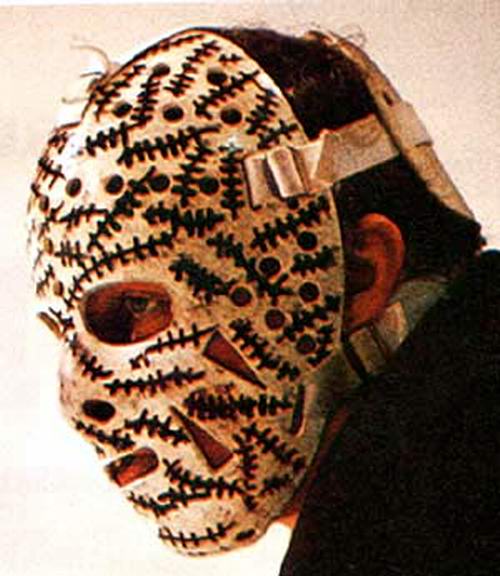
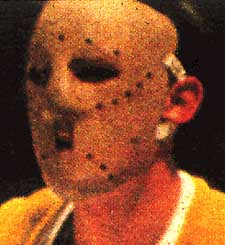
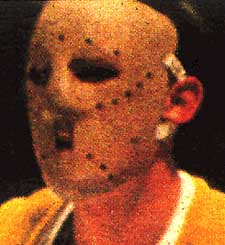
One of the first hockey posts that I did for this blog was a discussion of who was the greatest NHL goaltender of all time, and my choice was Terry Sawchuk, with the main reason being that not only did he dominate his era, but that era was the time when goalies played without masks. The blog included a picture of the accumulated damage done to Sawchuk’s face over the years. Most people would agree that the mask was a positive addition to the game. The picture above on the left is of another legendary goalie, Jacques Plante, donning his mask for the first time. I remember that same picture being used on t-shirts that read “GIVE BLOOD…PLAY HOCKEY!” In today’s game the mask has been replaced by the goalie helmet, and even though there are lot of creative masks being worn out there, it’s just not the same as it used to be. Boston’s Gerry Cheevers used a unique approach for his mask. He started each season with a clean white one, then would paint “stitches” on it in every spot he got hit as the season went on. His mask is shown in the picture above on the right. Here are a couple of other memorable masks from the past:

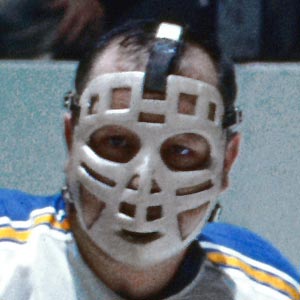
Mike Liut of the St.Louis Blues. 


Gary Simmons (also wore a “Cobra” mask in later years)

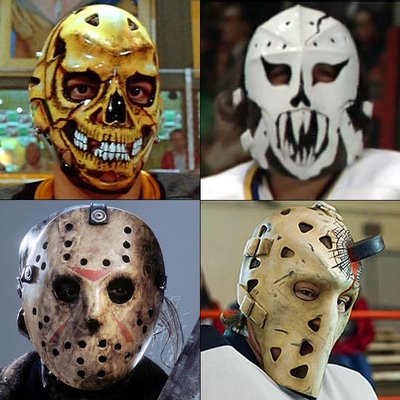
Here are some masks worn in movies, that wouldn’t quite make the grade for the NHL (the one in the top right corner is from the classic hockey movie “Slapshot”; I’m not sure about the others:


MLB – Relief Pitchers

08 Jul

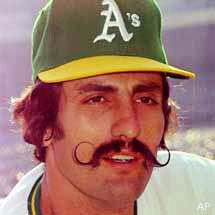
Today’s sports card of the day is of one of the pioneers of relief pitching in baseball, Roy Face of the Pittsburgh Pirates, and it got me to thinking how much pitching has become specialized in major league baseball today. In the past starting pitchers were expected to finish what they started, and horses like Don Drysdale, Bob Gibson, Juan Marichal and Wilbur Wood would be upset if they didn’t complete their starts. I believe Wood once won both ends of a doubleheader, although he didn’t start both games and was a knuckleball pitcher which is less strain on the arm.  In today’s game, a starter is considered to have made a “quality start” if he lasts 5 innings, and then the game gets turned over to the specialists, the middle relievers, the “set up man”, and finally, the “closer”. Pitchers are paid enormous amounts of money to come into a game and get 3 outs (sometimes only 1 or 2), then if they come in for an inning 2 nights in a row, they need to be rested. Yes, I did just roll my eyes. Don’t even get me started on pitch counts. For better or worse, the game is what it is now, and the role of closer has evolved into a much-respected position in baseball. New York’s Mariano Rivera has elevated the position to new heights. In the 1960s there were relievers who began the “closer evolution”, like Face, Hoyt Wilhelm and Ron Perranoski of the Dodgers. The first pitcher that I remember who started to glamorize the position was Rollie Fingers (pictured above) of the three-time World Series champion Oakland A’s in the early 1970s. His handlebar mustache paved the way for the mean-looking facial hair look of guys like Rich Gossage, Bruce Sutter and later on Dennis Eckersley. So the days of Koufax, Drysdale, Claude Osteen and Johnny Podres starting games and once in awhile turning the late innings over to Perranoski are over. Now every team has a five man starting rotation with each starter getting at least 4 days rest between starts, and a bullpen loaded with short relievers, long relievers, mop up men, set up men, left-hand specialists and closers to finish the job for them. When I see how many of those starting pitchers wind up on the disabled list, it makes me wonder if progress is always for the best, and gives me a greater appreciation for modern day guys like Roy Halladay, Cliff Lee and C.C. Sabathia, for whom the complete game is not a lost art.


ABA – Afros, Dunks and A Colorful Ball

30 Jun

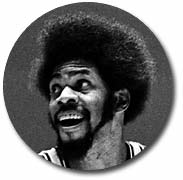
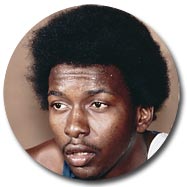
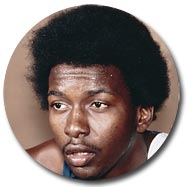
Just like the American Football League was created to compete with the established NFL in 1960, the American Basketball Association was born for one reason – to compete against the NBA. And just like the AFL, the ABA introduced new wrinkles to set its’ game apart from the NBA, among them the red, white and blue basketball the league used. The athletic players who played in the ABA brought the art of dunking the ball to a new level, especially Julius Erving (above,right), who earned the nickname “Dr. J”.  The ABA also is responsible for 2 innovations that carried over into the NBA when the leagues merged – the 3-point field goal and the slam dunk contest at the All-Star game. The ABA signed star players to large contracts, and wound up with a lot of the biggest stars of the era including Erving, George McGinnis, Artis Gilmore, Dan Issell, George Gervin, David Thompson, Marvin Barnes, Maurice Lucas, Connie Hawkins, Rick Barry and Moses Malone.  The league is probably most remembered for their wide open style of play, colorful players, wild promotions to attract fans and the huge Afro hairstyles worn by many of their players. When the two leagues decided to make peace, four of the ABA teams were absorbed into the NBA – the San Antonio Spurs, Indiana Pacers, Denver Nuggets and New York (now New Jersey) Nets. All four of these teams have been among the strongest franchises in the NBA over the years, and without a doubt created a lot of new energy and excitement for the game of pro basketball when they entered the league. Like the old AFL, the ABA still has a cult following of people who remember the league fondly. Check out the website www.remembertheaba.com for more info about the league.


NFL – The Lombardi Coaching Tree?

29 Jun

Whenever the discussion of great coaches in the NFL is the topic, one of the measuring sticks is always the “coaching tree” of each individual.  For instance, the great Paul Brown’s coaching tree includes Don Shula, Chuck Noll, Bill Walsh and Lou Saban, among others. Coaches who worked under Tom Landry include Mike Ditka and Dan Reeves. Sid Gillman, considered the father of the modern passing game, had an impressive list of people who worked under him, including Noll, Al Davis, Chuck Knox, George Allen and Dick Vermeil. Walsh’s coaching tree included Mike Holmgren, George Siefert, Mike Shanahan and Jon Gruden. I often wondered why the greatest coach of them all, Vince Lombardi, didn’t produce a lot of future coaches. He was known as a great teacher, yet the only Lombardi “disciple” who really had success was Forrest Gregg, an offensive lineman on Vince’s Green Bay teams who coached the Cincinnati Bengals to a Super Bowl. Bart Starr coached the Packers after he retired but didn’t do very well. Lombardi’s successor, Phil Bengston, coached the proud franchise into mediocrity during his short tenure. My theory about this revolves around the NFL’s Rooney Rule, which states that any franchise must give a minority candidate an interview before hiring a head coach. Whether the rule works in helping minority candidates get hired or not is debatable, but the fact is that in Lombardi’s time the rule didn’t exist, and hiring African Americans as head coaches was unthinkable. Looking back at that era, and taking into account the profile of people who have the traits to become head coaches – backup players, players who show leadership on the field,etc. – here is a list of players who may have been the members of Lombardi’s “coaching tree”, had they been given an opportunity:

Emlen Tunnell, a Hall of Fame defensive back who played in the secondary for the New York Giants under the coordination of Tom Landry. He was such a leader in the Giants’ secondary that Lombardi made it a point to acquire him when he took the head coaching job in Green Bay, to help develop the young Packer defensive backfield. He played his last 3 seaasons with the Packers. He was the first black player elected to the Hall of Fame, the first black player to play for the Giants and even served as a scout and a defensive assistant coach with the Giants later in his career. He clearly had the pedigree to be a great head coach in the league.

Elijah Pitts, a backup running back with the Packers in the Lombardi era, actually did get an opportunity to be a head coach, for 3 games in Buffalo when Marv Levy had to take time off after being diagnosed with prostate cancer. He was a long-time assistant with the Bills, and, former Bills’ running back Thurman Thomas often credited Pitts, his running backs coach, for helping him develop into the player he became. During his Hall of Fame acceptance speech, Thomas said this: ”  Elijah Pitts, you are definitely here with me today. I know Eli, if he were alive today, would definitely be a head coach in the National Football League.”

Willie Wood, a defensive back on Lombardi’s Packers, also served as a head coach, but in the now defunct World Football League and the Canadian Football League. His coaching record with those teams wasn’t impressive, but to counter the argument that makes him not qualified to be an NFL head coach, I submit as evidence Bill Bellichick’s coaching tenure in Cleveland.

Herb Adderley, like Wood, was a defensive back in the Packer secondary. Late in his career Tom Landry acquired him to help in the Dallas secondary with the young players and add some championship experience to a team that was struggling to “win the big one”. The Cowboys, with Adderley anchoring their “Doomsday Defense”, finally won the Super Bowl in 1971. He joined Wood as an assistant in the WFL and also briefly in college at Temple.

If only the opportunities had been there for these men during their coaching primes, I believe they could have built long and impressive legacies.


The Evolution of Youth Baseball

21 Jun

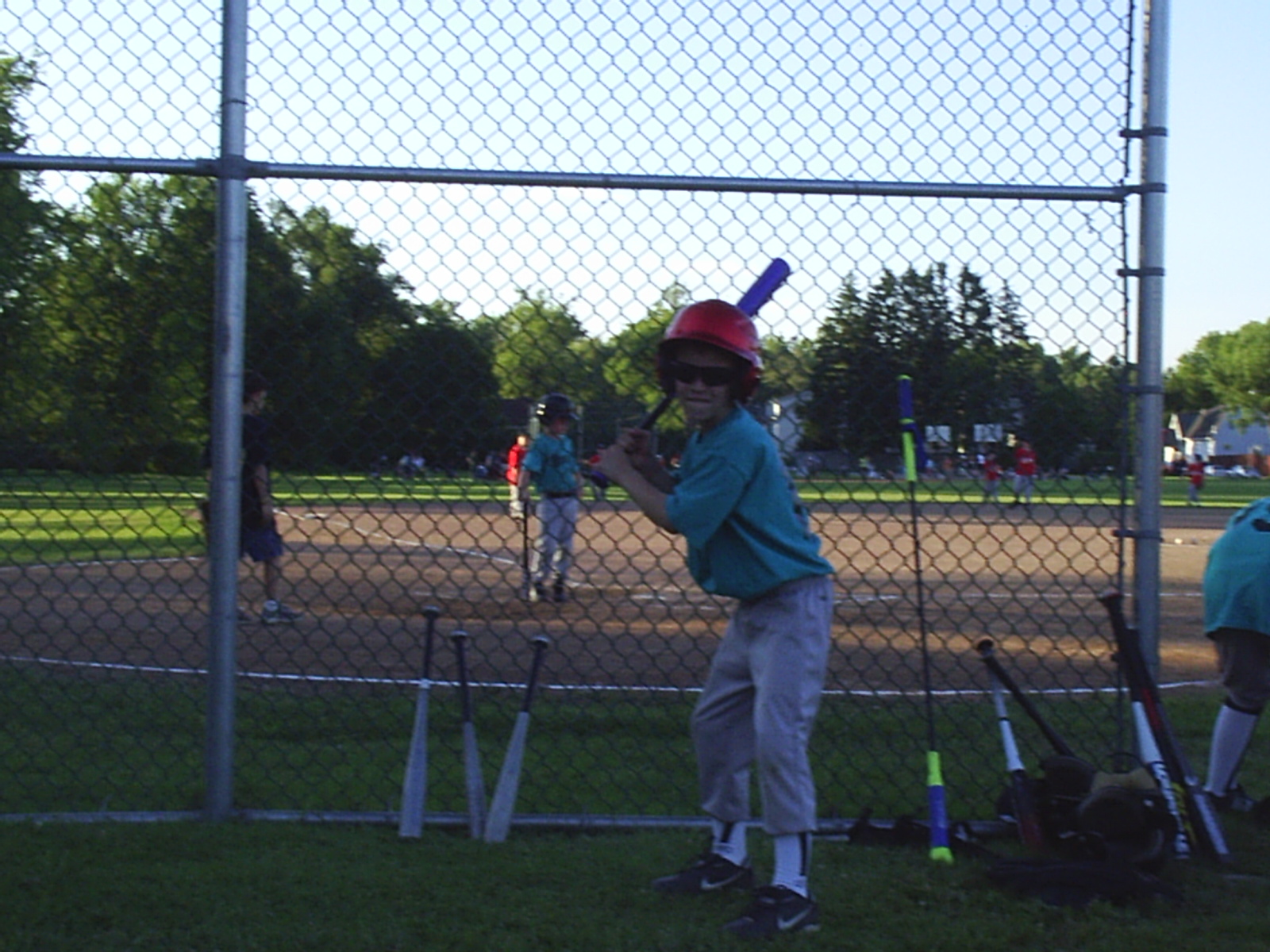
After blogging about my 10 year old grandson Josh’s youth baseball experience the other day, naturally, I had to do the same for my younger grandson, eight year old Connor. Now with Connor, style and looking good for the fans is a very important part of the baseball experience, as you can see in his picture above. Sporting his old school Rickey Henderson shades and shiny metallic Candy Apple red batting helmet, Connor warms up in the on-deck circle and is clearly ready for action. He had some really great hits and made a few plays in the field also. In fact, I was really impressed with how “baseball knowledgable” all the players were in the game, fielding the ball well, throwing accurately to the right base and knowing not to run on a popup if they’re on base,etc. – all the little nuances. It’s a credit to their coaches, I think. These are all kids that are eight years old or younger, and thinking back to when I played in Little League (not long after Abner Doubleday invented the game), I remember being nine years old already when I played for the first time. These days kids start with tee-ball at five and are seasoned veterans by the time they reach eight.  Members of my family have probably heard this story a thousand times but i’ll tell it anyway to make a point about how far youth baseball has come since I played.  That first year at 9, I played third base and wasn’t a bad fielder, but my throws to first base were terrible. I hardly ever reached the base and if I did the throw usually wasn’t in the same zip code as the base. Even kids on the other teams would say “What’s wrong with you? Why can’t you throw the ball??” Well, after completing that first season, my good friend Tim, who loved sports more than anything and is the person who introduced me to all the sports I love to this day and taught me everything he knew about them, invited me to eat dinner over his house. As I was eating, he looked over at me and said “What are you doing??” With a puzzled look I replied “Eatin’ some food.”  He shook his head and asked “Why are you eating with your left hand?” and of course my answer to that was easy – “Because I’m left-handed.” He started to laugh and asked why I had played the whole season of baseball right-handed. And again, my reply made sense to me anyway – “Because the glove you gave me to use went on the left hand so I figured I had to.” Needless to say my parents got me a glove that fit on my right hand for the following season, I switched over to the other side of the diamond and played first base, and even though I was never a really good player, I did a lot better and all was well with the world. Tim, of course, has gotten a lot of mileage out of that story over the years. He ran the auto insurance company I had my coverage through and once I called ahead and let him know I was coming in to pick up the insurance cards for a car I had purchased. When I walked in the door of the agency and let the receptionist know who I was she said “Oh, hi Lefty…how are you?”


Sports Vacations – Pro Football Hall of Fame

16 Jun

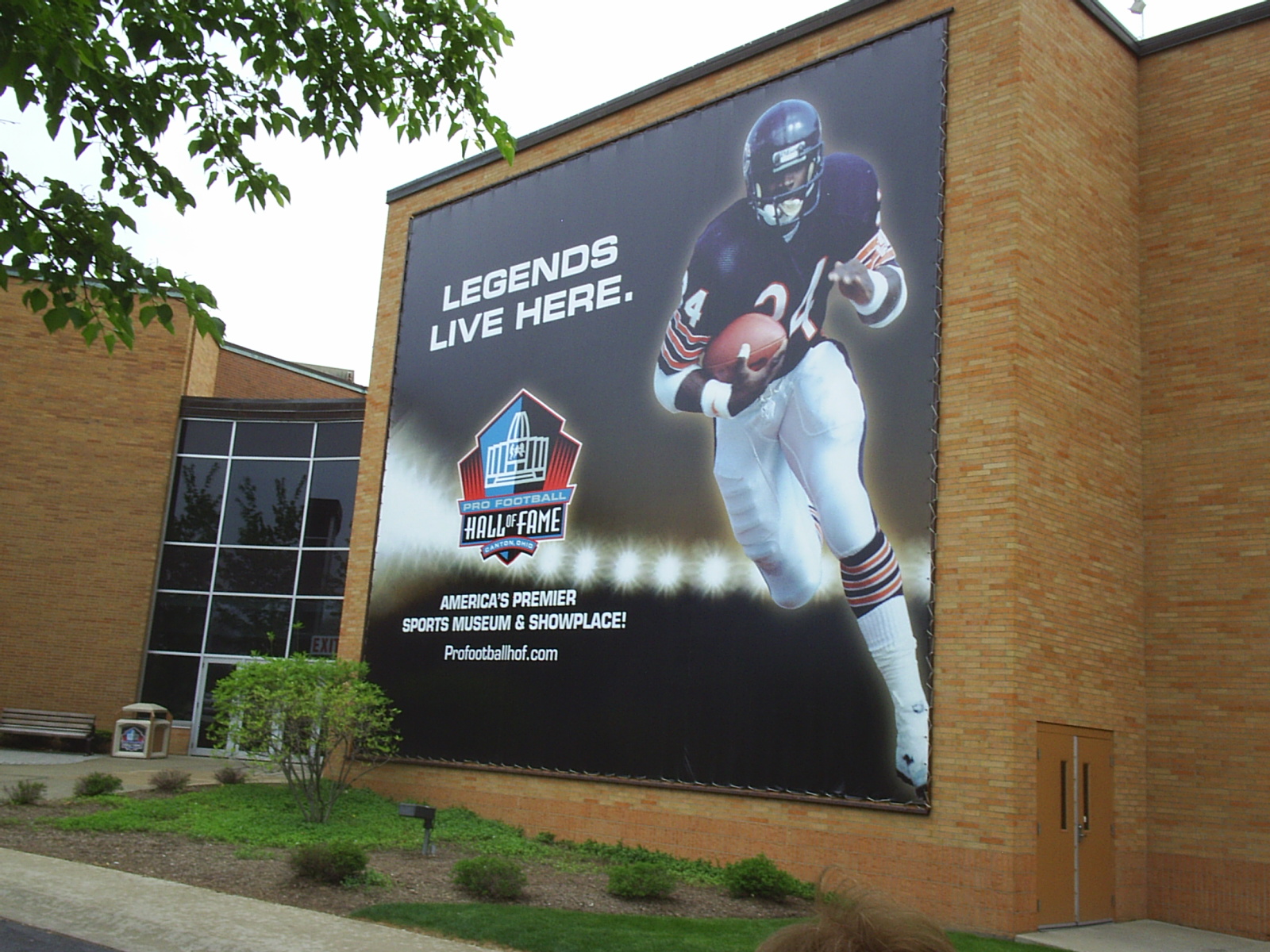
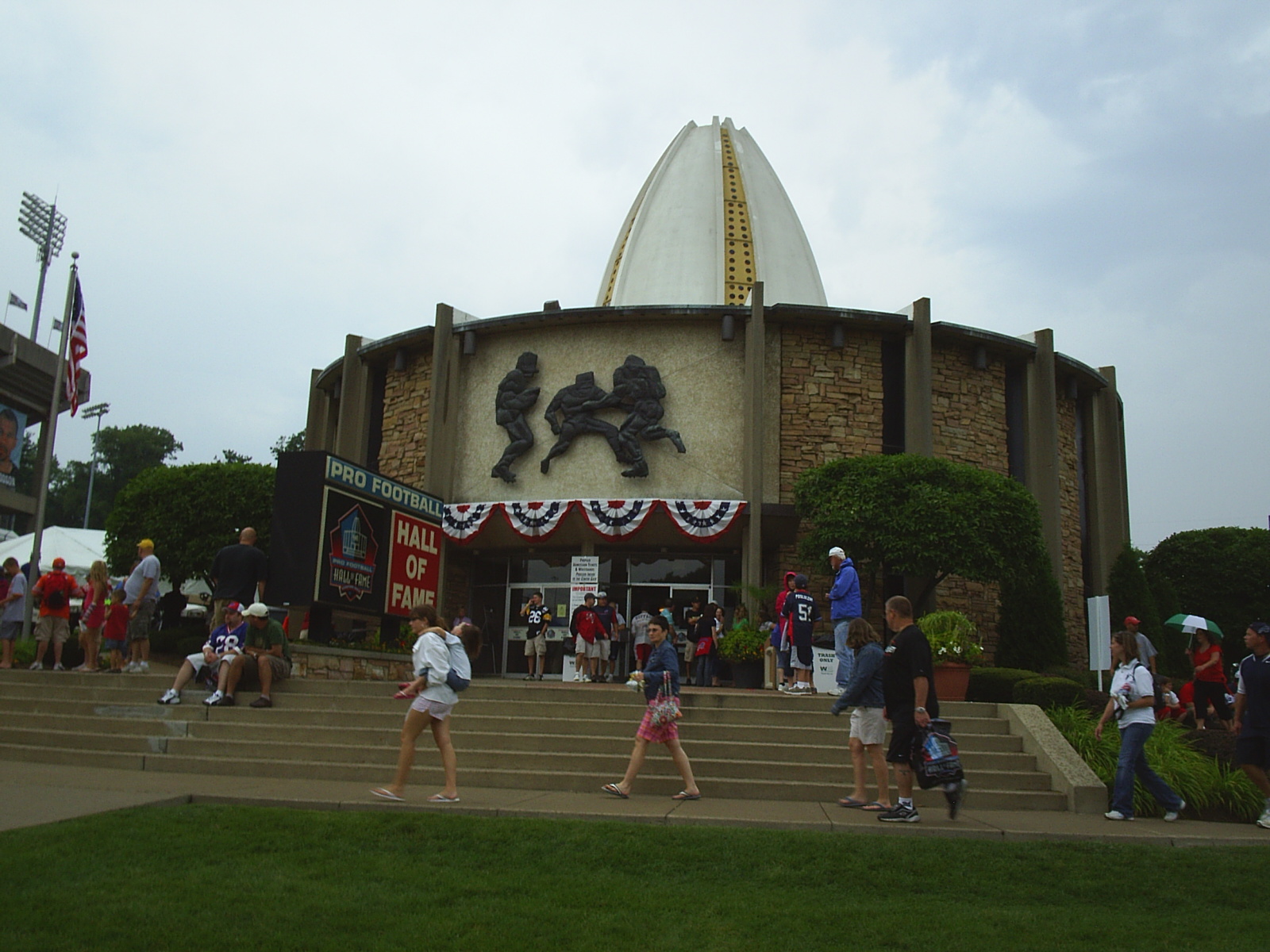
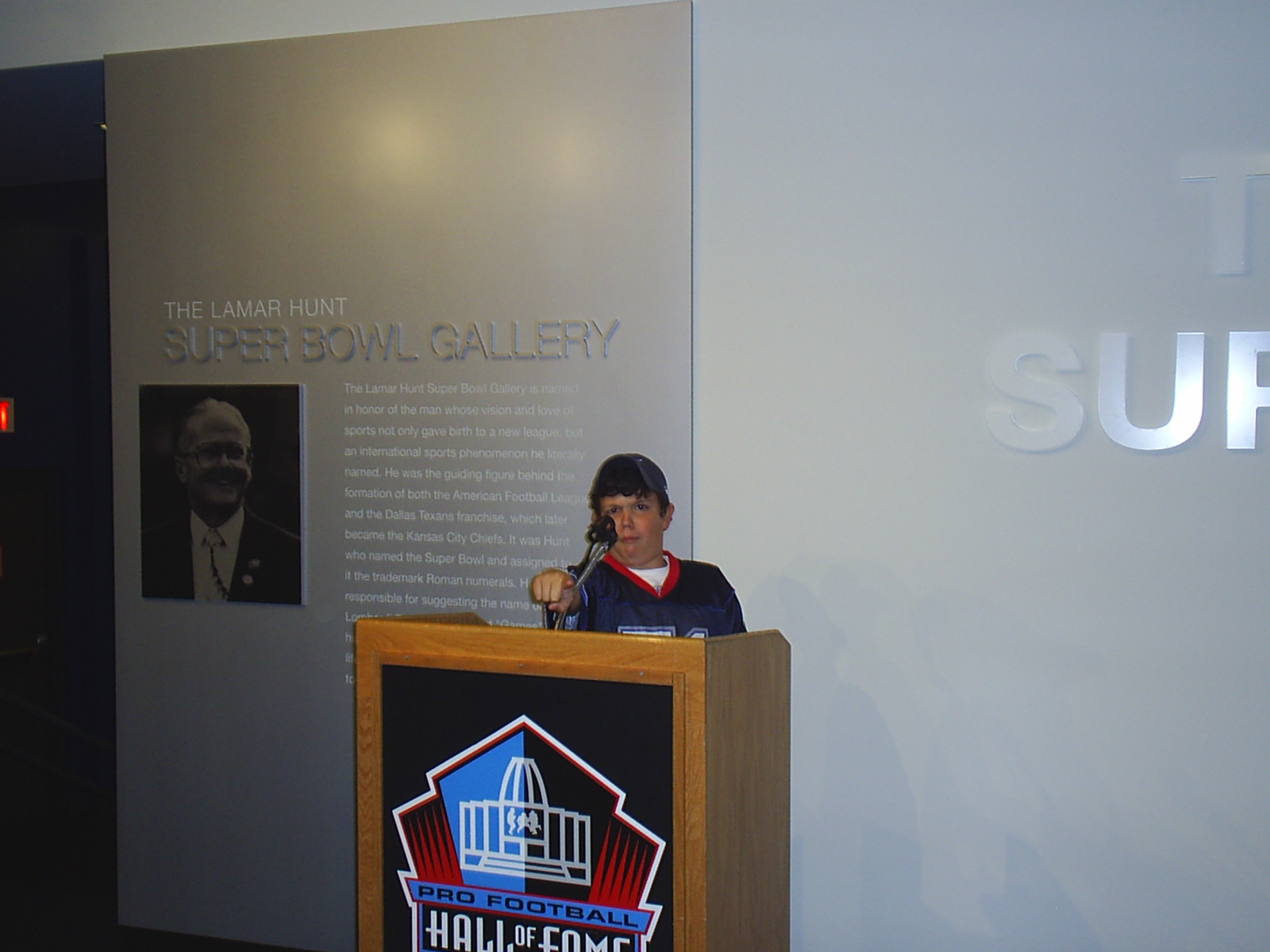
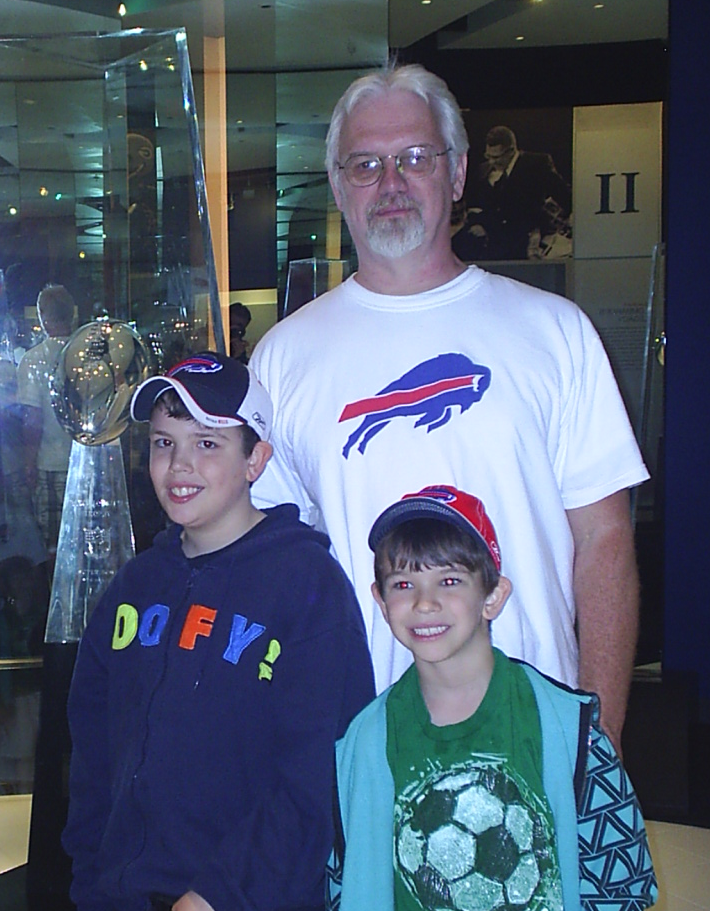
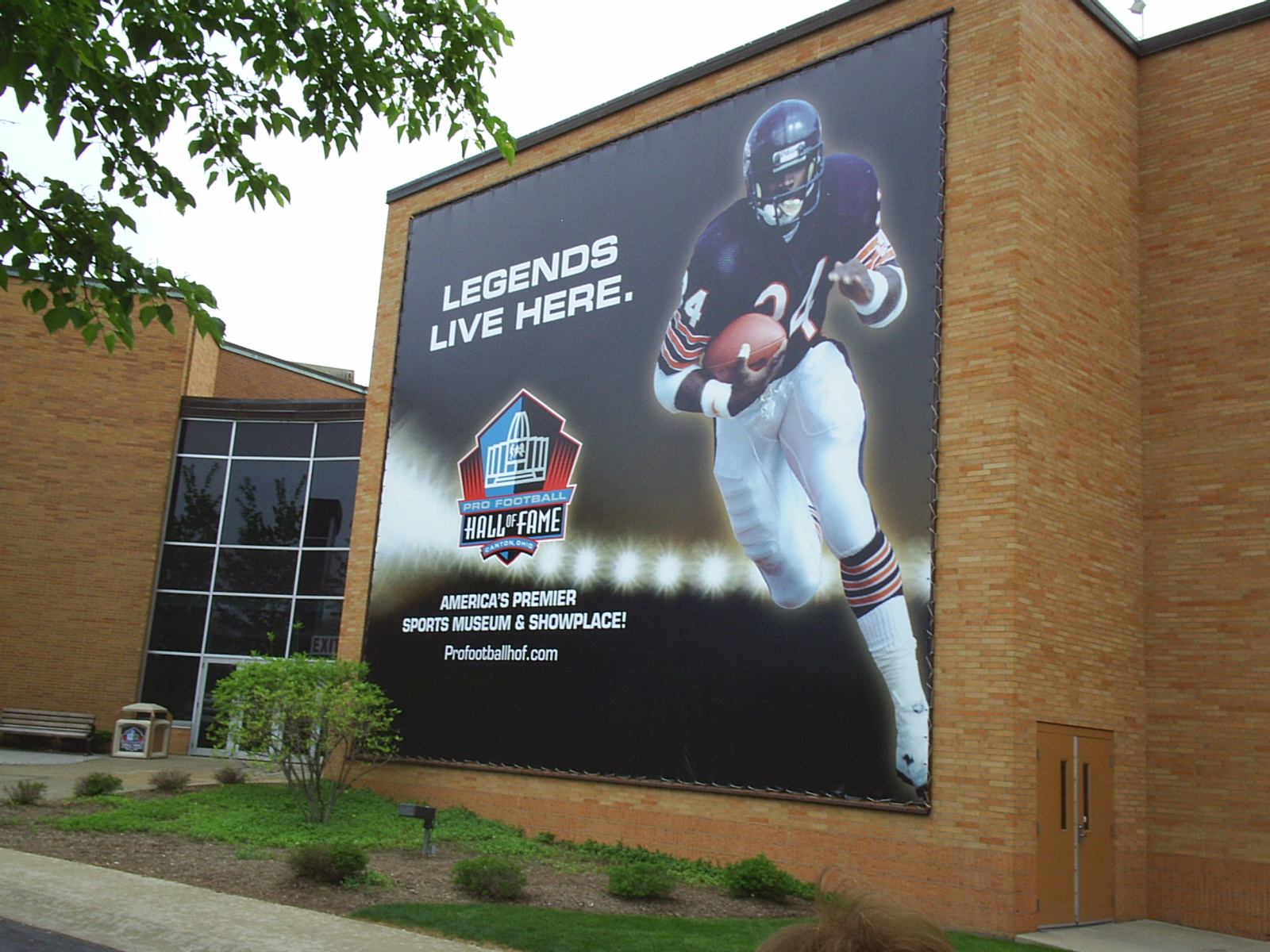
If you’re a football fan and you’ve never been to the Pro Football Hall of Fame in Canton, Ohio, it’s a pilgrimage you really need to make. Whether you plan to go for the induction ceremony weekend, when there are all kinds of Hall of Fame players and coaches roaming the grounds and lots of parties and great activities going on, or you just stop in any other time of the year, it’s an experience that isn’t forgotten. There are all kinds of inter-active games for fans of all ages, and the NFL Films Theater is not to be missed. The last time I was there one of the Hall’s many friendly workers put on a display of some of their lost treasure items, including some wiring for the heating system from below Lambeau Field that had been turned off the morning of the 1967 NFL Championship game, which then created the conditions that brought on the “Ice Bowl” game, and an elevator sign salvaged from Pittsburgh’s demolished Three Rivers Stadium. The story behind that sign was that Steelers owner Art Rooney was in the elevator headed down to the locker room to console the players for a tough playoff loss to Oakland, just as the “Immaculate Reception” play involving Franco Harris was happening, giving the Steelers an improbable win. I was astonished to hear that the Hall at any given time is really only displaying about 7% of the items they have, and because of that it is a real “living museum”, constantly changing and offering fresh displays. It is most definitely a trip worth taking for any avid sports fan. Here are a few highlights in pictures of a couple of my visits:

My grandson Josh giving his “acceptance speech” at a HOF podium set up inside the building.

My grandsons and I posing with the Lombardi Trophy.

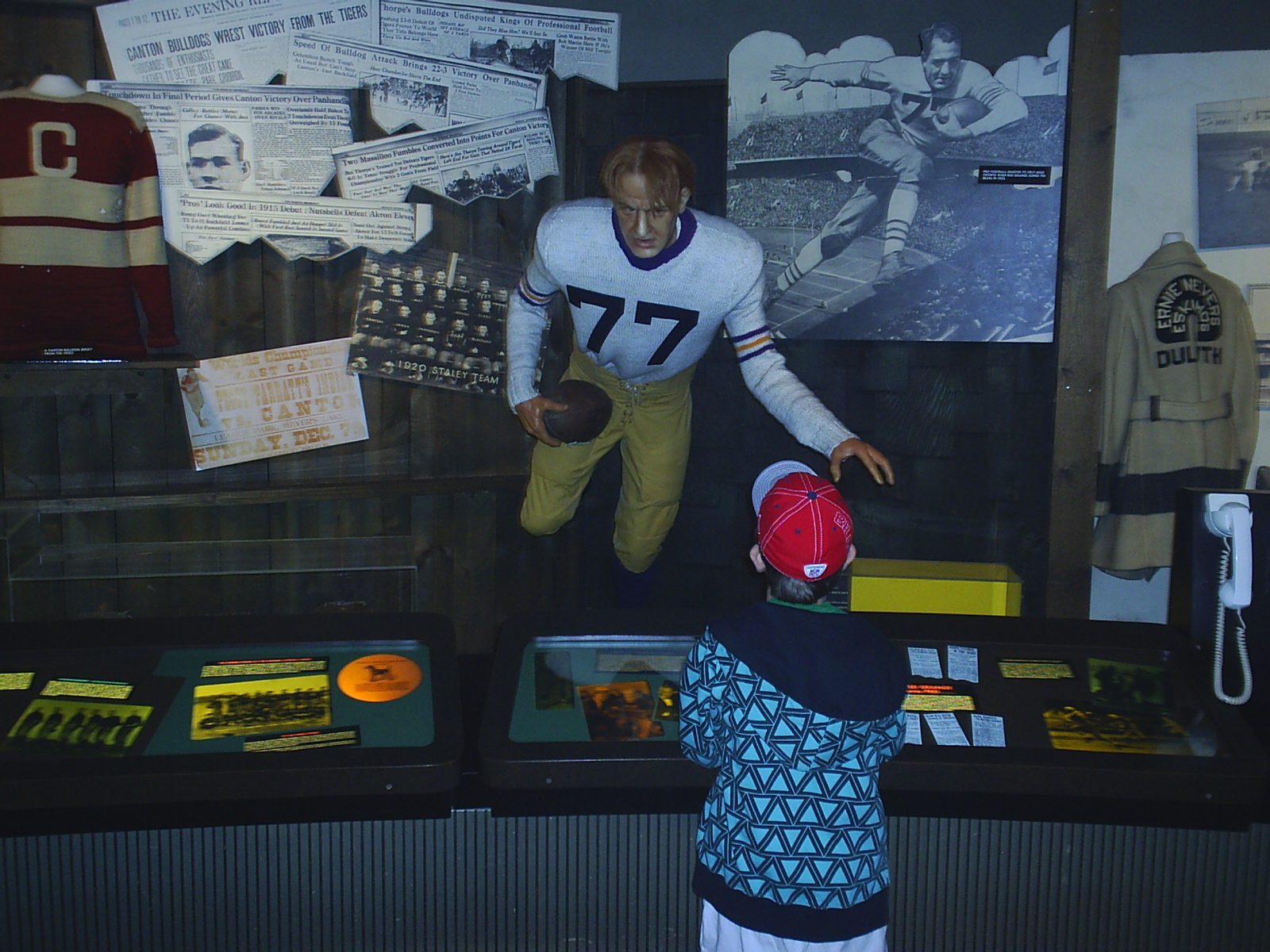
My younger grandson Connor really thought this display of Red Grange was coming out to run over him and wanted to “make the tackle”.