RSS
 

Classic Sports Card of The Day

30 Mar

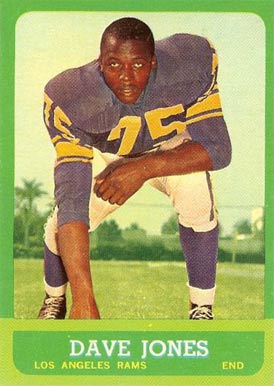
1963 Topps football card of former Los Angeles Ram defensive lineman David “Deacon” Jones, who is listed as an “end” on this card but was so much more than that. Jones was the emotional and spiritual leader of one of the NFL’s most famous defensive fronts – the Rams’ “Fearsome Foursome”, along with Merlin Olsen, Rosey Grier and Lamar Lundy. He was a tremendous player who never shied away from vocalizing his hatred for opposing quarterbacks, and regularly terrorized opponents’ backfields. Deacon literally invented the term “quarterback sack”, as he played in an era before tackling the QB for a loss was kept as an official statistic. Jones also was the first defensive lineman to utilize the “head slap” as a technique for beating opposing offensive linemen, and this tactic has since been outlawed by the league. Nicknamed “The Secretary of Defense”, he was an eight time Pro Bowler, was named to both the All Decade team for the 1960s and the NFL’s 75th Anniversary All Time team, and was elected to the Pro Football Hall of Fame in 1980.


NFL – March 28, 1984 – Dark Day In Baltimore

28 Mar

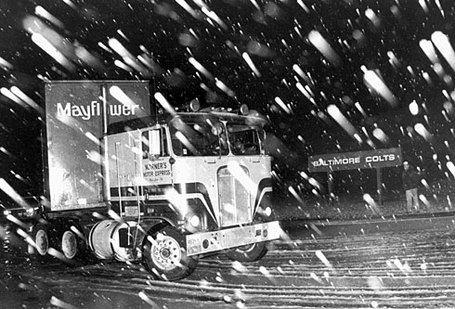
                                      March 28, 1984 – Colts flee Baltimore in the dead of the night.

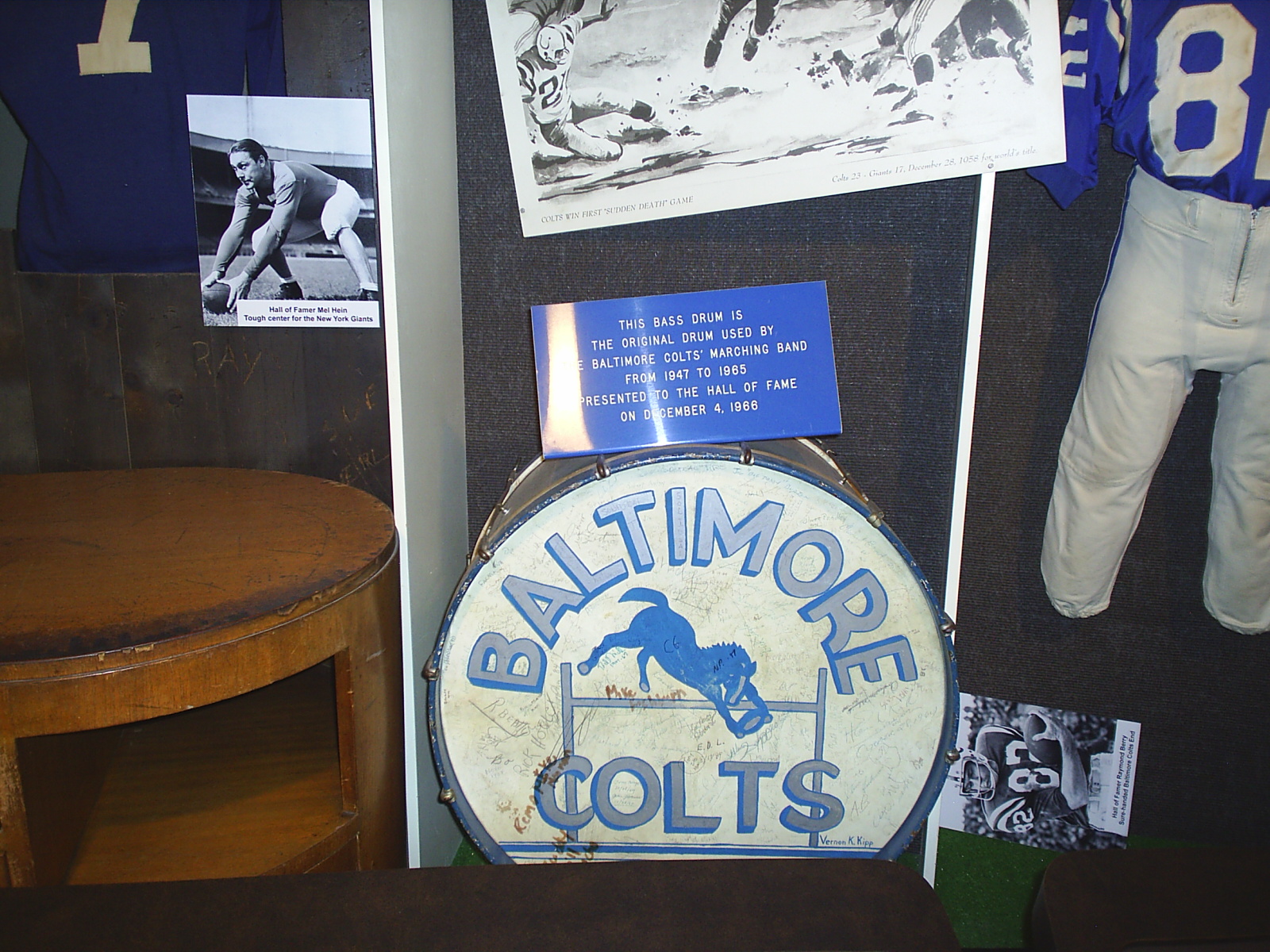
March 28, 1984 was perhaps the darkest day in the sports history of the city of Baltimore. Twenty-seven years ago today, the people of that city woke up to the shocking news that in the middle of the night, Baltimore Colts’ owner Robert Irsay had packed up the team’s belongings on Mayflower moving vans and moved them out of the team complex to Indianapolis. Irsay had continually threatened to move if he didn’t get a new stadium, but the city’s politicians never really believed him, since the Colts were one of the NFL’s flagship franchises with a rich tradition. They had come into the league in 1953 as a replacement for the defunct Dallas Texans, and that horseshoe logo on the sides of their helmets had become one of the most recognizable symbols in pro sports. They had a long history of great players and coaches – John Unitas, Raymond Berry, Lenny Moore, Gino Marchetti, Don Shula, Bubba Smith, Mike Curtis, Bert Jones, Jim Parker, Art Donovan, John Mackey, Alan Ameche and Ted Hendricks. They had won four championships, including “The Greatest Game Ever Played”, their 1958 sudden death overtime win over the Giants. The team was so entrenched in the community that they had their own marching band and cheerleaders (see below). This was long before the Dallas Cowboy cheerleaders existed.
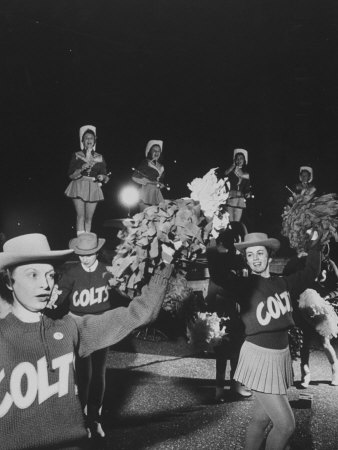
                                                                 Baltimore Colts’ cheerleaders

Irsay became the most hated man in the city, not only for moving the franchise but for the sneaky, cloak and dagger manner in which it was done. When Irsay’s mother was contacted for her reaction to the move, this was her statement:  “He’s a devil on earth, that one. He stole all our money and said goodbye. He (doesn’t) care for me. I (haven’t) even seen him for 35 years. My husband, Charles, sent him to college. I made his wedding. Five thousand dollars, it cost us. When my husband got sick and got the heart attack, he took advantage. He was no good. He was a bad boy. I don’t want to talk about him.” Irsay’s son Jim is currently the owner of the team, and after his father passed away admitted that he’d had a difficult childhood, and that his dad had problems with alcohol and wasn’t the most rational person to deal with most of the time.

There was a program aired recently on ESPN chronicling the Colts’ cheerleaders and band, which stayed together even after the team moved, playing charity events around the city and hoping for another franchise, which finally happened, ironically, in an even more controversial move when the Cleveland Browns moved to Baltimore. The city of Cleveland sued and forced Browns’ owner Art Modell to forfeit the Browns’ name and all the team’s records, so the relocated franchise became the Ravens, and the “new” Browns eventually came back into the NFL as an expansion team. In the ESPN show, the old Colt cheerleaders admitted it was painful for a long time after losing the Colts, but eventually they were able to forgive and forget and were now Raven fans. The show was taped the year after the Indianapolis Colts had won the Super Bowl behind the play of Peyton Manning, and the cheerleaders said they had actually pulled for Manning and the Colts to win, because Peyton reminded them of a young Johnny Unitas. Franchises move all the time  in professional sports, but like the move of the Brooklyn Dodgers to the west coast in 1958, this was a move that not only relocated a pro sports team but ripped the heart and soul out of a community. Those types of moves are stark reminders that professional sports really are, more than anything else, a “business”, and always subject to the cold, heartless tactics of the business world.
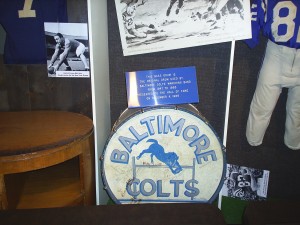
Bass drum from the Baltimore Colts’ band on display at the Football Hall of Fame in Canton.
 

Classic Team Logo of The Day

28 Mar

For their inaugural season in the National Basketball Association in 1970-71, this was the logo of the Buffalo Braves, who entered the league that year as one of three expansion teams, along with the Portland Trailblazers and Cleveland Cavaliers. The team’s first head coach was Hall of Famer Dolph Schayes, and they were able to acquire a couple of useful players – Don May and Bob Kaufmann – in the expansion draft. Like most expansion teams, they had a losing season in that first year, but in the next 2 years made some great moves – hiring Jack Ramsay as coach, trading disappointing draft pick Elmore Smith for Jim McMillian, and drafting Ernie DiGregorio, Bob McAdoo and local college star Randy Smith, and by 1973 were in the NBA playoffs. The club was sold to ABA owner John Y. Brown in 1978, who promptly traded the franchise for the Boston Celtics, and they were relocated to San Diego.


Classic Sports Card of The Day

28 Mar

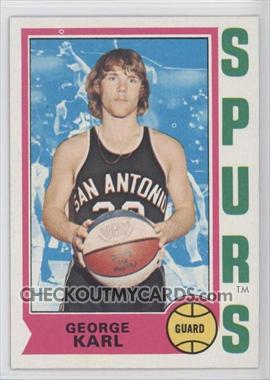
From www.CheckOutMyCards.com , a 1974 Topps basketball card of former  player and current coach George Karl. He played in the old ABA for the San Antonio Spurs, then became an NBA player when the Spurs joined that league in ’76. Karl was a journeyman player but has enjoyed a long and successful career as an NBA head coach, guiding the Seattle Supersonics in the 1990s to 50+ win seasons in all of his years there. He became coach of the Denver Nuggets in 2005 and is their current head man. He has had a couple of notable achievements this season, becoming only the seventh coach in NBA history to win 1,000 games in his career, and also winning a battle with prostate cancer.


Jalen Rose, Grant Hill & The “Uncle Tom” Debate

23 Mar

                                                        ESPN’s Jalen Rose

Two of the best things about ESPN are the “30 for 30” documentary films produced by the network and the First And Ten morning program, aired weekday mornings and featuring a debate desk segment where sportswriter Skip Bayless engages in lively arguments with guest debaters on timely sports topics. Recently, one of the films, about the early ’90s Michigan college basketball team that featured five starting freshmen dubbed the “Fab Five”, stirred some controversy and was debated in at least 2 segments on First And Ten. In the documentary, one of the freshmen players, Jalen Rose, ridiculed the black players from Duke University as “Uncle Toms”, verbalizing the feelings of many black inner city athletes at the time who felt that well-to-do, two-parent  black families who sent their kids to an elitist school like Duke were “selling out their race”. Rose, who went on to have a successful NBA career, is now an NBA analyst for ESPN, and in my opinion one of the most knowledgeable and entertaining ex-athletes working in the media today. He is frequently a guest debater on the First And Ten show, and gives Bayless all he can handle in arguments about not just basketball but all sports. Rose was invited on to explain/defend his comments from the documentary, and wasn’t proud of them, saying that he hopes people who see the film realize they were made by “a seventeen year old inner city kid with absolutely no filter between his brain and his mouth”.  Frankly, I believe Rose, and if you see the film and realize how much Michigan administators used the “Fab Five” to sell merchandise and make tons of money off of their notoriety at the time, while the players saw none of the money, you come to realize why those players developed attitudes toward “The Man”.

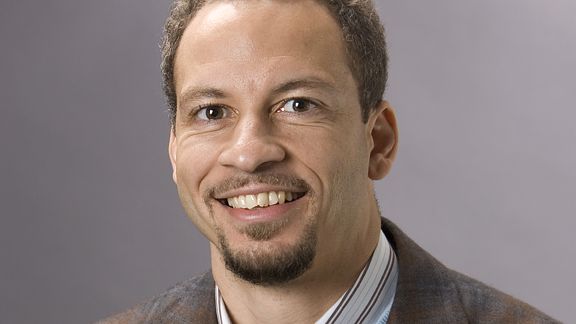
The next day, the subject was debated again, this time between Bayless and African American NBA writer Chris Broussard, another highly respected journalist. Bayless pretty much conceded his time to Broussard to make his case, and ESPN’s resident NBA insider made an eloquent argument. He exonerated Rose, who had been criticized in an op-ed column written by NBA player Grant Hill, son of former Dallas Cowboy Calvin Hill, who played at Duke during the Fab Five era. He said he understood Hill’s criticism also, and that it was good for the “Uncle Tom” reference to be discussed, since it has become a subject hotly debated in the African American community. He said he was disgusted by the way that even today, young blacks with no clue about the history of that term among blacks, were using it to denigrate affluent blacks in two-parent families. He criticized the hip hop community for promoting the idea in their songs that affluent black men who man up and parent their children were “Uncle Toms who sell out their race”, and offered the thought that the real sellouts to their race were the black men who joined gangs, ignored their children, sold drugs, brandished weapons and wound up in prison, thus propogating long-held stereotypes of the African American race. It was a powerful argument, and included stories of how some in the black community once criticized Bill Cosby’s television show as “an unrealistic portrayal of a black family.” It was a powerful argument, and was another example of what I see all the time in the world of sports – that sometimes sports shows that are generally considered “light entertainment” can do more good and shed more light on the real human condition than some of those pompous Sunday morning political programs.

                                           NBA Insider Chris Broussard


Classic Team Logo of The Day

23 Mar

Logo of a minor league baseball team that plays in the Class A Midwest League, the Great Lakes Loons. The club is located in Midland, Michigan and affiliated with the Los Angeles Dodgers. Five former Loons have made it to the big leagues, including Dodger pitcher Clayton Kershaw and Cleveland catcher Carlos Santana. Like most minor league clubs, the Loons have a mascot – an energetic bird named Lou E. Loon, and his signature cheer, the “Funky Feather”, won minor league baseball’s best in-game promotion award in 2009.


Classic Sports Card of The Day

23 Mar

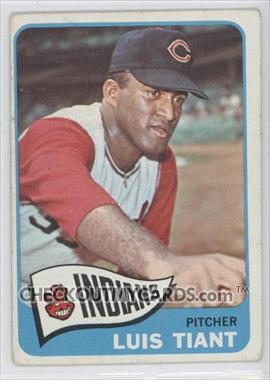
Courtesy of www.CheckOutMyCards.com , a 1965 Topps baseball card of former major league pitcher Luis Tiant. The Cuban born hurler played 19 seasons in the major leagues, mostly with the Cleveland Indians and Boston Red Sox. He is one of only 5 pitchers in modern major league history to have thrown 4 or more  consecutive shutouts, with Don Drysdale, Bob Gibson, Gaylord Perry and Orel Hershiser being the others. That’s pretty good company. Tiant is the subject of a documentary film Lost Son of Havana, and despite having won 229 games over his career, is not in the Hall of Fame, although there is a grassroots campaign on the social networking site Facebook trying to get him elected.


NHL – Devastating Loss For Sabres

21 Mar

Crushing, disheartening, devastating – choose your adjective to describe the Buffalo Sabres’ loss to Nashville on Sunday – they all fit. The Sabres have played some maddening games the last couple of seasons, and have given their fans fits, but Sunday’s meltdown may have been the worst. The club is in a battle for the Eastern Conference’s final playoff spot and needs every point it can get, yet somehow they managed to blow a 3-1 lead with a little less than 3 minutes left in regulation, then lose within the first 30 seconds of overtime. The Predators, like Buffalo, are striving for the last playoff position, in the Western Conference, but they had no business winning this game. The Sabres completely choked, giving a 2-goal lead away with terrible turnovers. Their supposed world-class goaltender, Ryan Miller, couldn’t make the big save when they really needed it either. Miller may be one of the bright young faces the NHL is trying to market, but that doesn’t make him a great player. He is average at best most nights, and regularly loses to supposed “lesser” goalies in head to head matches. On the other hand, Coach Lindy Ruff has said he plans to spell Miller in back-to-back games, and young Jhonas Enroth has played great in his opportunities. So Ruff starts Miller in this game, not only a back-to-back game but an afternoon game following a night game. Was Miller spent by the end of Sunday’s contest? And does Ruff share the blame for panicking and not sticking to his plan?

The Sabres  are still sitting in a pretty good position to secure a playoff spot, controlling their own destiny, but after going 30-0 when leading after 2 periods last season, the club has followed a disappointing pattern. They blew leads in 2 playoff games last year, costing them the series with Boston, and lead the NHL this season in blowing two-goal leads. That’s a sign of a team that lacks mental toughness, and if they happen to sneak into the postseason this year, any likely top-seeded opponent, like the Philadelphia Flyers for instance, will eat them alive in a playoff series much the same way the Bruins did last year. They know that mounting any kind of a forceful forecheck will result in the Sabres wilting and coughing up the puck with regularity, and I don’t get the feeling that any top-seeded team has any fear of being “stoned” in a playoff series by Miller, the way they might have with Dominik Hasek in the past, since Miller has never really shown the ability to do that. He has had his good moments, but in my opinion possesses the same trait as the rest of his teammates – a lack of mental toughness necessary to sustain the effort needed to close out a playoff series. I hope they prove me wrong, but I doubt if they will. The good news is that new owner Terry Pegula will likely not any waste time weeding out the dead weight on the roster after the season ends, and will spare no expense to upgrade the team next year.

 
No Comments

Posted in Hockey


Classic Team Logo of The Day

21 Mar

Logo of the Minnesota North Stars, who played in the National Hockey League from 1967 until moving to Dallas in 1993. This logo was used from the team’s inception in ’67, when they joined the NHL along with 5 other expansion teams, (doubling the league’s size from 6 teams, known as the “original six”, to twelve), until 1974. The team’s notable players in their early years include goalies Gump Worsley and Cesare Maniago, Bill Goldsworthy, Ted Harris, Danny Grant, Lou Nanne (who later served as the team’s GM), Jude Drouin and Bill Masterton, who unfortunately is the only player in NHL history to die from an on-ice injury. During a game against the California Seals in 1968, he fell backwards while skating, hitting his head on the ice, and never regained consciousness, dying 2 days later of a “massive brain injury”.


Classic Sports Card of The Day

21 Mar

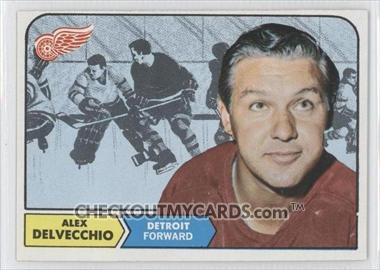
From www.CheckOutMyCards.com , a 1968 Topps hockey card of former Detroit Red Wing Alex Delvecchio, who played 22 complete seasons for the Wings, the most of any player with one team in NHL history. He was a member of Detroit’s “Production Line”, teaming with Gordie Howe and Ted Lindsay. Unlike Howe and Lindsay, however, Delvecchio was a “gentlemanly” player, winning the Lady Byng Trophy, which combines sportsmanship and excellence on the ice, three times in his career. At the time of his retirement in 1973, he was second to Howe in all career categories, but has since been surpassed by Steve Yzerman. Delvecchio’s # 10 sweater has been retired by the Wings, and he was elected to the Hockey Hall of Fame in 1977.