RSS
 

Archive for the ‘Feature Stories’ Category

NFL – Best Special Teams Players Not In The Hall of Fame

06 Aug

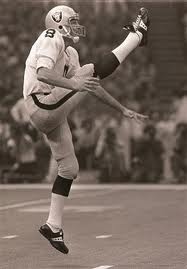
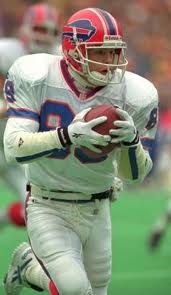
From left: Ray Guy, Steve Tasker, Billy “White Shoes” Johnson.

When it comes to special teams, NFL coaches pretty much all preach the same sermon – they are just as important as offense and defense, they are 1/3 of the entire team and practice time should be equal to what offense and defense get, they can win or cost a team games. So, if special teams are that important, why are special teams players consistently ignored at Hall of Fame voting time? There are lots of players who played on special teams who ARE in the Hall, like Lou Groza, Sammy Baugh and Paul Hornung for instance, but they got in due to their play on offense and defense. Baugh was a terrific punter but if he hadn’t been a quarterback he wouldn’t be in the Hall. Groza and Hornung were outstanding placekickers but it was their play at tackle and halfback that got them in. It could be argued that George Blanda’s kicking ability got him elected as much as his QB play, but still, he probably wouldn’t be in if he had only kicked. When Jan Stenerud became the first placekicker to be elected, it was a big deal and the expectation was that his election would open the floodgates for all the other kickers, punters, return men, specialists, etc. to start getting elected. Of course, that didn’t happen. There still isn’t one pure punter in the Hall. And nowadays the “long snapper” is a specialty position. Will there be a day when players are voted in solely as long snappers? To me that’s a stretch, but then again, the position is important enough today that every coach employs one. The first pure punter who should be inducted into Canton has to be the Raiders’ Ray Guy. In fact, the assumption is it’s just a matter of time for him. He is clearly the most outstanding punter of all time and it can be argued that he revolutionized the position.  Speaking of revolutionizing the game, when it comes to the “gunner” position on kick coverage, Steve Tasker of the Bills was the master. If any non-kicking special teams player deserves to be inducted, it is Tasker. He was a demon on kick coverage, a punt and kick-blocking machine and an occasional return man. Tasker was a player opposing teams specifically game-planned for. Billy “White Shoes” Johnson was a dynamic return man with the Falcons and Oilers, known for his outlandish end zone dances and, of course, for wearing white shoes. The fact that he reached the end zone so many times on returns that his end zone dances became legendary tells you all you need to know about his kick return abilities. 
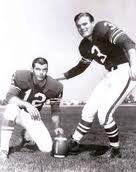
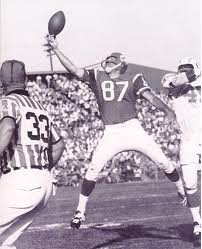
Above from left: Travis Williams, Pete Gogolak (and holder Daryle Lamonica), Mel Gray.

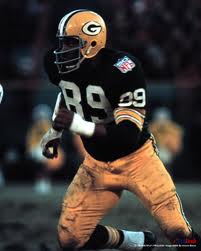
Two other return men who deserve a look are the Packers Travis Williams, who rivaled HOFer Gale Sayers in the 1960s as the NFL’s top return man, and the Cardinals’ Mel Gray. Williams played some at running back and Gray was a decent receiver, but mostly they made their name in the league returning kicks. The father and son combination of Terry and Eric Metcalf  is unique. Both had decent careers as running backs and were similar type players. They both excelled in the kick return game. For historical reasons alone, perhaps Pete Gogolak should get some love from the voters. He was the first soccer-style placekicker. Talk about revolutionizing the game! There isn’t one straight-on placekicker left in football today. The last of the straight-on kickers, Washington’s Mark Mosely, was good enough to be considered for Canton also. In the AFL, players like Gene Mingo, Speedy Duncan, Gino Cappelletti and Jim Turner all excelled at some facet of special teams, or “bomb squads” as they were affectionately called back then.
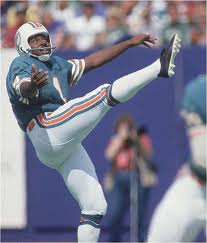
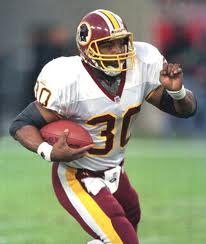
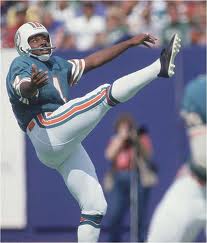
Above: Reggie Roby (left), Brian Mitchell.

Besides Guy, any conversation about HOF punter possibilities has to include Jerrell Wilson of the Chiefs and Reggie Roby, who punted for various teams, mostly the Dolphins. The fact that Roby wore a watch when he punted infuriated some players and enhanced the notion to some that punters “aren’t real football players.” And of course, that kind of macho thinking has worked against even the greatest punters as far as their chances for getting voted into Canton. One other kick returner who deserves a mention is Brian Mitchell. He was a major threat on returns and also just a general all-around great special teamer, and besides Tasker, the next best choice of non-kicking bomb squadder who is deserving.
 

NFL – Best Defensive Linemen Not In The Hall of Fame

05 Aug

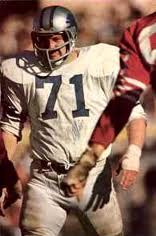
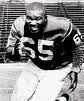
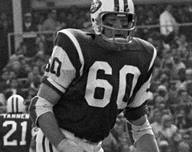
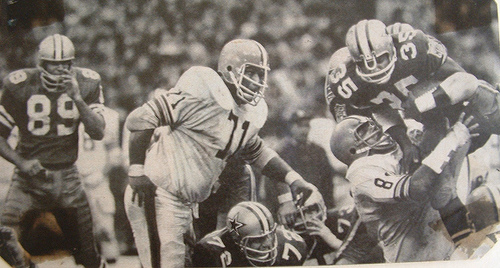
Above from left: Jim Marshall, Walter Johnson (71).

Below:  Alex Karras.

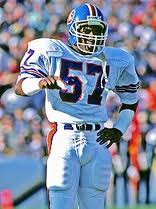
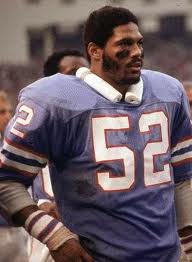
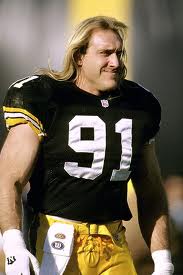
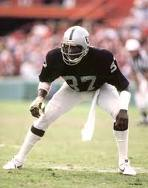
Among defensive linemen missing from the Hall of Fame whose bust should have been added long ago is former Minnesota Viking Jim Marshall. In fact, while researching this post I was shocked that he wasn’t in. I had always assumed he was. He played 20 years in the NFL. At the time of his retirement he was the league’s all-time iron man, having played 302 consecutive games (since surpassed by Brett Favre). He had an NFL record 29 opponent’s fumbles recovered in his career, and was just an iconic figure in the league. Unfortunately, of course, he was also Jim “Wrong Way” Marshall, going down in history as the guy who returned a recovered fumble 66 yards the wrong way against the ’49ers, resulting in a safety. I find it hard to believe that this one bad play is keeping him out of Canton. The late Walter Johnson, an outstanding defender for the 1960s Cleveland Browns, should also get much more consideration than he does for induction. Johnson was to the Browns defense in his era what HOF teammate Gene Hickerson was to the offense – a catalyst for the team’s success. He played 13 seasons and was a perennial Pro Bowler. Alex Karras had a tremendous career with the Detroit Lions, competing for 12 years and playing in 4 Pro Bowls, and also being named to the all-decade team for the 1960s. His chances for induction were hurt immeasurably by his one year suspension in 1963 for gambling. Paul Hornung was also suspended that same season, and he is in Canton. A couple of other players from the ’60s who probably will never get in but deserve a closer look are Roosevelt Grier, former Giant and one-time member of the Rams’ “Fearsome Foursome” defensive front, and Gene “Big Daddy” Lipscomb. Grier was an outstanding defender but was overshadowed on that fabled Ram line by HOFers Deacon Jones and Merlin Olsen. Lipscomb was huge and always seemed like a man playing among boys, and was an outstanding player. He was a 3-time Pro Bowler and MVP of the game twice. He died of a heroin overdose at the age of 31 a few months after winning the Pro Bowl MVP in the 1962 game. 


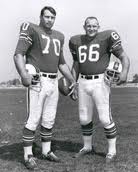
Above from left: Rich “Tombstone” Jackson, Houston Antwine, Tom Sestak (70) with HOF teammate Billy Shaw.

The American Football League, of course, produced great defensive linemen who have been overlooked by the Canton voters. One player who should get more consideration at least has a Hall worthy nickname – Rich “Tombstone” Jackson of the Denver Broncos. He was a 3 time all-star and a tremendous pass rusher, but his career was cut short by a severe knee injury. Houston Antwine was a 6-time AFL all star with the Boston Patriots and a member of the all-AFL team. Tom Sestak’s situation is similar to that of Walter Johnson. Sestak was to the dominant Buffalo Bills defense what HOF teammate Billy Shaw was to the Bills’ offense.  Sestak was a 4 time AFL all star in his injury-shortened career, and was a unanimous choice 3 times. Only 6 players were unanimous all-league selections that many times in the 1960s – Sestak and 5 other NFL players who are all in Canton.

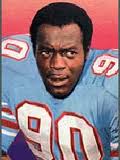
Above: Ron McDole (left), Curley Culp.

A couple of players who started their careers in the AFL and transitioned into the NFL in the ’70s, Ron McDole and Curley Culp, deserve a closer look. McDole, the “Dancing Bear”, was a standout defensive end on the same Bills’ defense that Sestak played on. That team held opposing rushers without a touchdown for 17 consecutive games during their dominant 2 year title run. McDole moved on to Washington and was a solid player for George Allen’s “Over the Hill Gang” in the ’70s when most figured his best days were behind him. Culp was a prototype nose tackle in the 3-4 defense of Bum Phillips’ Houston Oiler teams in the ’70s after starring for the Chiefs in the AFL.  He was a 6 time Pro Bowler and is credited in some circles as being the first to play the nose tackle position.

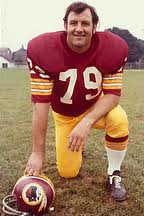
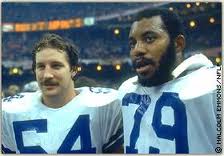
Above: L.C. Greenwood (left), Harvey Martin (79) with HOF teammate Randy White.

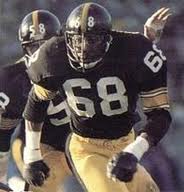
Two more examples of players who are under-appreciated because of being overshadowed by high-profile teammates are L.C. Greenwood and Harvey Martin. Greenwood, famous for wearing gold cleats, was a second banana to Mean Joe Greene with the Steel Curtain defense of the ’70s, but an outstanding defender and worthy of Canton consideration. Martin was overshadowed by Randy White, although he was voted co-MVP of Super Bowl XII along with White. Martin, who died in 2001, was a 4 time Pro Bowler and a member of the all-decade team for the ’70s.

Probably the most deserving modern day player among defensive linemen is Chris Doleman,  who played 15 seasons with the Vikings, ’49ers and Falcons and was an 8 time Pro Bowler. It may just be a matter of time for Doleman to get in, since he has the longevity and the numbers. Also, former Chicago Bear Richard Dent has been a finalist 6 times but still hasn’t garnered the votes to get elected.


NFL – Best Linebackers Not In The Hall of Fame

04 Aug

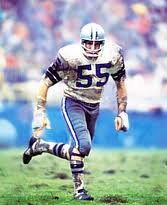
Above from left: Maxie Baughan, Dave Robinson, Lee Roy Jordan.

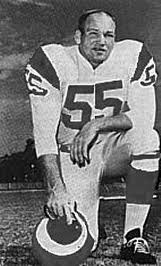
Linebacker is a position in football that requires many different skills, and a position that has evolved over the years. The best ones have to have the toughness and tackling skills of defensive linemen and the coverage skills of defensive backs. Linebackers who play in a 4-3 scheme have different responsibilities than those who play in a 3-4, but the bottom line is that in order for a linebacker to be Canton-worthy, he has to be a great football player. There were so many terrific backers playing in the 1960s that there are bound to be those who never get into the Hall. Maxie Baughan, who had a great career with the Eagles and Rams, is one of those. He played 12 years and was a Pro Bowler 9 times, and with 18 interceptions and 10 fumble recoveries in his career, was a playmaker. Dave Robinson was a stalwart linebacker on the great Green Bay title teams of the ’60s. He had 21 interceptions and was a member of the all-decade team of the ’60s, despite playing in the shadow of Hall of Fame teammate Ray Nitschke. Lee Roy Jordan was a key component of Tom Landry’s “Flex” defense in Dallas in the ’60s. With 32 career picks and 16 fumble recoveries, Jordan was a great ball-hawk.  He was a 5 time Pro Bowler in his 14 NFL seasons. Tommy Nobis, the first draft pick of the Atlanta Falcons when they entered the NFL as an expansion team, was named to 5 Pro Bowls in his 11 year career, but despite having a great career, there was always the perception that Nobis didn’t live up to the hype that comes with being the top pick in the NFL draft. Chris Hanburger of the Redskins is another player from the ’60s who is somewhat forgotten despite a great career.

Again, the American Football League produced Hall-worthy players who never get the recognition they deserve at every position, and linebacker is no exception. Larry Grantham was a stud linebacker with the New York Titans/Jets and was a 5 time AFL all-star, playing in all 10 years of the league’s existence. Mike Stratton of the 1960s Buffalo Bills had a long, stellar career and was a 6 time AFL All-star. George Webster patroled the middle of the Houston Oilers defense with the same ferocity as Nitschke or Dick Butkus, but never got much recognition.

Above from left: Larry Grantham, Mike Stratton, George Webster.

Moving on to later decades, the Denver Broncos have 3 linebackers who should get more love from the Canton voters. They are Tom Jackson, who had a monumental playing career before gaining fame as an ESPN studio football analyst, Karl Mecklenberg and Randy Gradishar. Denver’s lack of success in Super Bowls probably diminished these players in the voter’s eyes, but they are all deserving. Robert Brazile played 10 seasons with the Oilers in the 1970s and was a prototype 3-4 linebacker under coach Bum Phillips. He was a seven time Pro Bowler.  Wilber Marshall was one of the most physical players on a bruising Chicago Bears defense in the 1980s, but the hype surrounding other teammates, like Mike Singletary, Richard Dent and even William “Refrigerator” Perry, left him in the background. Kevin Greene was another great 3-4 backer, starring with the 1990s Pittsburgh Steelers. He had 160 career sacks and was a 1990s All-Decade selection.

 Below from left: Tom Jackson, Robert Brazile, Kevin Greene.


NFL – Best Defensive Backs Not In The Hall of Fame

03 Aug

Above, from left: Lester Hayes, Steve Atwater, Pat Fischer.

The measuring stick for defensive backs in the NFL has always been interceptions, so ball-hawking type players like Dick “Night Train” Lane and Ken Houston basically walked into Canton when their time came. Ronnie Lott of the ’49ers is an example of a punishing physical player getting recognized by the voters. Among the DBs who consistently get bypassed, despite meeting the measuring stick of players already in, are Lester Hayes, known for his trademark crouch at the line of scrimmage when lined up across from a receiver, and his use of “stick-um” back in the days when it was allowed. Hayes seems to be another victim of prejudice against renegade Raider players, since he clearly belongs in the Hall. Pat Fischer was an interception machine during his career, split between the Cardinals and George Allen’s “Over The Hill Gang” Redskin teams. He had 56 picks in his 17 year career and also should have a bust in Canton. Steve Atwater of the Broncos was a contemporary of Lott and played a similar style at safety. Like Lott, he was a leader on his team’s defense, setting the tone for the rugged Denver teams that won 2 Super Bowls. He was an eight time Pro Bowler in his 11 year career, and a member of the NFL’s all-decade team for the 1990s. Eric Allen is a player from the 1990s who has the numbers to qualify for Canton also, with 54 interceptions in his 14 year career.

Above: Carl “Spider” Lockhart (left), Donnie Shell.

Some other overlooked defensive backs with Canton credentials include the late Carl “Spider” Lockhart, a standout with the 1960s New York Giants, Lemar Parrish, who was not only a ballhawk in his career with the Bengals and Redskins but also a standout kick returner, Deron Cherry of the Chiefs, a 6-time Pro Bowler with 50 career picks, and 4 more star veterans of the 1960s, Abe Woodson of the 49ers, Jim Patton of the Giants, Eddie Meador of the Rams and Dallas’ Cornell Green. Two players who were rival safeties in the Super Bowl in the 1970s, Donnie Shell of the Steelers and Cliff Harris of the Cowboys, could also be considered Canton material. Shell was overshadowed by all the other Hall of Fame Steeler players from the ’70s but was just as important a piece of those teams. Harris and teammate Charley Waters may actually keep each other out of the Hall by splitting the vote between them.

Above: Johnny Robinson (left), Booker Edgerson.

As with every other position, there are players from the American Football League’s 10 years of existence who don’t get the notice they should. Kansas City’s Johnny Robinson started his pro career as a running back but was switched to safety and was a standout there for the Chiefs in his career, with 57 total picks and 18 touchdowns. Buffalo had the toughest defense in the AFL when they won back-to-back titles in 1964 and ’65, and a standout player on those teams was Booker Edgerson, who played 9 years in the league and was a “lockdown” cornerback before that phrase even existed. George Saimes was a safety on those teams and was a pioneer of the safety blitz (even though credit for inventing it usually goes to the Cardinals’ Larry Wilson). Dave Grayson split time in the AFL between the Chiefs and Raiders, and was also an outstanding DB. He had 47 career picks and was a 6-time AFL all-star.


NFL – Best Offensive Linemen Not In The Hall of Fame

02 Aug

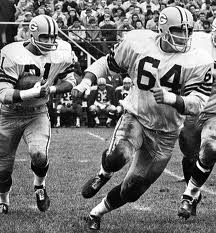
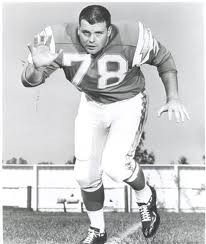
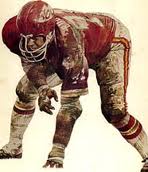
Above from left: Bob Kuechenberg, Kent Hull, Jerry Kramer.

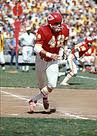
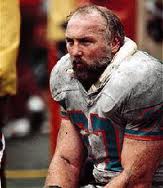
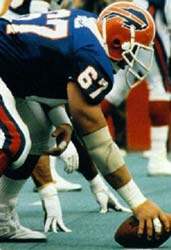
Offensive linemen have traditionally been the players who grind it out in the trenches and get little or no credit for their team’s success. That may explain why there are so many deserving O-line Hall of Fame candidates who don’t ever get consideration. There are 2 glaring omissions in this category, in my opinion. Jerry Kramer of the 1960s Green Bay Packers is one of them, and Bob Kuechenberg of the 1970s Miami Dolphins the other. Kramer was a stalwart guard on the most dominant team of that decade, and led the fabled Packer sweep, the team’s bread-and-butter running play (see picture above). The Packers were not a team that used trick plays. They were a “here we come, try and stop us” team, and they were rarely stopped. How Kramer is not in the Hall is a mystery to me. Kuechenberg is a similar case. He was, in my opinion, THE dominant offensive lineman of the 1970s. He was better than his teammate, Larry Little, who is in the Hall, and was the main reason why Don Shula’s running game was dominant against every team they played, especially during the team’s 3 year Super Bowl run in the early ’70s. Buffalo center Kent Hull is a player who will likely never be considered for enshrinement, but he should be. He arrived in Buffalo along with Jim Kelly and anchored the Bills’ offensive line in their four year Super Bowl run in the 1990s. The Bills ran a no-huddle offense during this period and the offensive linemen had to be in great condition, and Hull was. He made all the line calls on the run, and was a great run and pass blocker. Bill Fralic was an outstanding guard but toiled somewhat in anonimity with the Atlanta Falcons. He was a 4-time Pro Bowler and was named to the NFL’s all-decade team for the 1980s. Jim Tyrer and Ed Budde were teammates with the AFL Kansas City Chiefs and both were mainstays on Hank Stram’s great KC teams. Budde played for 14 years and was a 5 time AFL all-star. Tyrer was a 7 time AFL all-star and a dominant run blocker. Two players who were overshadowed by great teammates, but should be considered for Canton for their own abilities are Max Montoya, who played guard for the Bengals, and Walt Sweeney, a former Charger. Montoya played on the same line with a player who many consider to be the best lineman ever, Anthony Munoz, but he was a four-time Pro Bowler himself in his 16 year career. Sweeney played in the shadow of a Hall of Famer also, tackle Ron Mix. Sweeney was an all-star, either in the AFL or NFL, nine times in his 13 year career.  

Pictured below: Walt Sweeney (left), Ed Budde.

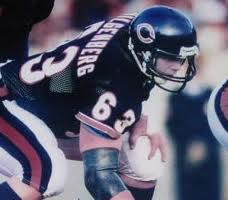
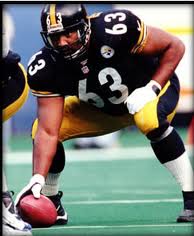
Hull isn’t the only center overlooked despite having Hall credentials. In fact center is a position that is overlooked in general. Some centers who had great football careers and deserve a look include Mick Tingelhoff, Jay Hilgenberg, Dermontti Dawson and Bart Oates. Tingelhoff played his entire 17 year career with the Vikings and was a Pro Bowler 6 times, and also the Vikes’ center in 4 Super Bowls. Hilgenberg anchored the Bears line in the Walter Payton era and made the Pro Bowl 7 times.  Dawson was a 7 time Pro Bowler with the Steelers, and has come close to election and may yet get in. Oates played 10 seasons, was a 5-time Pro Bowler and played on 3 Super Bowl champion teams.

Below: Jay Hilgenberg (left), Dermontti Dawson.


NFL – Best Tight Ends Not In The Hall of Fame

30 Jul

Top Row: Shannon Sharpe (left), Pete Retzlaff.

Second Row: Jerry Smith (left), Fred Arbanas.

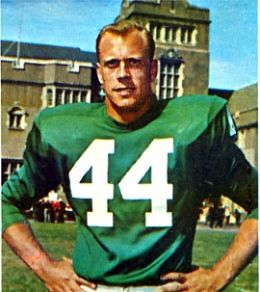
There aren’t many tight ends in Pro Football’s Hall of Fame, but then again it’s never been much of a “glamour” position in the NFL, although recent players like Tony Gonzalez and Antonio Gates are changing that perception. One tight end not in the Hall stands out above the rest – Shannon Sharpe of the Denver Broncos/Baltimore Ravens, and current CBS football studio analyst. He is destined to get in soon. There were a lot of fine tight ends in the 1960s, and that fact is borne out by the fact that 2 of them from that era – John Mackey and Mike Ditka – are in the Hall. Pete Retzlaff of the Eagles was another great TE from that era. He was a 5 time Pro Bowl player and his jersey number 44 was retired by the team. His chances of getting elected to Canton, perhaps, are hurt by the fact that early in his career he played running back and split end before settling in at the tight end spot. Amazingly, Retzlaff never caught a pass in his college career. Two others who played tight end in the 1960s are Canton-worthy also – Fred Arbanas, who starred in the AFL for the Kansas City Chiefs, and Jerry Smith, who played for the Redskins. Former AFL players are rarely considered, but Arbanas was the dominant TE in the league. Despite losing sight in his left eye, he managed to be an AFL all-star 6 times and was voted the tight end on the All-AFL team. Smith was a terrific player, a great downfield weapon for ‘Skins QB Sonny Jurgensen when tight ends weren’t normally downfield threats. He died of AIDS and it’s unknown whether his homosexuality is a reason why he never seems to get consideration from Hall voters.

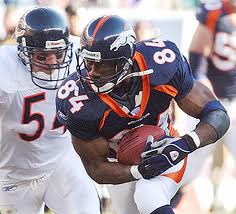
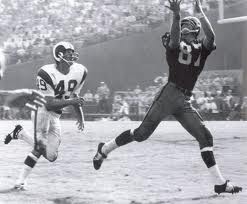
Some players who deserve a look are from the years when tight ends started to become more of a threat to catch passes rather than being just an extra blocking lineman. Among those players are Riley Odoms of Denver, Todd Christensen of the Raiders, Billy Joe Dupree of Dallas and Bob Trumpy of the Bengals. More modern day players who could have a shot to get in include New England’s Ben Coates, Mark Bavaro of the Giants and another Cowboy, Jay Novacek. The fact that Floyd Little, former Bronco running back, was elected this year gives hope to a player like Odoms.  Christensen was a converted running back who caught a lot of short passes and was a very unconventional tight end. Dupree and Novacek were both very high profile players of their respective eras, but, while playing for “America’s Team” may get you more media attention it doesn’t automatically punch your ticket to Canton.


NFL – Best Wide Receivers Not In The Hall of Fame

29 Jul

From left: Andre Reed, Chris Carter, Tim Brown.

Wide receiver may be the position that causes the most controversy when it comes to debates over who belongs in the Pro Football Hall of Fame. There have been so many great ones over the years that it is hard to sort out which ones belong, and it seems even the ones who do belong always wind up waiting to get there. The case of Art Monk, who is finally in after years of waiting, is an example of this. So this listing of best receivers who aren’t in Canton is divided up into 2 sections. First, there are 3 slam dunk candidates who aren’t in, but it’s just a matter of time before they are. They are the 3 pictured above – Andre Reed, who had a dynamic career with the Buffalo Bills, Chris Carter, who played in Philadelphia and mostly Minnesota and, as his old Eagles coach Buddy Ryan said when justifying trading him, “All he did was catch touchdowns”.  The third is former Raider Tim Brown. None of these 3 need arguments to warrant their place in the Hall. Their careers are their arguments.

From left: Cliff Branch, Harold Carmichael, Drew Pearson.

So it’s on to the rest of the list, starting with former Eagle Harold Carmichael.  He played 14 seasons in the NFL, was a 4 time Pro Bowler and was voted to the NFL’s all-decade team for the 1970s, which should be an automatic ticket to induction. Drew Pearson of the Dallas Cowboys, the favorite target of Roger Staubach for most of his career, is similar to Carmichael. He also was an all-decade team member for the ’70s, was a multiple year Pro Bowler and All-Pro choice and played on a Super Bowl championship team. Cliff Branch of the Raiders was overshadowed by his Hall of Fame teammates, Fred Biletnikoff and Dave Casper, when he played, but was just as important a receiver on those Raider teams  as those two were. There were a lot of great receivers who played in anonimity in the old American Football League who should be considered, including Lionel Taylor of Denver, Charley Hennigan of the old Houston Oilers and Elbert “Golden Wheels” Dubenion of the Buffalo Bills. Being that it is almost impossible for players who played exclusively in the AFL to get in, these players have little hope of making it, even though they deserve the honor and are easily as good as 2 of their AFL counterparts who did get in, Lance Alworth and Don Maynard. There is one old AFL receiver who stands out above the rest and should be in Canton. That would be Otis Taylor of the Kansas City Chiefs. He played on 2 championship teams, including the Super Bowl IV champs, has deserving career stats and was also a devastating downfield blocker which helped the Chiefs’ running game succeed.

Lionel Taylor (left) and Otis Taylor.

 There are a lot of honorable mention type players in the receiver category also, and those would include Del Shofner of the 1960s NY Giants, Henry Ellard, who had a brilliant 16 year NFL career and has deserving numbers, Harold Jackson, similar to Ellard in numbers (he played almost 20 years), Roy Green of the Cardinals, Gary Collins of Cleveland, who starred on teams in the 1960s that featured the running game with Jim Brown and then LeRoy Kelly (both hall of famers) and also played opposite HOFer Paul Warfield, Isaac Curtis of Cincinnati and Boyd Dowler of the 1960s Green Bay Packers. There are surely others who I am overlooking, but this is definitely the most competitive position as far as getting considered for immortality in Canton.

Gary Collins (left) and Isaac Curtis.


NFL – Best Running Backs Not In The Hall of Fame

28 Jul

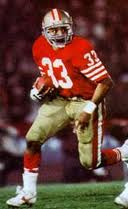
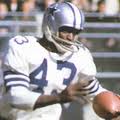
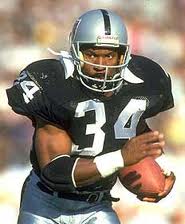
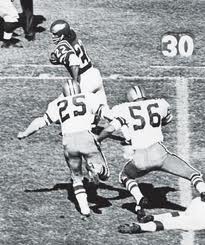
Above from left: Roger Craig, Don Perkins, Bo Jackson, Timmy Brown.

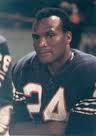
Running back is a position that is well represented in the Pro Football Hall of Fame, but there are still a few players who aren’t in yet that deserve consideration. The most glaring of the omissions has to be Roger Craig, who played for the San Francisco 49ers in their Super Bowl years. Craig, to me, was one of the finest all-around backs of all time, taking into consideration his running, receiving and blocking skills. He was overlooked on the 49er roster because of players like Joe Montana, Jerry Rice, Dwight Clark and Steve Young but he was an integral part of the success of the “West Coast” offense that coach Bill Walsh’s teams ran. In fact he may have been THE key player, outside of Montana.  

Chuck Foreman was a workman-like back for the Minnesota Vikings in the 1970s, and another overlooked player when it comes to Hall consideration. He was NFL Rookie of The Year in 1973, and a 5 time Pro Bowl selection, and scored 51 touchdowns over a 3 year period from 1974 to 1976. Like Craig, he had tremendous pass-catching ability for a back. 

If winning Super Bowls is supposed to be a fast track to Canton, then Terrell Davis deserves serious consideration. “T.D.” played for the Denver Broncos in the mid-to-late ’90s, and is their all-time career rushing leader. It’s no coincidence that the Denver franchise, known for not being able to “win the big one”, wrapped up 2 Super Bowl titles after they added Davis to their roster to complement QB John Elway. Davis’ career was shortened by injuries or I feel he would be an automatic choice for enshrinement.

Ricky Watters was known for being an ornery presence, with the media and in the locker room, when he played in both Philadelphia and San Francisco. But no one can deny Watters’ skill on the field. Like Craig, he was the straw that stirred the 49ers’  West Coast offense drink in the Steve Young era, and scored 3 touchdowns in the Niners Super Bowl XXIX victory. With over 15,000 career all purpose yards and 91 touchdowns for his career, statistically Watters belongs in the Hall.

Don Perkins played for Tom Landry’s early Dallas Cowboy teams in the 1960s, before they gained notoriety as “America’s Team”. He led the Cowboys in rushing 6 of his 8 seasons with the team, but the fact that he never rushed for 1,000 yards in a season hurts his chances for induction to the Hall. His career best season was 945 yards in 1962, but he also played in an era when gaining 1,000 yards was a much tougher accomplishment than it is now. He was an outstanding blocking back also, but unfortunately, players from by-gone eras like Perkins rarely get any consideration without overwhelming numbers.

The fact that Gale Sayers is in the Hall helps make the case for 2 other players to warrant some votes. Sayers’ career was shortened by injury, but he made such an impact, running the ball and in the return game, that he was elected despite not having played long in the league. Using the Sayers yardstick, Bo Jackson, who played only 4 seasons with the L.A. Raiders (while also playing major league baseball) before breaking his hip in a playoff game,basically ending his football career, is deserving. He made many dynamic plays in that shortened career. He had a 5.6 yards per carry average for his career, and scored 16 touchdowns. He would have to be a Joe Namath-type choice, being considered more for his impact on the game rather than numbers, to have a chance to get in. Sayers’ kick return abilities were a big part of why he waltzed into Canton, and if those skills are taken into account, then Timmy Brown, who played in Sayers’ era for the Philadelphia Eagles, should be considered also. He was a 3-time Pro Bowler who excelled in the return game, while also being a productive running back. Like Perkins, he never had a 1,000 yard rushing season, but was a terrific all-around back who excelled as a pass receiver also, with two 50+ reception years on his resume. He was undeniably one of the top all-purpose yardage backs of his era, ranking right up there with Sayers.
 

NFL – Best QBs Not In The Hall of Fame

27 Jul

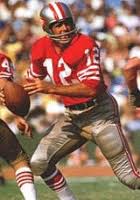
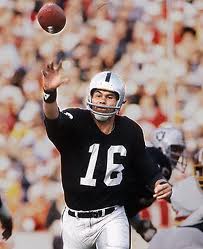
Above, from left: John Brodie, Jim Plunkett, Ken Stabler, Below: Charlie Conerly, Jim Hart.

The 2010 Pro Football Hall of Fame induction ceremony is coming up soon, with 2 slam dunk picks for the hall, Jerry Rice and Emmitt Smith, going in this season, among others. There is always a debate about players who belong in Canton who can’t seem to get in, and I’d like to highlight some of these players over the next few days, starting with quarterbacks today. The measuring stick for quarterbacks seems to be something that’s tough to get your arms around. Winning championships carries a lot of weight – that’s why Joe Montana, Otto Graham, Bob Griese and Terry Bradshaw are undisputed choices. Statistics count heavily also – Fran Tarkenton, Dan Marino, Sonny Jurgenson and Dan Fouts are examples of QBs getting in with big numbers but no titles. Using the “winning championships” argument, a case can be made for 2 former Oakland Raiders, Jim Plunkett and Ken Stabler. The Raiders being the bad boys of the NFL, and owner Al Davis constantly feuding with the league, seems to affect the Hall voting for one. Plunkett’s early-career perception of being a top draft choice bust while playing in New England works against him also, but he guided the Raiders to 2 Super Bowl titles and had a decent enough career after his Patriot debacle to warrant inclusion in the Hall. Stabler also had a reputation of being a rag-tag type of player in his time, but no one can dispute the winning he did while quarterbacking the Raiders. “The Snake” is a member of the NFL’s all-decade team for the 1970s, but isn’t good enough for the Hall? Two former New York Giants also fit this category. Charlie Conerly was a Giants’ mainstay in the late 1940s and 1950s, guiding the G-men to 3 NFL title games, beating the powerhouse Bears in 1956 to win it all. He was rookie of the year in 1948, league MVP in 1959 and a 2-time Pro Bowl selection, yet is not in Canton. Phil Simms was underappreciated his whole career, and this continues now as he has not gotten serious consideration by Hall voters either. Part of Simms’ problem is he was highly touted as a high draft choice and early in his career struggled to meet expectations. But once he figured it out, Simms was a key reason why New York won 2 Super Bowls (even though he was injured and didn’t play in one, he was instrumental in getting the team there). His career statistics are comparable to Griese’s, and he still holds the Super Bowl record for completion percentage. Frank Ryan, who quarterbacked the Browns in the 1960s, was a top signal-caller of that decade but lost a lot of playing time due to injuries. He led the Browns to the title game in 1964  and 1965, winning in ’64, but battled injury after that. He still compares statistically to Joe Namath, but lacks the flash and “legend” that Broadway Joe rode into Canton. Some forgotten players who had great careers but were stuck on losing teams include Ken Anderson, John Brodie, Jim Hart, John Hadl and Archie Manning. Anderson was the QB in Cincinnati when the Bengals offensive guru at the time, Bill Walsh, was tweaking Sid Gillman’s mad passing attack offense into what would become the “West Coast” offense, and rang up great numbers in that system. There is a groundswell of support for him and he may get in at some point. Brodie and Hart battled hard in the 1960s on mediocre teams in San Francisco and St. Louis respectively, and their lack of winning has worked against them. Hadl is an interesting case. Most of his work was done in anonimity in the American Football League, where he orchestrated Gillman’s wide open offense. Near the end of his career he had an MVP season with the L.A. Rams, leading them to a 12-2 season, and is a worthy HOF candidate, but it’s rare when players whose careers were mostly in the AFL get elected. Manning  had the bad luck of playing most of his career with an expansion team, the New Orleans Saints, and even though he is still appreciated and beloved in the Big Easy, he may only get to Canton to see his sons Peyton and Eli get inducted.
 

NASCAR’s Roots

26 Jul

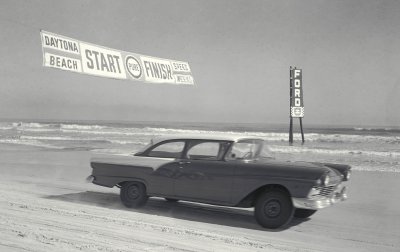
The recent opening of the new NASCAR Hall of Fame in North Carolina got me to thinking about the history of auto racing. NASCAR today is a mega-business, with the new Hall, sponsor-owned racing teams that are ultra-competitive and superstar drivers who are marketed like rock stars. Who hasn’t seen a commercial with Jeff Gordon, Dale Earnhardt, Jr., Tony Stewart or Jimmie Johnson in it? Even older NASCAR legends like Richard Petty and Mark Martin have cashed in on the sport’s popularity. I love exploring the historic past of sports, and the history of NASCAR racing is amazing. Pictured above is an old Ford racing in the Daytona 500, when the race still took place on the actual beach at Daytona. A legend of the sport from that early era is Junior Johnson, who, like many of the early drivers, learned their craft by running moonshine in Appalachia. Johnson’s NASCAR career began in 1953 and was briefly interrupted in 1956 when he was arrested while working on the family still and spent time in prison. The sport was, and in many ways still is, a Southern good ol’ boy sport. And of course, when you’re talking good ol’ boys, you know there’s going to be a “Junior” among the group. You have to love some of the other names and nicknames of the early drivers – Speedy Thompson, Fonty Flock and Fireball Roberts, who was tragically killed in an accident in 1964. I’ve never been to a NASCAR race but they say when you’re down near the track during the race that the cars produce a thunderous roar that is amazing. I’ve been to local tracks in Ransomville and Lancaster and been in the area down near the track, and I thought that was pretty great. I can’t imagine what it’s like at the NASCAR races. There’s no doubt the sport has become extremely popular today. I hope today’s drivers appreciate the pioneers who made it what it is, just like the early players in all sports. I’m not a big racing fan, but I still smile at seeing old grainy black and white films of the former moonshine runners racing on the beach at Daytona.